Tooth enamel is the hardest substance in the human body—stronger than bone—and acts as your teeth’s first line of defense. It shields the sensitive inner layers from acid, bacteria, temperature changes, and physical wear. But despite its strength, enamel has one critical flaw: it cannot regenerate. Once it’s worn away, it’s gone for good. Studies show that 20% to 45% of adults already exhibit signs of enamel erosion, making prevention more urgent than ever. The good news? You can stop enamel loss before it progresses. By adjusting your diet, refining your oral hygiene habits, and recognizing early warning signs, you can protect your enamel for life. This guide delivers science-backed, actionable strategies to defend against acid attacks, mechanical wear, and hidden medical threats.
Limit Acidic Foods and Drinks
Acid is the primary cause of enamel erosion, triggering a process called demineralization—where minerals like calcium and phosphate are stripped from the enamel surface. Frequent exposure prevents natural recovery, leading to progressive weakening.
Choose Low-Acid Alternatives
Swap high-risk items for safer options to reduce daily acid load:
– Instead of soda or sports drinks, drink water or unsweetened herbal tea.
– Replace citrus juices with low-acid fruits like bananas, melons, or apples.
– Opt for milk or almond milk over wine, coffee, or flavored sparkling water.
Even healthy foods like tomatoes and vinegar-based dressings contribute to erosion. Eat them during meals rather than alone—other foods help buffer their acidity and limit direct contact.
Reduce Sipping and Swishing
Prolonged exposure increases damage. Avoid:
– Sipping juice or soda throughout the day
– Swirling wine in your mouth
– Holding energy drinks between sips
Use a straw positioned toward the back of your mouth to bypass front teeth. This simple step can reduce acid contact by up to 60%, especially on your most visible teeth.
Neutralize Acid After Eating

After consuming acidic or sugary foods, your mouth’s pH drops, creating an erosive environment. Rinsing helps restore balance and clear harmful residues.
Rinse with Water or Milk
- Swish water for 30 seconds after meals or drinks to wash away acid and sugars.
- For stronger protection, rinse with milk—its calcium and phosphate actively support remineralization, helping rebuild weakened enamel.
Do not use baking soda immediately after eating. While alkaline, it can be abrasive on softened enamel. Save it for later in your routine.
Wait Before Brushing
Brushing right after acid exposure scratches weakened enamel. Wait 20 to 60 minutes to allow saliva to naturally re-harden the surface. Set a timer or use the waiting period to floss or clean your tongue—this builds a safe habit.
Use Fluoride Strategically
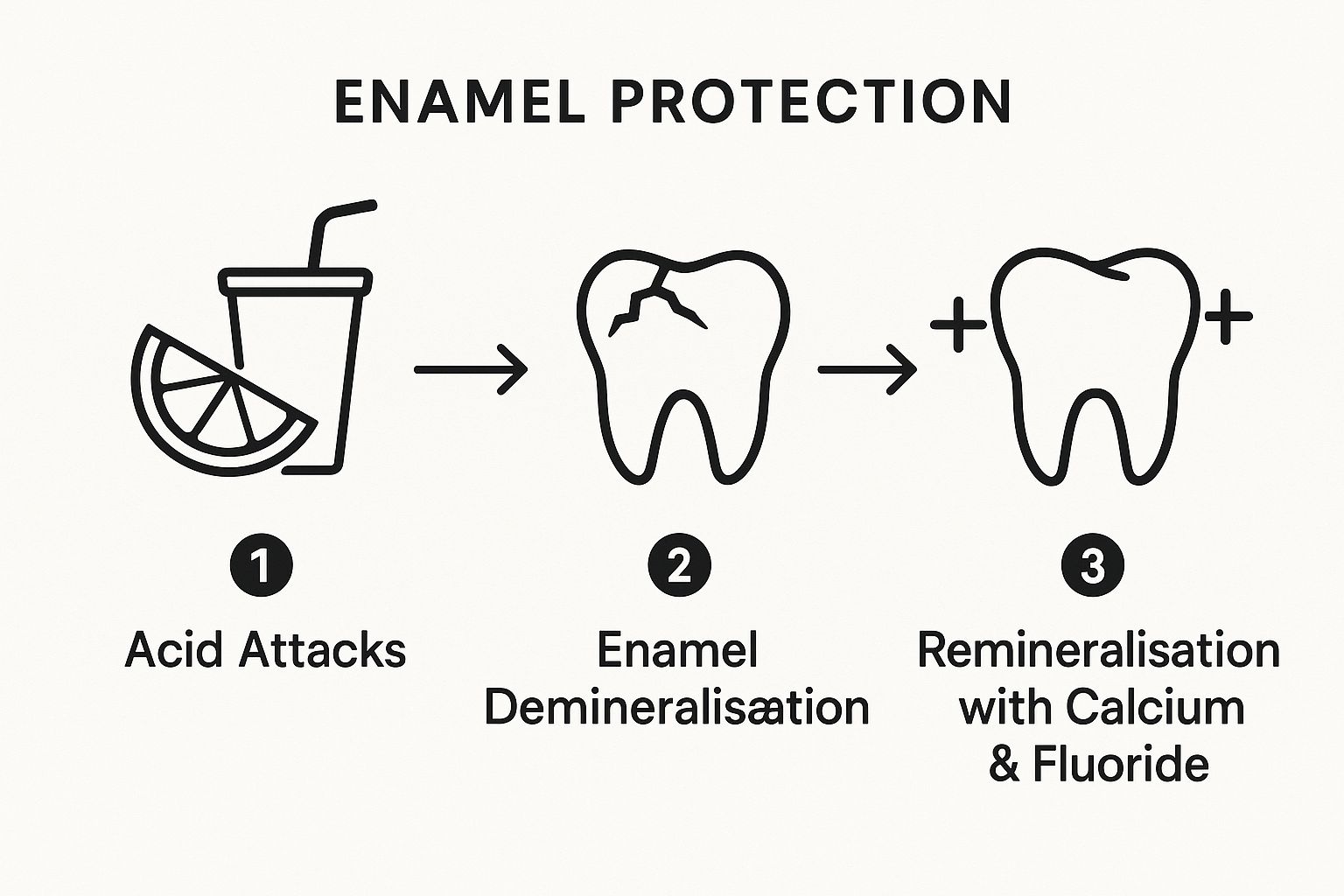
Fluoride is clinically proven to strengthen enamel by integrating into its structure, making it more resistant to acid.
Brush with Fluoride Toothpaste Twice Daily
Use toothpastes like Sensodyne Pronamel or Colgate Enamel Health, specifically formulated to protect against erosion. Use a pea-sized amount and brush gently in circular motions. Avoid aggressive scrubbing, which wears down enamel over time.
Add Fluoride Mouthwash
Use an alcohol-free, fluoride-rich mouthwash once daily, preferably at night. Alcohol-heavy or acidic rinses dry the mouth and increase erosion risk—opt for gentle, pH-balanced formulas.
Improve Brushing Habits
Even well-intentioned brushing can harm enamel if done incorrectly.
Use a Soft-Bristled Toothbrush
Hard bristles and excessive pressure cause abrasive wear, especially near the gumline. This leads to notched, sensitive teeth over time. Replace your toothbrush every three months or when bristles fray.
Brush Gently and Correctly
- Hold the brush at a 45-degree angle to the gums.
- Use short, circular strokes—not harsh back-and-forth motions.
- Clean all surfaces: outer, inner, and chewing.
Electric toothbrushes with pressure sensors help prevent overbrushing and are ideal for long-term enamel protection.
Boost Saliva Production
Saliva is your mouth’s natural defense system. It neutralizes acid, washes away food particles, and delivers minerals to repair early enamel damage.
Stay Hydrated
Drink water consistently throughout the day. Dehydration reduces saliva flow, increasing acid buildup. Aim for 6–8 glasses daily, more if you’re active or live in a dry climate.
Chew Sugar-Free Gum
Chewing gum after meals stimulates saliva up to 10 times faster. Choose brands with xylitol, which also inhibits cavity-causing bacteria. Look for the ADA seal of approval and chew for 5–10 minutes post-meal for maximum benefit.
Eat Enamel-Friendly Foods
Your diet can either destroy or defend your enamel. Choose foods that support remineralization and protect against acid.
Consume Calcium-Rich Foods
Calcium rebuilds what acid dissolves. Prioritize:
– Aged cheeses (especially cheddar and gouda)
– Yogurt and milk
– Leafy greens like kale and spinach
– Almonds and chia seeds
Hard cheeses are especially effective—they raise oral pH and stimulate saliva.
Include Phosphate Sources
Phosphorus works with calcium to strengthen enamel. Eat:
– Eggs
– Poultry
– Fish
– Pumpkin seeds
Avoid Frequent Snacking
Each snack triggers a new acid attack lasting 20–30 minutes. Constant grazing means your teeth are under attack all day. Stick to 3 main meals and limit snacks to non-acidic, low-sugar options like cheese or raw vegetables.
Manage Medical Risk Factors

Some causes of enamel loss come from within—requiring medical attention.
Treat GERD and Acid Reflux
Stomach acid (pH 1–2) is far stronger than dietary acid. GERD can rapidly erode enamel, especially on the back of upper front teeth. Symptoms include:
– Sour taste in the mouth
– Heartburn
– Waking with a sore throat
See your doctor for treatment. Managing reflux protects both your teeth and overall health.
Address Eating Disorders
Bulimia nervosa leads to severe enamel erosion due to repeated vomiting. Damage often appears first on the lingual (tongue-side) surfaces of front teeth. If you or someone you know is struggling, seek professional help. Dental teams can support recovery with protective treatments.
Review Medications
Some drugs cause dry mouth (xerostomia), reducing saliva’s protective effects. These include:
– Antihistamines
– Antidepressants
– Blood pressure medications
Ask your dentist about saliva substitutes or prescription-strength fluoride if dry mouth is unavoidable.
Stop Teeth Grinding

Bruxism exerts up to 250 pounds of pressure per square inch, enough to wear enamel down to dentin over time.
Recognize the Signs
- Waking with jaw pain or headaches
- Flattened, chipped, or worn teeth
- Increased sensitivity
- A partner hearing grinding at night
Wear a Night Guard
A custom-fitted occlusal guard from your dentist absorbs grinding forces and protects enamel. Over-the-counter trays offer less protection and may worsen jaw issues if poorly fitted.
Watch for Early Warning Signs
Catch erosion early, and you can reverse it. Know what to look for.
Spot White or Chalky Patches
These indicate Stage 1 demineralization—minerals are leaching out, but the damage is still reversible. Use fluoride treatments and improve hygiene to restore strength.
Notice Yellowing or Transparency
- Yellow teeth? Enamel is thinning, revealing the yellow dentin underneath.
- Translucent edges on front teeth? This signals advanced thinning—common in acid reflux or bulimia cases.
Both mean irreversible structural loss. See your dentist promptly.
Feel Sensitivity or See Dents
- Pain when drinking ice water or eating sweets? Dentin is exposed.
- Cupping (small dents) on molars? Enamel is eroding from chewing surfaces.
These are signs of Stage 3 erosion. Without intervention, cavities and fractures follow.
Get Professional Dental Care
Your dentist is your best ally in preserving enamel. Don’t wait for pain.
Schedule Biannual Checkups
At each visit, your dentist checks for:
– Smooth, shiny spots (early erosion)
– Thinning enamel
– Cracks or cupping
– Sensitivity triggers
Early detection means remineralization is still possible.
Get Fluoride Treatments
In-office fluoride varnishes are 5–10 times stronger than toothpaste. Applied every 3–6 months, they significantly boost enamel resistance—ideal for high-risk patients.
Consider Sealants or Bonding
- Sealants coat molar grooves to block acid and plaque.
- Bonding restores eroded areas with tooth-colored resin, reducing sensitivity and improving appearance.
Both are preventive, not just cosmetic.
Support Enamel with Supplements
If your diet lacks key nutrients, supplements can fill the gap.
Take Calcium and Vitamin D
Together, they enhance calcium absorption. Aim for:
– 1,000–1,200 mg calcium/day
– 600–800 IU vitamin D/day
Choose forms like calcium citrate for better absorption.
Add Magnesium, Vitamin K2, and Phosphorus
- Magnesium regulates calcium distribution.
- Vitamin K2 directs calcium to teeth and bones, not arteries.
- Phosphorus is a core enamel mineral.
Found in nuts, seeds, dairy, and fermented foods—or as part of a comprehensive dental support supplement.
Avoid Enamel-Damaging Myths
Not all popular advice is safe. Know what to skip.
Don’t Brush Immediately After Vomiting
Like acidic foods, stomach acid softens enamel. Wait at least 30 minutes before brushing.
Rinse with baking soda and water (1 tsp in 1 cup) to neutralize acid faster.
Skip Abrasive Whitening Products
Charcoal toothpastes and gritty whitening gels can scratch and wear enamel. Stick to dentist-approved whitening systems, which are safe and effective without damage.
Final Note: Tooth enamel loss is preventable—but only if you act early. You can’t regrow enamel, but you can stop erosion in its tracks and even reverse early damage through smart habits. Limit acid, use fluoride, support saliva, and visit your dentist regularly. Your teeth are built to last a lifetime—protect them like they’re priceless, because they are.