A cavity on a front tooth isn’t just a dental problem—it’s a visible flaw that can affect your confidence every time you smile, speak, or laugh. Unlike back teeth, where decay can go unnoticed for months, a front tooth cavity shows up fast: a dark spot near the gum line, a rough edge your tongue keeps finding, or sudden sensitivity when drinking coffee. The good news? Modern dentistry offers natural-looking, durable solutions to cover and repair it—often in a single visit. Whether you’re dealing with a small discoloration, a shallow pit, or a full-blown cavity, today’s treatments blend science and artistry to restore both function and aesthetics. From tooth-colored fillings to porcelain veneers, this guide covers everything you need to know in 2025 about fixing a front tooth cavity and regaining a flawless smile.
Spot the Early Warning Signs of Front Tooth Decay
Catching a cavity early means less drilling, lower cost, and better cosmetic results. Front teeth have thinner enamel than molars, so decay spreads faster—but early symptoms give you a window to act before major damage occurs.
Know These Red Flags
- White or brown spots appearing near the gum line or between teeth
- Sensitivity to cold drinks, hot coffee, or sugary foods
- Rough or pitted texture when your tongue brushes against the tooth
- Visible hole or dark shadow on the tooth surface
- Stains that won’t come off with brushing
White spots are early demineralization, not full cavities—yet. They signal that acid from plaque is stripping minerals from the enamel. If caught now, this stage can sometimes be reversed with fluoride treatments or remineralizing gels. But left alone, it turns into irreversible decay. The key is seeing your dentist promptly to stop progression before the cavity reaches the dentin or nerve.
Choose the Best Treatment Based on Cavity Size and Location

The right way to cover a front tooth cavity depends on how deep it is, where it’s located, and how much healthy tooth remains. Here’s a breakdown of all available options in 2025.
Composite Resin Fillings: The Gold Standard for Front Teeth
Best for: Small to moderate cavities
Time required: 30–60 minutes, one visit
Composite resin fillings are the top choice for front teeth. Made from a blend of plastic and fine glass particles, this material is tinted to match your natural tooth shade, making it nearly invisible.
Why It’s Ideal:
- Bonds directly to enamel, strengthening the tooth
- Preserves more healthy structure than crowns or veneers
- Can repair chips and decay simultaneously
- Polished to mimic the natural luster of enamel
Since 2023, nano-filled composites have become standard in quality practices. These advanced materials offer:
– Superior resistance to staining from coffee, tea, and wine
– Stronger wear resistance
– Bioactive properties that release fluoride to protect surrounding enamel
The process starts with removing decay using a precision drill or dental laser. The tooth is then etched, treated with a bonding agent, and filled in thin layers. Each layer is hardened with a blue curing light. Final shaping and high-gloss polishing ensure the restoration blends seamlessly.
Pro Tip: Ask your dentist to use a translucent margin layer at the edges—this mimics natural enamel and prevents a “filled” look under bright light.
Dental Bonding for Minor Cavities and Chips
Best for: Tiny cavities, surface stains, or minor reshaping
Time required: 30–45 minutes
Dental bonding uses the same composite material as fillings but focuses on aesthetics. It’s perfect if the cavity is shallow or limited to the outer enamel.
Key Benefits:
- Often requires no drilling
- Delivers instant results
- More affordable than veneers
Bonding typically lasts 4–8 years and can be touched up during routine cleanings. However, it’s more prone to staining than porcelain, so minimize tobacco, red wine, and dark beverages.
Porcelain Inlays and Onlays for Larger Cavities
Best for: Medium to large cavities affecting multiple surfaces
Time required: Two visits
When a filling isn’t strong enough but a crown isn’t needed, porcelain inlays (inside the tooth) or onlays (covering a cusp) offer durable, aesthetic repair.
The Process:
- Decay is removed and the tooth shaped
- A digital impression is taken
- A lab fabricates a custom porcelain piece (1–2 weeks)
- It’s bonded permanently during the second visit
Porcelain resists staining better than composite and lasts 10–15 years. It’s especially effective for cavities between front teeth, where strength and proper contact points are critical.
Porcelain Veneers for Severe Aesthetic Damage
Best for: Large cavities, discoloration, or structurally weakened teeth
Time required: Two visits
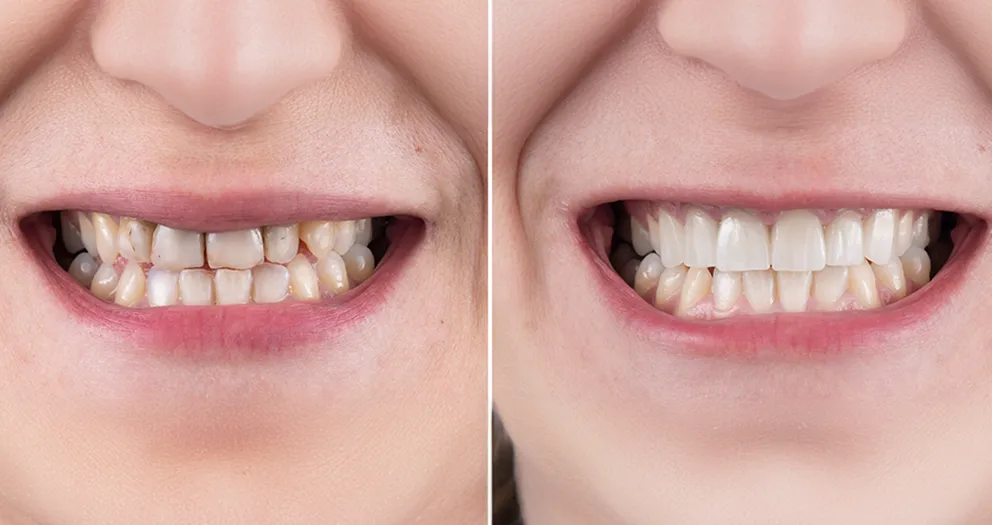
If decay has compromised more than 30% of the visible tooth, a porcelain veneer may be the best solution. This ultra-thin shell covers the entire front surface.
When Veneers Are Recommended:
- Previous fillings look dark or unnatural
- Tooth is chipped, misshapen, or permanently stained
- Multiple cosmetic flaws exist
Veneers require minimal enamel removal but deliver the most lifelike results. They last 10–15+ years and can hide cavities, gaps, and discoloration all at once.
Note: Veneers are usually considered cosmetic and often not covered by insurance unless structural decay is present.
Dental Crowns for Extensive Decay or Root Canals
Best for: Teeth with major structural loss or after nerve treatment
Time required: Two visits
A crown (or “cap”) covers the entire tooth. For front teeth, all-porcelain or zirconia crowns are used for their natural translucency and strength.
When a Crown Is Needed:
- Cavity too large for a filling
- Tooth is cracked or weakened
- Root canal has been performed
The tooth is reshaped, a temporary crown placed, and the final one bonded weeks later. Crowns last 10–15 years and provide full protection.
Root Canal + Crown: When Infection Reaches the Nerve
Best for: Deep decay causing pain, swelling, or infection
Symptoms: Throbbing pain, sensitivity to pressure, gum swelling
If bacteria reach the pulp, a root canal removes the infected tissue. Afterward, a crown is almost always needed to restore strength and prevent fracture.
Even on front teeth, root canals are routine and highly successful. The final crown blends seamlessly with your smile—no one will know you had treatment.
Treat Cavities at the Gum Line with Precision
Cavities near the gum line (cervical caries) are common, especially with gum recession. These areas lose protective enamel and are prone to plaque buildup.
Treatment Steps:
- Decay is removed, often from the back side to avoid visible drilling
- Tooth is conditioned and bonded
- Composite is placed with special attention to seal below the gum margin
- Polished to prevent plaque traps
These fillings are challenging due to moisture, but modern rubber dam isolation and hydrophobic bonding agents improve success rates.
Prevent Recurrence and Keep Your Restoration Looking New
Even the best repair can fail without proper care. Front tooth restorations face constant visual and functional demands—protect your investment.
Key Prevention Tips
✅ Brush twice daily with fluoride toothpaste
✅ Floss every night, especially between front teeth
✅ Use an electric toothbrush with a small head for precision
✅ Rinse after sugary or acidic foods
✅ Avoid biting hard objects (ice, pens, bottle caps)
✅ Get cleanings every 6 months
For high-risk patients, dentists may recommend:
– Prescription fluoride toothpaste (5,000 ppm)
– Remineralizing gels with nano-hydroxyapatite or CPP-ACP (Recaldent)
– Custom fluoride trays for nightly use
Know the Costs and Insurance Coverage
Treatment cost varies, but most plans cover restorative (not cosmetic) work.
| Treatment | Average Cost (2025) | Typically Covered? |
|---|---|---|
| Composite Filling | $150–$350 | Yes |
| Dental Bonding | $200–$400 | Partially |
| Porcelain Inlay/Onlay | $600–$1,500 | Sometimes |
| Porcelain Veneer | $800–$2,500 | No |
| Dental Crown | $800–$3,000 | Partially |
| Root Canal (Front Tooth) | $700–$1,500 | Yes |
Many offices offer payment plans or third-party financing (CareCredit). Ask about in-house membership plans if uninsured.
What to Expect After Treatment
Right After the Procedure
- Numbness wears off in 2–4 hours
- Avoid chewing until sensation returns
- Mild sensitivity for 1–3 days is normal
- White spots may appear more noticeable at first—this fades as the tooth rehydrates
Longevity by Treatment Type
- Composite Fillings: 5–10 years
- Bonding: 4–8 years
- Inlays/Onlays: 10–15 years
- Veneers/Crowns: 10–15+ years
Warning: If you grind your teeth, ask about a custom night guard—it protects both natural teeth and restorations.
Restore Confidence with a Natural-Looking Smile
Your front teeth define your smile. A well-done restoration shouldn’t look “fixed”—it should look like you, only healthier.
Dentists use:
– Shade guides to match hue, translucency, and opacity
– Layering techniques with multiple resin shades to mimic natural enamel
– High-gloss polish that reflects light like real teeth
Even under close inspection, modern materials are indistinguishable in social settings. Some patients report feeling more confident within hours of leaving the office.
Act Fast—Don’t Wait on a Front Tooth Cavity
There’s no safe way to delay treatment. Front tooth enamel is thin, and decay can reach the nerve in weeks—not months. What starts as a small stain can become a root canal if ignored.
Consequences of Delay:
- Larger restoration needed (more drilling, higher cost)
- Increased risk of tooth fracture
- Possible infection or abscess
- Need for extraction and implant (costing $3,000+)
Early intervention saves time, money, and your natural tooth.
Final Note: Covering a cavity on a front tooth is a precise blend of art and science. With composite fillings, bonding, veneers, or crowns, you can restore both health and beauty. Thanks to 2025 advancements—like bioactive composites and digital shade-matching—your repair will look natural and last for years. If you see a spot, feel sensitivity, or just suspect decay, schedule a dental visit now. Your smile deserves it.