For many, the emergence of wisdom teeth signals the transition into adulthood—often marked not by celebration, but by pain, swelling, and an appointment with an oral surgeon. But what exactly is the purpose of the wisdom tooth, and why do we still grow them if they so often need to be removed? These third molars, once essential for survival in early humans, now serve little functional role in modern life. Instead, they frequently lead to complications like impaction, infection, and crowding, prompting millions of extractions each year. Understanding their evolutionary origins, anatomical traits, and clinical implications reveals how a once-critical adaptation has become a common source of dental issues. This guide explores why wisdom teeth exist, why they often go wrong, and what that means for your oral health.
Evolutionary Role: Why Humans Developed Wisdom Teeth
Chewing Tough Prehistoric Diets
The purpose of the wisdom tooth lies in human evolution, not modern function. Early humans consumed raw meats, fibrous plants, roots, nuts, and uncooked vegetation—foods that demanded intense chewing. Without knives, cooking, or food processing, survival depended on powerful jaws and durable teeth. Wisdom teeth provided extra grinding surface to break down these tough foods. With larger jaws than today’s humans, our ancestors had room for all 32 teeth, including the four third molars. These molars acted as functional backups, stepping in when front teeth wore down from constant use.
Jaw Size and Tooth Wear Compensation
Prehistoric diets were highly abrasive, causing significant tooth wear by early adulthood. As molars flattened or broke down, wisdom teeth emerged to maintain chewing efficiency. This biological redundancy ensured that even with dental deterioration, individuals could continue to process food effectively. The constant mechanical stress of chewing also stimulated jawbone development, creating the space needed for third molars to erupt properly. In this context, wisdom teeth weren’t just useful—they were essential for long-term nutrition and survival.
Dietary Shifts Reduced Molar Need
As humans mastered fire and developed tools, food became softer and easier to chew. Cooking broke down fibers, while cutting and grinding reduced particle size before ingestion. These changes lessened the need for powerful jaws and multiple molars. Over time, natural selection favored smaller jaws, as large mandibles were no longer necessary. However, tooth size didn’t shrink at the same rate, leading to a mismatch between jaw space and tooth size. This evolutionary lag explains why so many people today lack room for wisdom teeth to erupt normally.
Anatomical Features of Third Molars
Location and Number Variability
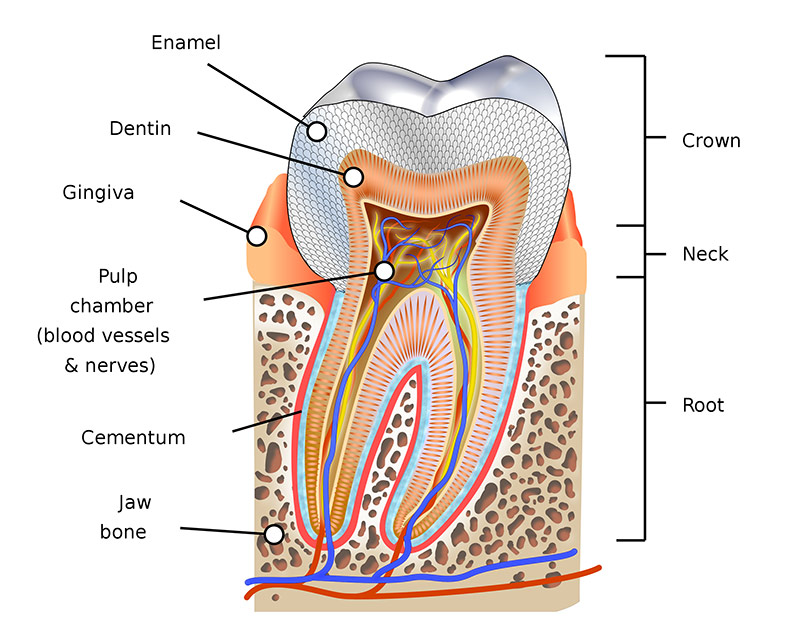
Wisdom teeth are the most posterior molars, located behind the second molars in each quadrant: upper left, upper right, lower left, and lower right. While most people develop four, the number varies widely. Agenesis—the congenital absence of one or more wisdom teeth—is increasingly common, especially in East Asian populations. Some individuals are born without any third molars, a sign of ongoing evolutionary change. Rarely, people develop more than four molars, a condition called hyperdontia, affecting less than 1% of the population. Dental X-rays often reveal these variations during routine checkups.
Eruption Timeline: Late Teens to Mid-Twenties
These molars typically emerge between ages 17 and 25, earning the name “wisdom teeth” due to their appearance during a period of increased maturity. In some cultures, they’re known as “teeth of judgment,” reflecting this link to adulthood. Development begins around age 10, with roots forming gradually. Delayed eruption means problems can go undetected for years. Some wisdom teeth never erupt, remaining fully impacted in the jawbone. Others partially emerge, creating pockets where bacteria thrive and infections develop.
Morphological Differences and Root Complexity
Compared to other molars, wisdom teeth show greater anatomical variation. Most have two or three roots, but some develop up to four. Roots may be fused or splay in unpredictable directions, making extractions more complex. Upper wisdom teeth often have roots near the maxillary sinus, while lower ones may lie close to the inferior alveolar nerve, which controls sensation in the lower lip and chin. This proximity requires careful surgical planning to avoid nerve damage or sinus complications.
Modern Function: Are Wisdom Teeth Still Useful?
Vestigial Organs in Contemporary Dentition
Today, wisdom teeth are largely vestigial, like the appendix or tailbone. They retain the shape and potential for function but rarely contribute to chewing. Modern diets consist of soft, processed, and cooked foods that don’t require excessive grinding. First and second molars are usually sufficient for mastication. In most cases, third molars either remain trapped beneath the gums or erupt in positions that make them inaccessible. Their presence is more a remnant of evolution than a functional advantage.
Rare Cases of Functional Use
In a small percentage of people, wisdom teeth erupt fully, align correctly, and remain healthy. When this happens, they can assist in chewing and help preserve the integrity of the dental arch. They may also support adjacent teeth and maintain bone density in the posterior jaw. However, these ideal conditions are uncommon. Even when functional, wisdom teeth are harder to clean, increasing long-term risks of decay and gum disease. Dentists evaluate each case individually to determine whether retention is safe or if preventive removal is advisable.
Contribution to Oral Structure Stability
When properly aligned, third molars can play a minor role in maintaining posterior occlusal support. They help distribute chewing forces across more teeth, potentially reducing strain on second molars. In patients missing other molars, a healthy wisdom tooth might even be used as an anchor for dental bridges or partial dentures. Still, such applications are rare and depend heavily on position, health, and accessibility. Most dental professionals agree that the risks of keeping wisdom teeth outweigh any marginal benefits.
Why Wisdom Teeth Cause Problems
Jaw Size vs. Tooth Size Mismatch
The core issue behind wisdom tooth complications is evolutionary mismatch. Human jaws have become smaller over generations due to softer diets and reduced chewing demands. Yet, tooth size has remained relatively unchanged. This creates insufficient space for third molars to erupt normally. As a result, they often become impacted, meaning they cannot fully emerge from the gums or bone. This mismatch affects up to 80% of people, making impaction one of the most common dental conditions in young adults.
Types of Impaction and Their Risks
Impacted wisdom teeth are classified by position:
– Soft tissue impaction: Tooth breaks through the gum but not the bone.
– Bony impaction: Tooth remains trapped within the jawbone.
– Angular impaction: Tooth grows at an angle, pushing against adjacent teeth.
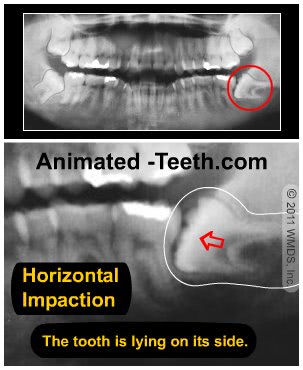
Common types include mesioangular (tilted forward), distoangular (tilted backward), horizontal, or vertical impactions. Each carries different risks—horizontal impactions, for example, can press directly into the root of the second molar, causing irreversible damage.
Consequences of Poor Alignment
Misaligned wisdom teeth can lead to:
– Pressure on adjacent teeth, causing shifting or crowding
– Root resorption of second molars
– Tooth decay due to difficulty cleaning
– Gum disease from trapped food and bacteria
Even without pain, hidden damage can progress silently. Regular dental monitoring is essential to catch problems early.
Common Clinical Complications
Pericoronitis: Infection Around Partial Eruption
When a wisdom tooth only partially erupts, a flap of gum tissue often covers part of the crown. This creates a pericoronal pocket where food and bacteria accumulate, leading to pericoronitis—an infection causing pain, swelling, bad breath, and difficulty opening the mouth. Episodes can recur, especially during stress or illness. Severe cases may lead to abscesses or spread of infection into deeper facial tissues, requiring emergency care.
Cavities and Gum Disease Risk
Due to their location, wisdom teeth are difficult to clean. Plaque buildup increases the risk of cavities on the third molar and the adjacent second molar. Decay can go undetected until severe. Poor hygiene also leads to gingivitis and periodontitis, which may cause bone loss around neighboring teeth.
Cyst and Tumor Development
Impacted wisdom teeth are surrounded by a follicular sac that can transform into a dentigerous cyst. These fluid-filled cysts expand slowly, destroying jawbone and displacing teeth. In rare cases, they may develop into benign or malignant tumors. Early detection via X-ray is critical.
Orthodontic Relapse and Crowding
Wisdom teeth can contribute to teeth shifting after braces. As they attempt to erupt, they exert forward pressure on the dental arch, potentially pushing other teeth out of alignment. Preventive extraction is often recommended to preserve orthodontic results.
Diagnosis and When to Remove Wisdom Teeth
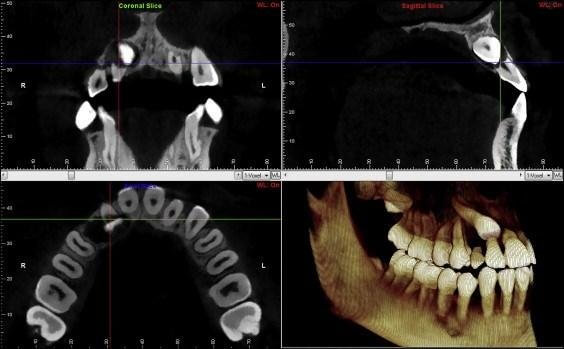
Dentists use panoramic X-rays (OPG) to evaluate position, angulation, and nerve proximity. CBCT scans provide 3D views for complex cases. Extraction is recommended for impaction, recurrent infection, decay, gum disease, cysts, or orthodontic concerns. Early removal—before age 25—offers faster healing, simpler surgery, and lower complication risks. Even asymptomatic teeth may be removed preventively.
Evolutionary Future: Will Wisdom Teeth Disappear?
Evidence suggests they may. Agenesis rates are rising, especially in certain populations. Genes suppressing third molar development are becoming more common. Natural selection favors individuals with fewer dental complications, accelerating this evolutionary shift. Over thousands of years, wisdom teeth may vanish entirely—joining the appendix and tailbone as obsolete remnants of human evolution.
Final Note: The purpose of the wisdom tooth is rooted in human history, not modern function. Once vital for survival, they now represent an evolutionary relic that often causes more harm than good. While they can be useful in rare cases, most people benefit from preventive monitoring or removal. Understanding their origin, risks, and trajectory empowers better decisions about long-term oral health.