If you have ever wondered how a water flosser cleans between teeth and along the gumline, you are not alone. Millions of people use water flossers like Waterpik to improve their oral hygiene, but how does a water flosser work, exactly? Unlike traditional string floss, it uses targeted bursts of water to remove plaque, food particles, and bacteria from hard-to-reach areas. This article breaks down the science and mechanics behind water flossing so you can understand exactly how it improves gum health and why it is recommended by dentists.
Core Components of a Water Flosser

Every water flosser relies on three essential parts to function. These components work together to deliver pulsating water precisely where you need it for effective cleaning.
Motor and Pump System
The motor powers a small pump that pressurizes water from the reservoir. As the pump activates, it creates a stream of water released in rapid pulses rather than a continuous flow. This pulsation is key to effective cleaning because it disrupts plaque biofilm and stimulates gum tissue without causing damage. Most models allow you to adjust the pressure, letting you start gently and increase intensity as your gums adapt.
Water Reservoir Capacity
The reservoir holds the water used during each session, typically ranging from 180 ml to 600 ml depending on the model. Larger reservoirs mean fewer refills, making countertop units ideal for full-family use. Cordless models have smaller tanks for portability but may require mid-use refills. Always fill the reservoir before turning on the device and empty it after use to prevent bacterial buildup.
Replaceable Flosser Tips
Each tip is designed for specific needs. Standard tips work for everyday cleaning, orthodontic tips fit braces, periodontal tips reach deep pockets, and tongue cleaner attachments address bad breath. The tip attaches to the handle and directs the water stream. Over time, wear reduces effectiveness, so manufacturers recommend replacing tips every three to six months.
How Water Pressure Cleans Teeth
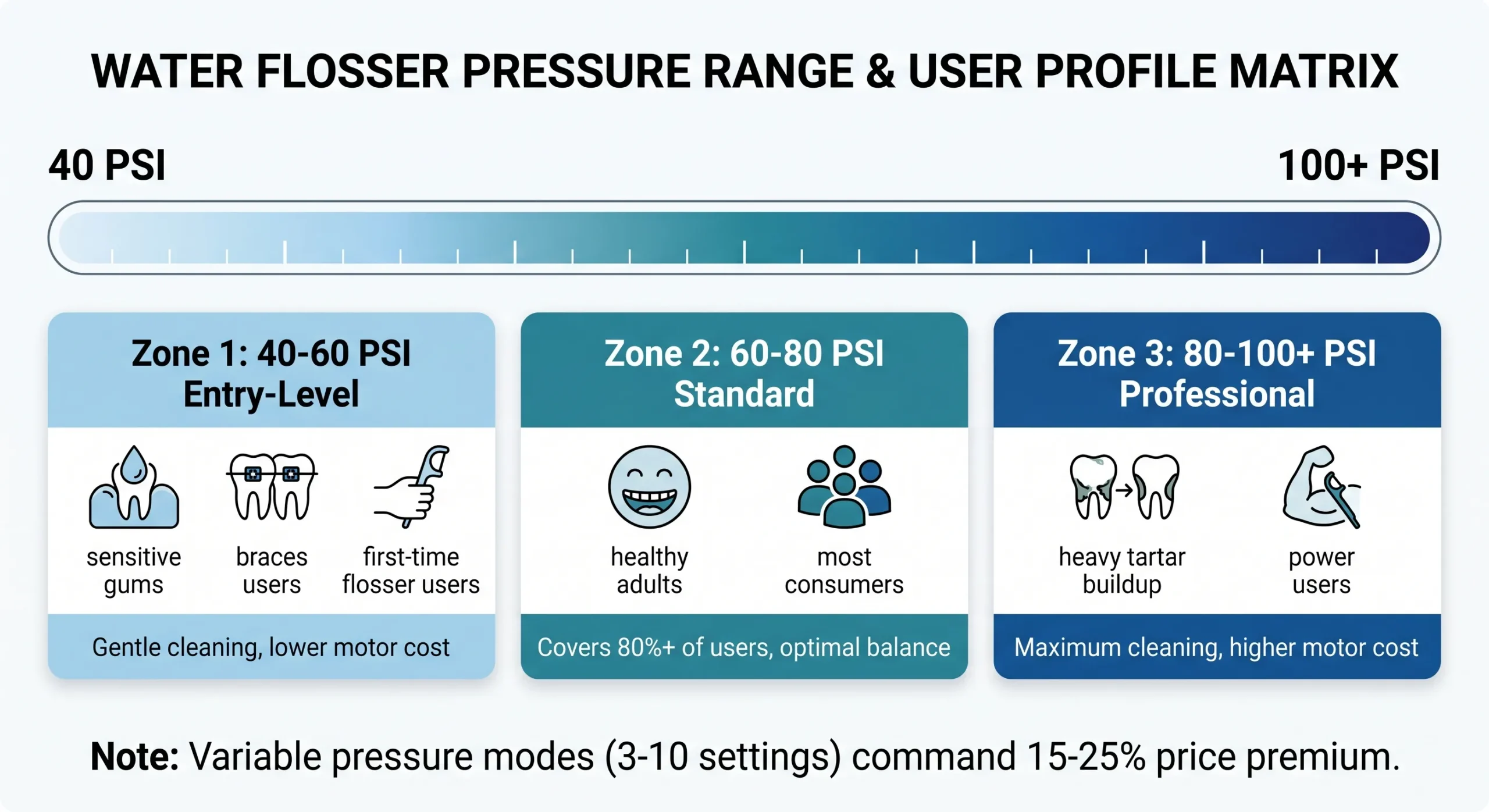
The real cleaning power of a water flosser comes from controlled water pressure. When aimed at the gumline and between teeth, the pressurized stream dislodges trapped food and bacteria. But it is not just about force. Too much pressure can irritate gums, while too little will not remove plaque effectively. Most devices offer variable pressure settings from 10 to 100 psi, allowing customization based on sensitivity and dental work.
Adjusting for Comfort and Effectiveness
Start on the lowest setting if you are new to water flossing. Gradually increase pressure as your gums become accustomed to the sensation. Users with sensitive gums or recent dental procedures should stick to lower pressures. The ideal setting feels strong enough to clean but does not cause discomfort or splashing.
Reaching Below the Gumline
One major advantage of water flossing is its ability to clean up to 3 mm below the gumline, far deeper than string floss can reach. This subgingival cleaning helps reduce inflammation and prevents gingivitis. The pulsating action creates a flushing effect that pushes out bacteria from periodontal pockets, promoting healthier gum attachment over time.
Pulsation vs. Steady Stream: Why It Matters
Not all water streams are created equal. A continuous flow of water simply rinses the surface. In contrast, a pulsating stream delivers intermittent bursts, typically 1,200 to 1,600 pulses per minute, that enhance cleaning efficiency.
Disrupts Plaque Biofilm Effectively
Plaque is not just loose debris. It is a sticky biofilm that adheres to teeth and resists rinsing. The rapid on-off pulses from a water flosser create micro-vibrations that break apart this biofilm, making it easier to wash away. Clinical studies show that pulsating water removes significantly more plaque than a steady stream, especially in tight spaces between teeth and around bridges or implants.
Stimulates Gum Health
Beyond cleaning, pulsation gently massages the gums, increasing blood circulation. This stimulation strengthens gum tissue and improves resistance to infection. Regular use leads to reduced bleeding, swelling, and redness, common signs of early gum disease.
Step-by-Step: Using a Water Flosser Correctly
To get the full benefits, proper technique is essential. Follow these steps for maximum effectiveness.
1. Fill and Set Up the Device
Remove the reservoir and fill it with warm water or mouthwash if recommended. Reattach it securely. Select your preferred tip and insert it into the handle. Plug in the unit or charge if cordless and set the pressure control to low for your first use.
2. Position the Tip Properly
Lean over the sink, place the tip in your mouth, and close your lips slightly to prevent splashing but do not clamp down. Aim the nozzle at a 90-degree angle to your gumline, starting at the back teeth.
3. Move Systematically Along the Gumline
Turn on the device and follow the curve of each tooth, pausing briefly between them. Move from tooth to tooth, covering both the outer and inner surfaces. Spend about one to two seconds per gap. Work your way around the entire mouth, upper, lower, front, and back, for a full 60 to 90 second session.
Benefits of Daily Water Flossing
Adding a water flosser to your routine offers measurable improvements in oral health.
Reduces Gingivitis and Bleeding Gums
Research shows that daily water flossing reduces gingivitis by up to 50% more than string floss alone. By removing bacteria below the gumline, it addresses the root cause of inflammation.
Improves Breath and Overall Cleanliness
Food debris trapped between teeth is a major cause of bad breath. Water flossing flushes out these particles, leaving your mouth feeling fresh. Combined with tongue cleaning tips, it tackles odor at its source.
Ideal for Braces, Implants, and Crowns
Traditional flossing around braces or dental work is difficult and time-consuming. Water flossers easily navigate around wires, brackets, and fixed prosthetics, reducing the risk of decay and gum disease in high-risk patients.
Common Mistakes to Avoid
Even with the best device, improper use can reduce effectiveness.
Using Cold or Hot Water
Extreme temperatures can shock sensitive teeth and gums. Always use lukewarm water unless otherwise directed by your dentist.
Skipping Tip Replacement
Worn or clogged tips reduce water pressure and cleaning power. Check tips monthly and replace every three to six months, or sooner if damaged.
Moving Too Quickly
Rushing through your session means missing key areas. Take your time and spend at least 60 seconds ensuring full coverage of all tooth surfaces and along the gumline.
Maintenance Tips for Longevity
Proper care extends your water flosser is life and ensures hygienic performance.
Clean Reservoir and Tip Weekly
Mineral deposits and bacteria can build up over time. Rinse the reservoir after each use and deep clean it weekly with a vinegar-water solution in a one-to-two ratio. Soak tips in the same solution to remove buildup.
Store Properly
Leave the reservoir detached and upside down on the base to air dry. This prevents mold and mildew growth. Store tips in a clean, dry case away from moisture.
Why Dentists Recommend Water Flossers
More dental professionals recommend Waterpik than all other oral irrigators combined. Its clinical effectiveness, ease of use, and safety for daily use make it a top choice. Studies confirm it removes up to 99.9% of plaque from treated areas when used correctly.
Proven Results in Clinical Trials
Multiple independent studies show water flossers outperform string floss in reducing plaque, gingivitis, and gum bleeding. They are especially effective for patients with orthodontic appliances, periodontal disease, or dexterity issues.
Suitable for All Ages and Abilities
From teens with braces to seniors with arthritis, water flossers require less manual dexterity than string floss. The simple trigger mechanism makes it accessible for people with limited hand mobility.
Frequently Asked Questions About Water Flossers
Does a water flosser replace traditional flossing?
No, water flossers are designed to complement not replace traditional flossing. While they effectively clean between teeth and below the gumline, many dentists recommend using both for optimal oral hygiene. Water flossing handles hard-to-reach areas while string floss can still provide mechanical cleaning action.
Can anyone use a water flosser?
Most people can safely use a water flosser. However, those with weakened gums, recent dental surgery, or certain medical conditions should consult their dentist first. People with implants, braces, crowns, or bridges often benefit most from water flossing because it reaches areas traditional floss cannot.
How often should I use a water flosser?
For best results, use your water flosser once daily, preferably before or after brushing your teeth. Consistency matters more than timing, so choose a time that fits your routine and stick with it each day.
Is water flossing safe for sensitive teeth?
Yes, water flossing is generally safe for sensitive teeth when used correctly. Start on the lowest pressure setting and gradually increase as your sensitivity decreases. The gentle pulsating water is often more comfortable than string floss for people with sensitive gums or receding gumlines.
How long does a water flosser last?
With proper care and maintenance, a quality water flosser can last three to five years or longer. Key factors affecting lifespan include usage frequency, water quality, and how well you maintain the device. Regular cleaning and timely tip replacement help extend its useful life.
Key Takeaways for Understanding How Water Flossers Work
Water flossers offer a powerful, science-backed way to enhance your oral hygiene. By combining adjustable water pressure with rapid pulsations, they clean deeper than brushing or traditional flossing alone. The motor and pump system creates pressurized water streams that disrupt plaque biofilm, while the pulsation action massages gums and improves circulation. Whether you are dealing with braces, implants, or just want a fresher, healthier mouth, understanding how a water flosser work helps you use it more effectively. With consistent daily use, proper technique, and regular maintenance, you will experience cleaner teeth, healthier gums, and lasting oral wellness.