If you have ever struggled with traditional flossing due to braces, dexterity issues, or simply hating the hassle, you have probably asked: does a water flosser work? The answer, backed by clinical research and dental professionals, is a clear yes. A water flosser effectively removes plaque, reduces gum bleeding, and improves oral health, especially in hard-to-reach areas where string floss falls short.
Unlike manual floss, which relies on physical scraping between teeth, a water flosser uses a pulsating stream of water to flush out food particles, bacteria, and biofilm from along the gumline and deep between teeth. It is particularly effective for people with braces, implants, periodontal pockets, or limited hand mobility. The American Dental Association has even awarded its Seal of Acceptance to certain water flossers, confirming their safety and efficacy in reducing plaque and gingivitis.
How Water Flossers Clean Teeth
Water flossers do not scrub like string floss. Instead, they disrupt plaque using hydrokinetic forces. Using a combination of water pressure and rapid pulsation (typically 1,200 to 1,600 pulses per minute), they generate forces that break apart bacterial plaque and rinse it away.
Hydrokinetic Plaque Removal Explained
The cleaning mechanism involves several processes working together:
• Shear forces: The oscillating water stream creates lateral movement that destabilizes biofilm.
• Cavitation: Microscopic bubbles form and collapse near tooth surfaces, helping detach plaque.
• Subgingival penetration: Water streams can reach up to 90% of the depth in periodontal pockets under 6 mm, cleaning below the gumline where brushing and flossing cannot reach.
This makes water flossing uniquely effective for deep cleaning without requiring physical contact with tight interdental spaces.
Safety of Subgingival Cleaning
A common concern is whether water pressure pushes bacteria deeper into gums. Research confirms it does not. Instead, water flossing removes bacteria from pockets, reducing microbial load.
• No evidence shows damage to the epithelial lining of periodontal tissues when used at recommended pressures.
• Bacteremia levels (bacteria entering the bloodstream) are similar to brushing and flossing, posing no added health risk.
Healthy gum tissue can tolerate pressures up to 160 psi, but most devices operate between 50 and 90 psi, with adjustable settings for sensitive or inflamed gums.
Clinical Proof: Plaque and Gingivitis Reduction
Multiple clinical trials show water flossers match or outperform traditional floss in plaque removal. The research is substantial and consistently supports their effectiveness.
Water Flosser vs. String Floss: Study Results
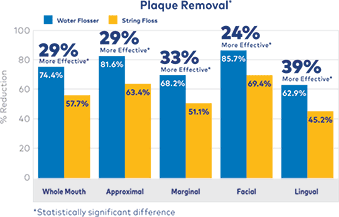
A landmark study published in the Journal of Clinical Dentistry (Goyal et al., 2013) compared plaque removal efficacy when using a water flosser versus waxed string floss, both combined with a manual toothbrush:
• Water flosser group:
– 74.4% reduction in whole-mouth plaque
– 81.6% reduction in interproximal plaque
• String floss group:
– 57.7% reduction in whole-mouth plaque
– 63.4% reduction in interproximal plaque
The difference was statistically significant, indicating superior performance of the water flosser.
Additional peer-reviewed research supports these findings. The Journal of Clinical Periodontology found water flossers achieved greater reductions in gingival bleeding and plaque. A 2022 study in the International Journal of Dentistry found no significant difference between super floss and water flossers in plaque removal among orthodontic patients.
Reduces Gum Inflammation and Bleeding
Water flossing does not just clean. It heals. Studies show rapid improvement in gum health:
• Significant reductions in bleeding on probing (BOP), gingival index, and plaque index.
• Al-Mubarak et al. (2002): Patients using water flossers saw improved gingivitis, less plaque, and reduced probing depths.
• One patient is reported to have had a 7mm periodontal pocket shrink to 3mm after three months of daily use.
Even in high-risk groups like diabetics, water flossing improves outcomes due to better compliance and deep cleaning.
Anti-Inflammatory Effects Beyond Cleaning
Beyond mechanical action, water flossing modulates the immune response. Cutler et al. (2000) found reduced levels of proinflammatory mediators in gingival crevicular fluid. This suggests water flossing helps calm the body inflammatory reaction to plaque, potentially slowing periodontal disease progression.
Advantages Over Traditional Flossing

Water flossers offer several distinct advantages that make them appealing to many users.
Easier for Braces, Implants, and Crowns
String floss struggles around complex dental work. Water flossers excel in these situations:
• Braces: Orthodontic tips clean around brackets and under wires, reducing white spot lesions.
• Implants: Soft rubber tips clean peri-implant sulci without scratching titanium.
• Bridges and crowns: Flush debris from beneath fixed prosthetics where floss cannot reach.
• Tight spaces or wisdom teeth: No threading required. Simply aim and pulse.
Users report better access and comfort, especially with orthodontic appliances.
Better for Sensitive or Inflamed Gums
Many people avoid flossing because it hurts. Water flossing is gentler:
• Adjustable pressure settings allow gentle cleaning for tender gums.
• Pulsation stimulates blood flow, improving tissue resilience.
• Most users see reduced bleeding within a week of consistent use.
Unlike aggressive flossing that can tear gums, water flossing cleans without contact trauma.
Higher User Compliance and Frequency
The biggest advantage is that people actually use it:
• Patients who refused to floss now water floss multiple times a day after meals, before bed, and in the morning.
• Dental hygienists report they will take water flossing any day over no flossing at all.
• No need for dexterity or perfect technique. Just point and shoot.
Higher compliance means better long-term oral health, even if plaque removal is not 100% complete on flat surfaces.
Who Benefits Most From Water Flossing
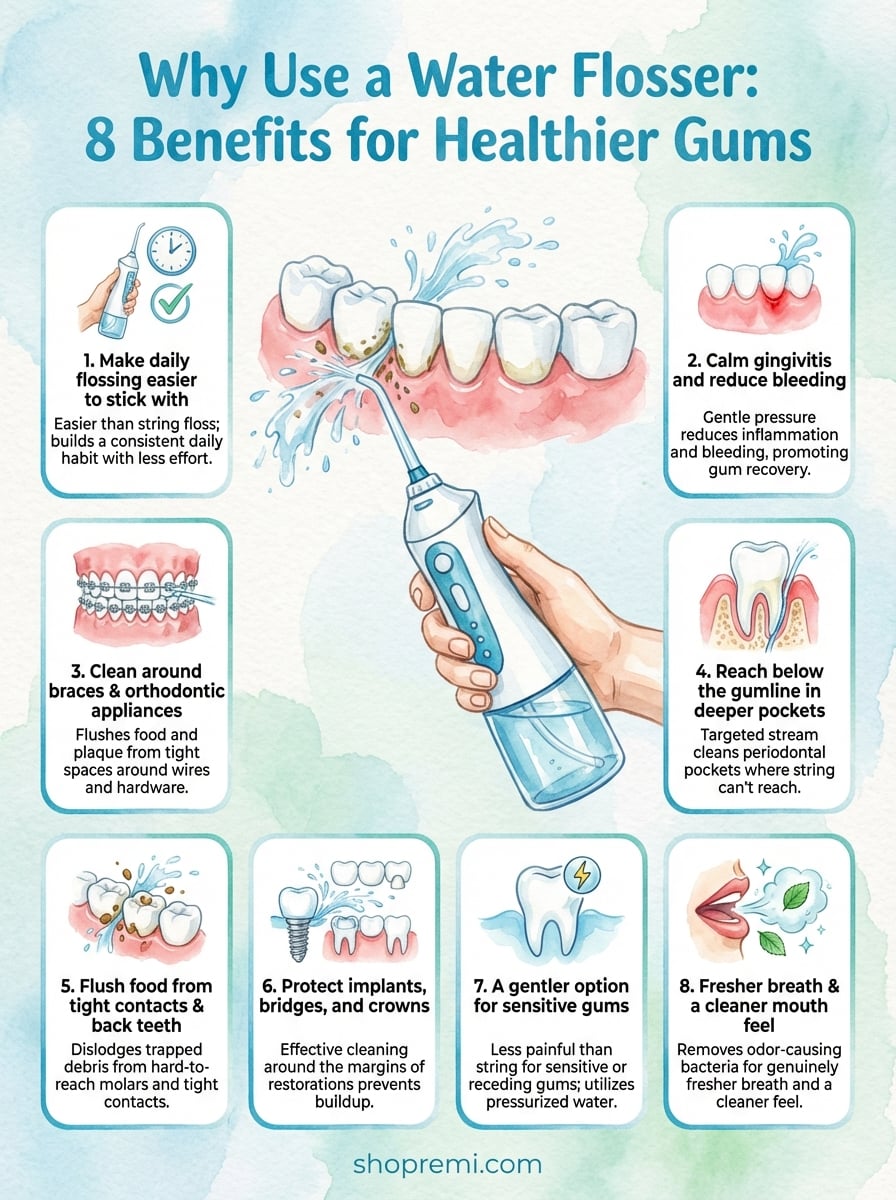
Certain patient populations see particularly strong benefits from adding a water flosser to their routine.
Orthodontic Patients
Braces trap food and plaque, increasing risks of decay and gum disease:
• Water flossers with orthodontic tips remove debris from around brackets and wires.
• Clinical trials confirm equal or better plaque control versus super floss.
• Reduces risk of decalcification (white spots) and gingivitis during treatment.
Periodontal Disease Patients
For those with gum pockets (4mm or deeper), water flossers are a game changer:
• Penetrates deep into pockets, removing bacteria after scaling and root planing.
• Helps maintain clinical attachment levels and reduce pocket depth.
• Often recommended as part of periodontal maintenance therapy.
Diabetic Patients
Diabetics face higher risks of gum disease due to impaired immunity:
• Water flossing improves plaque control and reduces bleeding.
• Easier to maintain consistent hygiene, which is critical for blood sugar management.
• Supports overall health by reducing oral inflammation.
Patients With Physical Limitations
Arthritis, Parkinson disease, carpal tunnel, or spinal injuries can make flossing impossible:
• Water flossers require no manual dexterity.
• Lightweight, ergonomic handles and seated use make them accessible.
• Children as young as six can use them safely.
Trauma-Averse or PTSD Patients
Some avoid flossing due to past trauma. Water flossing offers a non-invasive alternative and may be the only acceptable method for interdental cleaning in these cases.
Limitations: When Water Flossers Fall Short
While effective, water flossers are not perfect. Understanding their limitations helps set realistic expectations.
Not 100% Effective on Flat Surfaces
While great for deep pockets and around appliances, water flossers may leave behind adherent plaque on smooth interdental surfaces:
• Mechanical friction from string floss is still best for scraping off stubborn biofilm.
• Husseini et al. (2008) found older models did not reduce visible plaque consistently, though newer research contradicts this.
Bottom line: Water flossing is excellent but not a complete replacement for physical contact when possible.
Performance Varies by Brand and Model
Most clinical evidence comes from Waterpik studies:
• Results may not apply to cheap or generic models sold online.
• Cordless models often have lower pressure and shorter battery life.
• Pulsation frequency, tip design, and reservoir size affect effectiveness.
Stick to reputable brands with ADA acceptance for proven performance.
Messy and Less Portable Than Floss
• Requires sink use and can splash water.
• Takes longer to set up and clean than string floss.
• Cordless models help with travel, but battery life varies.
Safe Use: Tips and Warnings
Using a water flosser correctly maximizes effectiveness and minimizes mess.
Correct Technique for Best Results
- Fill reservoir with warm water (or 50/50 water and hydrogen peroxide for extra cleaning).
- Start on lowest pressure setting if new or sensitive.
- Lean over sink, close lips slightly to control spray.
- Aim nozzle at gumline, not directly into gums.
- Move slowly from back to front, pausing between teeth.
- Empty reservoir after use to prevent mold.
Consult your hygienist for personalized tips based on your dental work.
Use With Mouthwash? Yes, But Carefully
You can add these safely:
• Chlorhexidine (antibacterial, but may stain teeth)
• Essential oils (like Listerine)
• Diluted hydrogen peroxide (50/50)
• Salt water (soothing for inflamed gums)
Avoid undiluted solutions, abrasive powders, or vinegar. These can damage the device or irritate tissue.
Sharing Tips? Not Recommended
• Tips harbor bacteria after regular use.
• Even with cleaning, do not share tips between users.
• Replace every 3 to 6 months or sooner if worn.
Cost, Maintenance, and Long-Term Use
Understanding the investment helps with decision making.
Price vs. Value
• Countertop models: $50 to $80 (most powerful)
• Cordless models: $80 to $150 (portable but less pressure)
• Budget models: $30 to $50 (lower durability)
Many FSAs and dental insurance plans cover water flossers as preventive devices.
Maintenance Matters
• Clean reservoir daily. Dry it after use to prevent mold.
• Replace tips every 3 to 6 months.
• Run vinegar rinse monthly to descale internal parts if recommended.
• Check seals and o-rings on cordless models to prevent leaks.
Final Verdict: Does It Work?
Yes, Backed by Science and Dentists
Water flossers are not a gimmick. They are:
• Clinically proven to reduce plaque and gingivitis.
• Superior in deep pockets, braces, and implants.
• Safer and more comfortable for sensitive gums.
• More likely to be used than string floss.
They earned the ADA Seal of Acceptance for good reason.
Best Used With, Not Instead Of, Floss
For optimal results, water floss first to loosen debris, then string floss second to remove residual plaque, then brush last to clear away particles and deliver fluoride. But if you cannot floss, a water flosser is a highly effective alternative.
Who Should Use One?
• Anyone with braces, implants, bridges, or crowns
• People with arthritis or limited dexterity
• Patients with gum disease or deep pockets
• Diabetics or those at high risk for infection
• Anyone who hates traditional flossing
Frequently Asked Questions About Water Flossers
Does a water flosser actually work better than string floss?
Yes, multiple clinical studies show water flossers remove more plaque than string floss, especially in hard-to-reach areas. The Goyal et al. 2013 study found 81.6% interproximal plaque reduction with water flossers versus 63.4% with string floss.
Can water flossers replace regular flossing entirely?
Water flossers are highly effective but may leave some adherent plaque on flat surfaces. For best results, use both water floss and string floss together. However, if you cannot use string floss, a water flosser alone is far better than no flossing at all.
Is water flossing safe for sensitive gums?
Yes. Water flossers have adjustable pressure settings, and most users see reduced bleeding within a week. Start on the lowest setting and gradually increase as your gums become healthier.
How often should I use a water flosser?
Use it once daily, preferably before brushing. Many users water floss after meals as well. Consistency matters more than frequency. Daily use provides the best results for gum health.
Do dentists recommend water flossers?
Yes, many dentists and dental hygienists recommend water flossers, especially for patients with braces, implants, periodontal disease, or difficulty using string floss. The ADA has granted its Seal of Acceptance to several water flosser models.
Can I use mouthwash in my water flosser?
Yes, but dilute it. Use 50/50 water and mouthwash, or water and hydrogen peroxide. Avoid undiluted solutions, as they can damage the device or irritate gum tissue.
Key Takeaways for Water Flossers
Water flossers are scientifically proven to work. They remove more plaque than string floss in clinical studies, reduce gum bleeding and inflammation, and reach areas that traditional floss cannot. They are especially beneficial for people with braces, implants, periodontal disease, or limited dexterity. The American Dental Association has awarded its Seal of Acceptance to water flossers, confirming their safety and efficacy.
While not a complete replacement for mechanical cleaning on flat surfaces, water flossers excel as a complementary tool or as the primary method for those who cannot use string floss. Higher user compliance makes them effective in real-world use, even if they are not 100% perfect.
For best results, use a water flosser daily, choose a reputable brand with ADA acceptance, replace tips every 3 to 6 months, and consider using it alongside string flossing for comprehensive oral care. Talk to your dentist or hygienist to choose the right model and technique for your specific needs.