
If your COSLUS water flosser isn’t performing like it used to, smells odd, or sprays weakly, the problem is likely buildup inside the device. Many users overlook one critical fact: even high-performing cordless models like the COSLUS C20, C30, E40, and C31 need regular, thorough cleaning to stay hygienic and functional. Without proper maintenance, biofilm, mold, and mineral deposits can quickly take over the internal tubing and reservoir, especially in hard-to-reach areas.
The good news? Cleaning your COSLUS water flosser doesn’t require special tools or hours of effort. With the right routine, you can prevent most issues before they start. This guide delivers a complete, step-by-step cleaning protocol based on manufacturer guidelines and user-tested methods. You’ll learn exactly how to clean every part safely, what liquids to avoid, and how to extend your device’s lifespan by years.
Empty and Dry After Every Use
Run Dry to Expel Moisture
After each flossing session, run the device without water for 10 to 15 seconds. This pushes residual moisture out of the internal tubing and pump system, reducing the chance of mold and bacterial growth. Simply remove the reservoir, press the trigger until no water sprays, then turn off the device.
Why this matters: COSLUS flossers are sealed, cordless units with hard-to-reach internal paths. Standing water in these areas creates a breeding ground for black mold, especially near the valve and base.
Never Store with Water Inside
Always empty the reservoir immediately after use. Leaving water overnight, even for a few hours, dramatically increases contamination risk. One user reported mold forming within 48 hours due to overnight storage.
Pro tip: Make it a habit. Empty, rinse, dry, store. Treat it like your toothbrush.
Clean the Jet Tips Weekly
Remove and Rinse Nozzles
Detach each tip from the handle after use and rinse under warm running water. This removes loose debris and toothpaste residue. For deeper cleaning, do a full scrub weekly.
Scrub with Vinegar or Peroxide
Soak tips in equal parts white vinegar and water for 10 to 15 minutes. Alternatively, use 3% hydrogen peroxide for 5 to 10 minutes to disinfect. Then use a soft-bristled toothbrush or pipe cleaner to scrub the nozzle opening and exterior. Gently probe the tip’s interior to clear mineral deposits, then rinse thoroughly with clean water.
Avoid metal wires or abrasive tools. They can scratch plastic and harbor bacteria in the micro-scratches.
Disinfect with Denture Cleaner
For maximum hygiene, soak tips in effervescent denture tablets once a week. Follow package instructions, usually 15 to 30 minutes. Rinse well afterward to remove any chemical taste.
Never use bleach. It degrades O-rings and may leave toxic residues inside your device.
Deep Clean the Reservoir Monthly
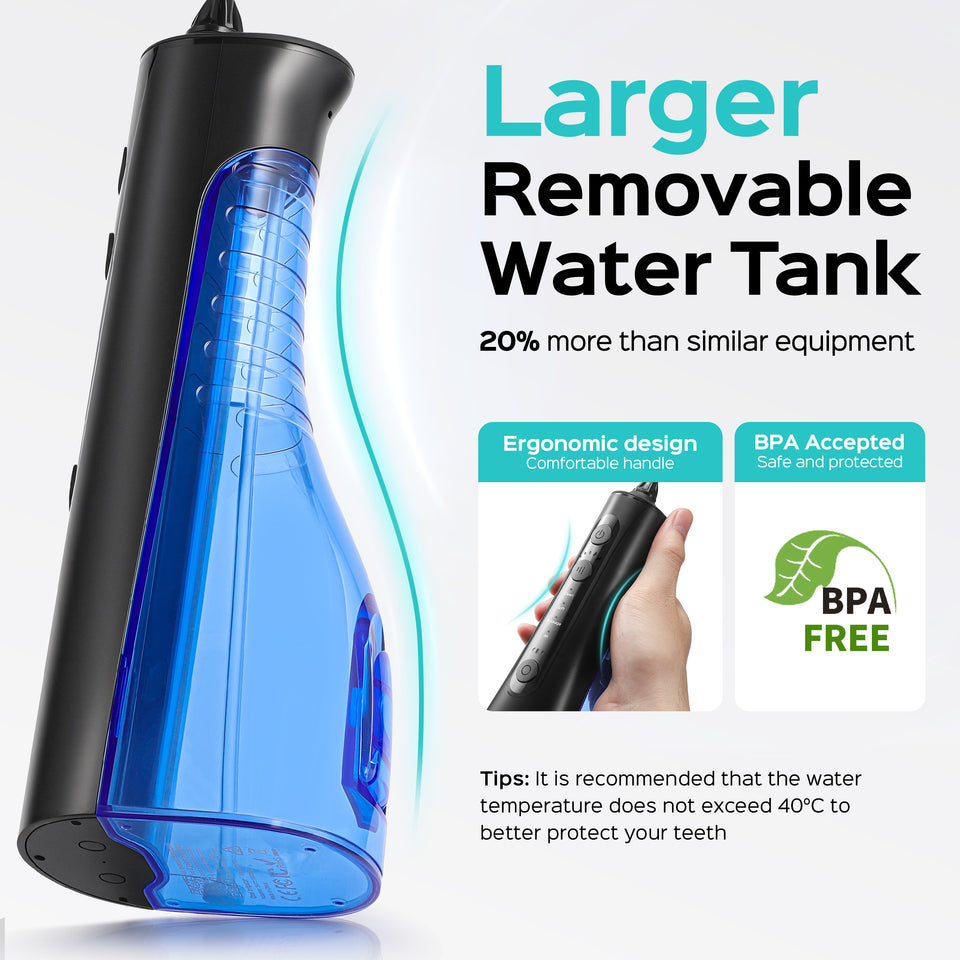
Hand Wash with Bottle Brush
Remove the water tank and wash weekly with warm water and mild dish soap. Use a flexible bottle brush or silicone scrubber to reach the bottom, especially in models like the E40 with rounded bases that trap mold.
For stubborn spots, wrap a non-abrasive sponge around a chopstick. Or use a bent-head brush to access corners that standard brushes cannot reach.
Remove Mold with Vinegar Soak
If you see black specks or smell mildew, fill the reservoir with 1 part white vinegar to 2 parts warm water. Or use 50% hydrogen peroxide plus 50% water. Let sit for 30 minutes, then scrub the interior, focusing on the valve and base. Rinse 2 to 3 times to eliminate odor.
User hack: Swirl the solution in the reservoir before running or soaking to loosen biofilm first.
Use Denture Tablets for Easy Cleaning
Drop one denture cleaning tablet into warm water inside the reservoir. Soak for 15 to 30 minutes, then lightly scrub and rinse. This method is especially effective for users who struggle with manual scrubbing.
Flush Internal Lines Every Month
Run Cleaning Solution Through System
Even with clean tips and tank, biofilm builds up inside the pump and tubing. Prevent clogs and odor with a monthly deep flush. Mix 1 part white vinegar with 2 parts water, or use 50% hydrogen peroxide plus 50% water. Fill the reservoir, reattach to base, turn on, and run until empty. Refill with clean water and flush again 1 to 2 times.
Why this prevents weak pressure: Mineral deposits and microbial slime restrict water flow. Regular internal flushing keeps pressure strong and prevents the sputtering many users report after months of use.
Wipe and Dry All Components
Use Microfiber Cloth Daily
After each use, wipe the handle, base, and reservoir exterior with a clean, dry microfiber cloth. This removes fingerprints, toothpaste splatter, and surface moisture.
Air Dry Completely Before Storage
Place all parts in a well-ventilated area, away from humidity. Never store in closed cabinets or near the shower. Ensure no water remains in nozzle openings, O-rings and seals are dry, and the charging port is moisture-free.
User trick: Some store their fully dried flosser in the fridge to slow mold growth, though this isn’t officially recommended by COSLUS.
Clean the Handle and Nozzle Base
Soak Connection Point
The area where the tip clicks into the handle collects gunk over time. Detach the handle if possible, or clean in place. Soak in vinegar-water or 50% peroxide for 5 minutes. Use a cotton swab to clean around the O-ring and connection ring. Rinse and dry thoroughly.
Check for mold: Discoloration or slimy texture means deep cleaning is overdue.
Maintain the Main Unit Safely
Wipe Base with Damp Cloth
Never submerge the main unit. It contains electronics. Instead, dampen a cloth with water only, with no soap, alcohol, or solvents. Wipe exterior surfaces only. Avoid the charging port and motor housing.
Keep Charging Port Dry
Moisture in the USB port triggers a safety lock, preventing charging. Always dry the port with a tissue or cotton swab before plugging in. Use a 5V DC charger with 1A to 2A output. Avoid high-voltage adapters.
Never use while charging. The device disables operation during charging.
Avoid These Liquids and Cleaners
Never Use Bleach or Alcohol
Despite some user suggestions, bleach and isopropyl alcohol are not safe for COSLUS flossers. They corrode internal seals and tubing, degrade plastic components, and leave harmful residues. No official COSLUS documentation approves bleach use.
Avoid Sugared Mouthwash
Using sugared mouthwash guarantees mold growth. If you want flavored water, mix sugar-free, alcohol-based mouthwash 1:1 with water. Rinse the tank thoroughly after use.
Skip Hot or Boiling Water
Water above 40°C can warp plastic and damage seals. Stick to lukewarm or room-temperature water.
Troubleshoot Common Cleaning Issues

Fix Mold in Reservoir
Symptoms include black spots, musty smell, and slimy texture. Causes are incomplete drying, sugared liquids, and infrequent cleaning. Solution: Soak in vinegar or peroxide for 30 or more minutes, use denture tablet to break down biofilm, scrub with flexible brush, and always empty and dry after use.
Unclog Nozzle or Restore Pressure
If water flow is weak, soak tip in vinegar for 15 minutes. Clear the opening with a toothpick or soft wire. Run clean water through system, then perform monthly internal flush.
Prevention: Clean tips weekly and flush monthly.
Stop Leaks at Tank or Nozzle
Leak causes to check: No click when inserting tip, damaged O-ring, or cracked reservoir. Press until you hear an audible snap when inserting the tip. Replace O-rings via COSLUS support. Request warranty replacement for cracked reservoirs.
Follow the Maintenance Schedule
Daily Routine
Empty reservoir, run dry for 10 to 15 seconds, rinse tip and tank, wipe exterior, and dry completely.
Weekly Tasks
Clean and disinfect all tips, hand wash reservoir, and inspect for mold, leaks, and clogs.
Monthly Deep Clean
Flush internal lines with vinegar or peroxide, soak reservoir if needed, and replace worn or discolored tips.
Replace tips every 3 to 6 months, sooner with heavy use.
Store Properly for Longevity
Keep in Dry, Cool Place
Store assembled flosser in a ventilated, dry location away from sunlight. Avoid humid bathrooms unless fully dried.
Use Tip Caps
Keep nozzles covered with included caps or storage case to prevent dust and contamination.
Long-Term Storage
Detach reservoir, dry all parts, store upright, and recharge battery every 3 months.
Get Support When Needed
Warranty Covers Key Issues
COSLUS offers a 12-month standard warranty and 24-month extended warranty with online registration. Coverage includes leaking tank, charging issues, and defective nozzles.
Contact Customer Service
Email support@coslus.com or call +1 855-594-3950, Monday through Friday, 9AM to 5PM EST. Response time is typically within 1 hour. Replacement parts available include tips, tanks, and chargers.
Free adapter replacement is available if wrong voltage damaged the unit.
Maximize Oral Health Benefits
Flosser Is Not a Toothbrush Replacement
Use your water flosser after brushing, not instead of it. A toothbrush removes plaque from surfaces. A water flosser cleans below the gumline, between teeth, and around braces.
Handle Gum Bleeding
Some bleeding is normal in the first week. If it persists, use gentle pressure setting, switch to soft tip, and consult your dentist. It could indicate gingivitis.
Note: COSLUS is not yet ADA-certified. Certification application is in progress as of 2024.
Frequently Asked Questions About Cleaning COSLUS Water Flosser
Can I use bleach to clean my COSLUS water flosser?
No. Bleach is corrosive and damages internal seals, tubing, and electronics. It may leave toxic residues. COSLUS does not support bleach use in any official documentation.
Why does my water flosser smell bad?
The smell likely comes from standing water in the tank, use of sugared mouthwash, inadequate drying, or mold in internal lines. Perform a deep clean with vinegar or peroxide and ensure you dry the device after every use.
How often should I replace my water flosser?
With proper maintenance, a COSLUS water flosser typically lasts 2 to 3 years. Replace if you experience persistent mold despite thorough cleaning, significantly decreased water pressure, cracks in the reservoir, or noticeable battery degradation.
Are all COSLUS tips interchangeable?
Yes, most COSLUS models use universal quick-connect tips. However, they are not compatible with other brands. Always verify compatibility with your specific model before purchasing replacements.
Can I put my COSLUS water flosser in the dishwasher?
Only the reservoir may be dishwasher-safe, depending on your model. If allowed, place on the top rack only and disable the heated dry cycle to prevent warping. Always check your user manual first.
What is the best way to prevent mold in my water flosser?
The best prevention is a consistent routine. Empty the reservoir after every use, run the device dry for 10 to 15 seconds, wipe all components, and store in a well-ventilated area. Perform weekly tip cleaning and monthly internal flushing.
Key Takeaways for Cleaning Your COSLUS Water Flosser
A clean COSLUS water flosser works better, lasts longer, and keeps your mouth healthier. Stick to this simple routine: empty, dry, clean, and flush. This prevents 90% of common user complaints.
Daily maintenance takes only 2 minutes. Empty the reservoir, run dry, rinse tip and tank, wipe exterior, and dry completely before storage. Weekly, clean and disinfect all tips, hand wash the reservoir, and inspect for mold or leaks. Monthly, flush internal lines with vinegar or peroxide solution and replace worn tips.
No special skills are needed, only consistency. Your gums and your device will thank you for the extra care.