If your usmile water flosser isn’t delivering that crisp, powerful stream it once did, or worse, starts smelling musty, it’s likely overdue for a proper cleaning. Even with daily use, mineral buildup, bacteria, and mold can silently accumulate in the reservoir, nozzle, and internal tubing. This guide walks you through daily, weekly, and monthly cleaning routines, model-specific tips for the usmile C10, and how to avoid common mistakes that damage your device.
Empty and Rinse After Every Use
Cleaning your usmile water flosser starts the moment you finish flossing. A few quick steps prevent bacteria from taking hold and keep internal components clear.
Remove All Water Immediately
Always empty the reservoir completely after each use. Stagnant water, even for a few hours, creates a breeding ground for bacteria and mold, especially in warm, humid bathrooms. For the usmile C10, simply detach the tank and pour out any remaining water. Never leave water sitting overnight.
Rinse the Reservoir Thoroughly
Refill the tank halfway with lukewarm water, swirl it around to rinse interior walls, then empty. Repeat this process two to three times. Use a soft cloth or clean finger to wipe the inside if accessible. Avoid hot water, which can warp plastic and degrade seals over time.
Clean the Nozzle Tip Daily
Detach the nozzle from the handle and rinse under running water to flush out debris. Use a cotton swab to gently clean around the tip opening and connection threads. For extra sanitation, wipe with a disinfecting wipe. Inspect for cracks or discoloration, and replace if damaged.
Wipe and Dry the Exterior
Use a damp cloth or disinfecting wipe to clean the handle and charging base. Avoid getting moisture into buttons or charging ports. Dry all parts with a lint-free towel before storage.
Air Dry Upright
Store the device upright with the reservoir off or loosely attached to allow air circulation. Never store in sealed cabinets or near the shower, where humidity encourages mold. Proper drying prevents odors and extends seal life.
Weekly Deep Clean with Vinegar
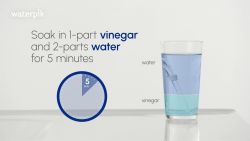
A weekly deep clean removes biofilm, hidden bacteria, and early mineral deposits that daily rinsing cannot reach. The vinegar soak method is safe, effective, and uses ingredients you already have.
Use Vinegar Solution Safely
Mix equal parts white vinegar and warm water. Fill the reservoir with the solution and let it soak for 15 to 20 minutes. Vinegar naturally disinfects and dissolves light scale without damaging plastic or rubber components.
Flush the System
After soaking, activate the flosser over the sink to run the vinegar solution through the internal tubing. Use pulse mode to ensure full circulation. This step clears contaminants from hard-to-reach areas.
Rinse Thoroughly
Flush the system with clean water three to four times to eliminate any vinegar taste or residue. Run plain water through the device until the output is neutral. Residual vinegar can irritate gums if not fully rinsed.
Soak and Scrub Nozzles
Remove all nozzles and soak in vinegar solution for 10 minutes. Use a soft-bristled toothbrush to scrub the tip, threads, and connection point. Rinse well under running water. Inspect for wear, and replace if cracked or discolored.
Deep-Clean the Reservoir
For a deeper clean, use a small bottle brush with soft bristles to gently scrub the inside of the tank. This removes biofilm that builds up in corners and seams. Rinse thoroughly and air dry completely.
Monthly Descaling for Hard Water
If you live in a hard water area, monthly descaling prevents calcium and magnesium buildup that clogs nozzles and reduces water pressure.
Choose the Right Descaling Method
Use undiluted vinegar for tough scale. Fill the reservoir with undiluted white vinegar and let it soak for 20 to 30 minutes. Run the solution through the device, then flush with clean water four to five times. This DIY method effectively dissolves mineral deposits.
Try a commercial descaler for heavy buildup. Use a manufacturer-recommended descaling solution and follow label instructions for dilution and dwell time. These are formulated specifically for oral care devices and are safe for seals and tubing.
Use baking soda for odor removal. Mix one teaspoon of baking soda in warm water, fill the reservoir, and let sit for 15 minutes. Run through the device, then rinse thoroughly. Baking soda neutralizes odors and removes light residue but will not tackle hard scale.
Replace Nozzles on Schedule

Nozzles wear out over time and can harbor bacteria even after cleaning. Regular replacement ensures optimal hygiene and performance.
Follow Replacement Guidelines
Standard tips should be replaced every three months and are most prone to wear and debris. Orthodontic tips last six months and are more durable but still degrade. Periodontal tips require replacement every four months due to their design, which retains more debris.
The usmile C10 includes five professional nozzles, allowing you to rotate and extend usability. Replace immediately if cracks or chips appear, if discoloration persists after cleaning, or if water flow becomes uneven or weak.
Inspect for Damage
Check nozzles monthly under good lighting. Look for cloudiness, warping, or residue that will not rinse out. Damaged nozzles reduce cleaning efficiency and can irritate gums.
Store Properly to Prevent Mold
Where and how you store your usmile water flosser impacts its cleanliness and longevity.
Keep It Dry and Ventilated
Always store the device in a dry, well-ventilated area. Avoid enclosed cabinets or spots near the shower. Moisture trapped in sealed spaces encourages mold and musty odors.
Use Upright Storage
Place the flosser upright with the reservoir detached or open. This allows air to circulate and prevents water pooling in the base. Consider a draining stand if available.
Avoid Humid Zones
Steam from showers raises bathroom humidity, creating ideal conditions for mold. If possible, store your flosser in a closet or drawer, but only after it is fully dry.
Check Seals and Battery Monthly
Routine inspections prevent leaks, motor strain, and battery issues, especially for cordless models like the usmile C10.
Inspect Rubber Seals
Check O-rings and gaskets monthly for cracks, warping, or hardening. Damaged seals cause leaks and reduce pump efficiency. Replace them promptly. If seals feel stiff, apply a food-grade silicone lubricant sparingly. Never use petroleum-based oils.
Maintain Battery Health
The usmile C10 offers up to 45 days of battery life. To maximize longevity, charge before full depletion, as deep discharges harm lithium-ion batteries. Unplug once fully charged to avoid overcharging. Store in a cool, dry place. Avoid leaving the device plugged in for days after it is charged.
Avoid Common Cleaning Mistakes
Even well-intentioned habits can damage your usmile water flosser. Steer clear of these frequent errors.
Do not use hot water. Hot or boiling water can warp plastic parts and degrade rubber seals. Always use lukewarm or room-temperature water for rinsing and cleaning.
Skip harsh chemicals. Bleach, ammonia, and strong detergents can corrode materials and leave toxic residues. Stick to white vinegar, mild dish soap, or manufacturer-approved cleaners.
Never dishwasher clean. Even removable parts like the reservoir or nozzle should not go in the dishwasher. High heat and aggressive detergents can damage seals and electronics. Hand wash only.
Never store while wet. Storing a damp flosser invites mold growth and odors. Always ensure all parts are completely dry before reassembling or storing.
Do not ignore strange smells. A musty or sour odor means bacteria or mold is already growing. Perform an immediate vinegar soak and flush. If the smell persists, replace the reservoir or nozzle.
Do not skip weekly cleans. Daily rinsing removes surface debris but not biofilm. Weekly deep cleaning is essential to maintain hygiene and prevent long-term damage.
Troubleshoot Cleaning-Related Issues
Solve common problems fast with targeted fixes.
Low Water Pressure
Mineral buildup in the nozzle, clogged internal tubing, or a dirty reservoir can cause low water pressure. Clean or replace the nozzle. Run a vinegar descaling cycle. Flush the system with clean water. Use filtered water going forward.
Musty Smell
Bacterial or mold growth from stagnant water causes unpleasant odors. Soak the reservoir in vinegar solution. Run vinegar through the device. Empty water after each use. Store upright and dry.
Visible Mold
Infrequent cleaning or humid storage leads to visible mold. Discard nozzles or reservoir caps with visible mold. Clean all other parts thoroughly. Improve airflow in the storage area.
Leaking
A worn or damaged O-ring, mineral deposits on the sealing surface, or improper reassembly causes leaking. Inspect and replace damaged seals. Clean sealing areas before reattaching. Ensure proper alignment during reassembly.
Use the Right Cleaning Supplies
Equip yourself with simple, effective tools.
White vinegar serves as a natural disinfectant and descaler. Lukewarm water is safe for all components. A soft-bristled toothbrush scrubs nozzles and crevices. A small bottle brush deep cleans the reservoir interior. Cotton swabs clean nozzle tips and threads. Disinfecting wipes provide quick exterior sanitization. Mild dish soap works for deep cleaning but must be rinsed thoroughly. Food-grade silicone lubricant maintains rubber seal flexibility.
Follow a Simple Cleaning Schedule
Stay on track with this easy maintenance plan.
After each use, empty the tank, rinse the reservoir, clean the nozzle, wipe the exterior, and air dry. This takes two to three minutes. Weekly, perform a vinegar soak, flush the system, scrub nozzles, and deep-clean the reservoir. This takes 15 to 20 minutes. Monthly, descale, inspect seals, check the battery, and perform a full system flush. This takes 30 minutes.
Pair cleaning with your nightly brushing routine to build consistency.
Maximize usmile C10 Longevity
The usmile C10 Portable Water Flosser is built for durability, but only with proper care.
Leverage Built-In Features
The detachable tank allows easy cleaning and drying. The IPX7 waterproof design enables safe rinsing. High-quality materials resist stains and cracks. The five included nozzles allow rotation and extended life.
With consistent maintenance, your usmile C10 can last three to five years, twice as long as poorly cared-for units.
Pro Tip
Sync cleaning with brushing. Make flosser maintenance automatic by cleaning the device right after your evening brushing routine. This habit ensures daily rinsing and weekly deep cleans become second nature.
Frequently Asked Questions About Cleaning Your usmile Water Flosser
How often should I clean my usmile water flosser?
Clean your water flosser after every use with a quick rinse and dry. Perform a weekly deep clean with vinegar and a monthly descaling if you have hard water.
Can I use hot water to clean my usmile water flosser?
No. Hot water can warp plastic components and degrade rubber seals. Always use lukewarm or room-temperature water for cleaning.
What is the best way to remove hard water deposits?
Use undiluted white vinegar. Fill the reservoir, let it soak for 20 to 30 minutes, run through the device, then flush with clean water four to five times.
How do I prevent mold in my water flosser?
Always empty and rinse the reservoir after each use. Store the device upright with the reservoir detached or loosely attached. Keep it in a dry, well-ventilated area away from shower steam.
How often should I replace the nozzles?
Replace standard tips every three months, orthodontic tips every six months, and periodontal tips every four months. Inspect monthly for cracks, cloudiness, or discoloration.
Why does my water flosser smell musty?
A musty odor indicates bacterial or mold growth from stagnant water. Perform an immediate vinegar soak and flush. Ensure you empty the reservoir after each use and store the device completely dry.
Key Takeaways for Maintaining Your usmile Water Flosser
Regular cleaning is not just about hygiene. It is about performance, safety, and value. A few minutes a day protects your investment and keeps your usmile water flosser running like new.
The essential routine involves emptying the tank after each use, rinsing thoroughly with lukewarm water, and storing upright to air dry completely. Weekly deep cleaning with a vinegar solution removes biofilm and prevents buildup. Monthly descaling tackles mineral deposits, especially important in hard water areas.
Whether you use the C10 or another model, stick to the basics: empty, rinse, deep clean, and dry. Replace nozzles on schedule, check seals monthly, and avoid common mistakes like using hot water or harsh chemicals. With consistent maintenance, you will enjoy strong water pressure, fresh operation, and better oral health for years to come.