You forgot to charge your water flosser last night, and now you’re standing in front of the bathroom mirror wondering how long until it’s ready. You’re not alone. Charging time is one of the most common concerns for cordless water flosser users. The answer depends on your brand, model, and battery technology, but most units take between 4 and 24 hours to fully charge.
This guide breaks down exactly how long different models take to charge, what affects charging speed, and how to get the most out of your device’s battery. Whether you own an Oral-B Aquaare, a Waterpik WP-580, or are shopping for a new model, you’ll learn everything you need to keep your flosser powered and ready.
Charging Times by Brand and Model
Charging times vary significantly between brands and model tiers. Understanding these differences helps you choose the right device for your lifestyle.
Oral-B Water Flossers
Oral-B offers a range of water flossers from budget-friendly basics to premium smart models. Their charging times reflect this tiered design.
Entry-Level Models
The Aquaare 4 and Aquaare 6 represent Oral-B’s basic offerings. These models use older charging systems that require longer power sessions.
These units need 16 to 24 hours for their initial charge and 12 to 16 hours for regular recharging. They offer no quick-charge feature, so planning ahead is essential. A full overnight charge is the standard approach with these models.
Mid-Range Proexpert Series
The Proexpert series delivers a significant upgrade in charging efficiency. These models balance performance with practical features.
Regular charging takes 8 to 12 hours, but the real benefit is the quick-charge capability. A 30-minute charge provides 2 to 3 full flossing sessions, making these ideal for daily use and travel. Just half an hour on the charger restores enough power for immediate use.
Premium Proexpert Advanced Models
The premium Oral-B models represent the fastest-charging options in their lineup. These units use modern charging technology for convenience.
These flossers charge in 6 to 8 hours for regular use and support a 15-minute quick charge that delivers one full flossing session. The 2024 models feature USB-C charging, replacing proprietary docks with universal compatibility. The latest Aquaare series also offers 30% longer battery life compared to previous generations.
Waterpik Water Flossers
Waterpik dominates the cordless flosser market with reliable performance and increasingly fast charging options on their premium models.
Standard Models
The WP-450W and similar basic models offer reliable performance without fast-charging features.
These units require 16 to 24 hours for initial charging and 8 to 12 hours for regular recharging. Like entry-level Oral-B units, they need patience. No quick-charge option means forgetting to charge could leave you without power the next morning.
Premium WP-580 and Newer Models
The WP-580 represents Waterpik’s fast-charging flagship. This model is a game-changer for users who need flexibility.
This unit charges in just 4 to 6 hours for a full charge and supports ultra-fast top-ups. A 15 to 30-minute charge provides enough power for multiple days of use, perfect for travel or last-minute needs. The magnetic USB cable provides a secure, splash-resistant connection.
Pro Tip: On the WP-580, a flashing blue light means it’s charging. When the light turns off, the flosser is fully charged. There’s no solid “done” indicator, so don’t panic if the light disappears.
Initial vs. Regular Charging: What’s the Difference?
Many users don’t realize that the first charge of a new water flosser differs significantly from regular recharging.
First-Time Charge Requirements
All brands recommend a longer initial charge when you first get your device. This process calibrates the battery, maximizes capacity, and extends overall lifespan.
Even if your model normally charges in 4 to 6 hours, always perform a full 16 to 24-hour initial charge. This ensures the lithium-ion battery reaches optimal performance. Skip this step, and you may never get the full capacity the device can deliver.
Regular Recharging Patterns
After the initial charge, regular charging times vary by model tier. Most devices fall between 4 and 16 hours depending on battery size and charging technology.
Lithium-ion batteries have no memory effect, so you can recharge at any time without damaging the battery. However, charging when the battery drops to 20 to 30% generally produces the best long-term results.
Quick Top-Up Charging
Premium models offer quick-charge features for emergency situations. These deliver enough power for 1 to 3 flossing sessions in just 15 to 60 minutes.
This feature is available on mid-range and premium models from both Oral-B and Waterpik. It’s safe and won’t harm the battery thanks to built-in charging regulators that control current flow.
Charging Indicators: What the Lights Mean
Understanding your flosser’s indicator lights prevents undercharging or overcharging. Each brand uses different signals.
Oral-B Indicator Systems
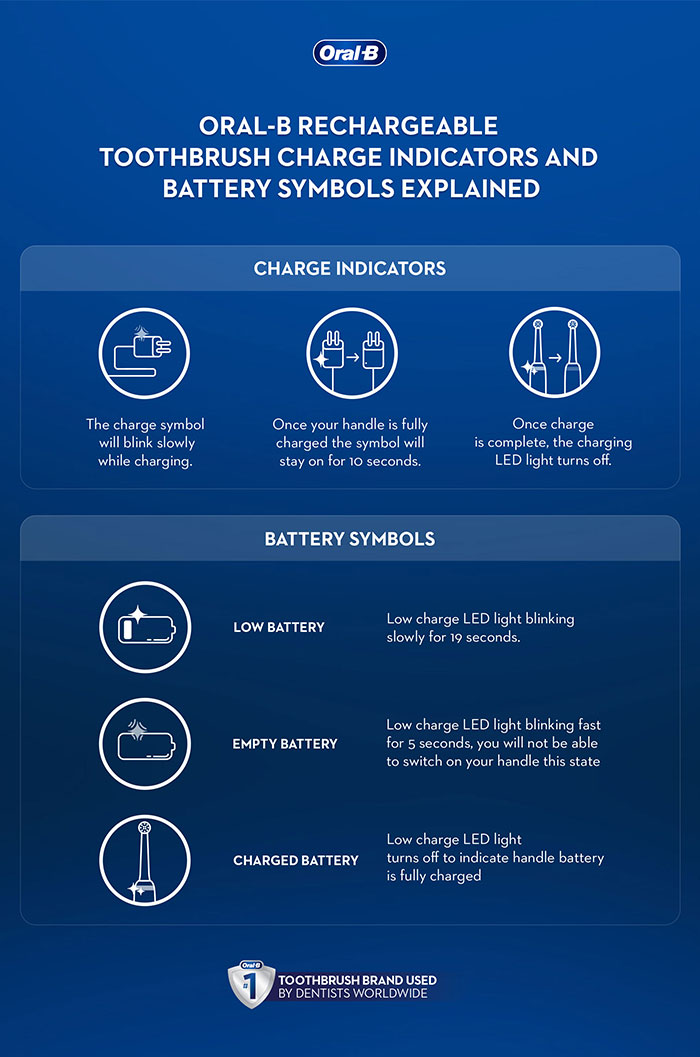
Oral-B uses color-coded LEDs to communicate charging status. These indicators make it easy to know when your device is ready.
Green means fully charged. Amber indicates charging in progress. Red signals low battery below 20%. Some smart models connect to the Oral-B app for real-time battery tracking and usage alerts.
Waterpik Indicator Systems
Waterpik uses different indicators depending on the model. The system varies more than Oral-B’s consistent approach.
On the WP-580, flashing blue means charging is active. The light turns off completely when fully charged. Other models may use solid blue or multi-color LEDs. Most Waterpik models don’t offer app integration for battery monitoring.
Warning: If the light flashes but the battery doesn’t gain charge, clean the magnetic contacts. Moisture or toothpaste residue can block the connection and prevent charging.
How Long Does the Battery Last Per Charge?
Charging time is only half the story. Battery life determines how often you need to plug in your device.
Oral-B Battery Life by Usage
Usage patterns significantly impact how long your Oral-B battery lasts between charges.
Light users who floss for 1 to 2 minutes daily get 14 to 21 days per charge. Regular users at 2 to 3 minutes daily get 7 to 14 days. Heavy users exceeding 4 minutes daily typically get 5 to 7 days.
Using low-pressure mode extends battery life by 20 to 30% compared to high-pressure settings. This simple adjustment means fewer charging sessions.
Waterpik Battery Life by Model
Waterpik batteries generally last 7 to 14 days with average use. This assumes twice-daily sessions of 2 minutes each.
High-pressure pulsations and extended sessions reduce runtime. Premium models with optimized motors and larger batteries tend toward the upper end of this range.
Best Practices for Faster, Safer Charging
Maximize your water flosser’s performance and lifespan with these expert-backed tips.
Use the Right Power Source
Using the correct charger makes a significant difference in charging speed and safety.
Use a 5V/1A USB wall adapter for optimal results. Avoid low-output USB ports like those on laptops or some power banks. Underpowered sources slow charging or fail to initiate it entirely.
Charge at Room Temperature
Extreme temperatures reduce charging efficiency and can damage battery cells.
The ideal charging range is 15°C to 25°C (59°F to 77°F). Avoid charging in direct sunlight or in unheated bathrooms during cold months.
Clean Charging Contacts Monthly
Dirty contacts are a leading cause of slow or failed charging.
Use a slightly damp cloth to wipe contacts. Remove toothpaste residue, water spots, or mineral buildup. This takes seconds but prevents major frustration.
Avoid Overcharging
Even devices with overcharge protection benefit from being unplugged once full.
Prolonged charging accelerates battery wear over time. Set a reminder if you tend to leave devices plugged in overnight.
Store at Optimal Levels for Long Breaks
If you won’t use your flosser for weeks, prepare it properly for storage.
Charge to 40 to 60% before storing. This prevents deep discharge or overvoltage stress. Fully charged or fully drained batteries degrade faster during storage.
Quick-Charge Features: Lifesaver or Gimmick?
On premium models, quick charging is a legitimate convenience, not just marketing hype.
Oral-B Quick-Charge Performance
The Proexpert Advanced delivers 15 minutes of charging for one full flossing session. This is enough for immediate use after forgetting to charge overnight.
Waterpik Quick-Charge Performance
The WP-580 provides 15 to 30 minutes of charging for multiple days of power. This is ideal for last-minute travel needs or business trips.
These features use smart circuitry to safely deliver high current without overheating or damaging the battery. They’re genuinely useful for busy lifestyles.
Note: Quick charging doesn’t replace full charging. Use it for emergencies, but complete a full charge cycle weekly to maintain battery health.
Troubleshooting Common Charging Problems
Even with best practices, issues can arise. Here’s how to fix them.
Flashing Light But No Charge
This usually indicates dirty or misaligned magnetic contacts.
Clean both the flosser and charger with a dry or slightly damp cloth. Ensure the connection is flat, dry, and properly aligned. Try a different USB power source if cleaning doesn’t help.
Light Stays Off When Plugged In
This suggests a faulty cable, dead outlet, or broken port.
Test with a different USB adapter and cable. Check if the outlet powers other devices. If nothing works, the charging port may be damaged.
Slow Charging
Underpowered USB sources are the most common cause.
Use a dedicated 5V/1A wall adapter. Avoid laptop USB ports or low-output power banks. This simple change often solves the problem.
Battery Drains Fast After Full Charge
High-pressure mode, aging batteries, or excessive use cause this issue.
Switch to low pressure and reset your usage habits. If degradation persists after 2 to 3 years of use, the battery may need replacement.
Battery Lifespan: When to Replace Your Flosser
Understanding battery lifespan helps you plan for replacement.
Expected Lifespan
Most water flosser batteries last 2 to 3 years or 300 to 500 charge cycles. After this period, you may notice shorter battery life, longer charging times, or failure to hold charge overnight.
Non-Removable Batteries
Most cordless flossers have sealed, non-replaceable batteries. When the battery fails, you typically need to replace the entire unit.
Some manufacturers offer repair services, but costs often approach that of buying a new model.
Charging Tech Evolution: What’s Next?
Water flosser charging is getting faster, smarter, and more convenient.
USB-C Is Taking Over
Premium models increasingly use USB-C instead of proprietary docks. This provides faster charging and universal compatibility. The Oral-B Proexpert Advanced and newer Waterpik models already feature this technology.
Magnetic Charging
Magnetic charging cables like those on the WP-580 provide secure, splash-resistant connections. However, they must sit flat and dry. Even minor moisture or misalignment breaks the circuit.
Future Trends
Solar charging is under exploration for travel-focused models. Higher-capacity batteries will deliver longer runtimes. Smart integration will bring real-time battery analytics and predictive alerts via smartphone apps.
The future is fast, efficient, and user-friendly.
Charging Times at a Glance
This summary table captures all key charging specifications in one place.
| Model Type | Initial Charge | Regular Charge | Quick Charge | Battery Life |
|---|---|---|---|---|
| Oral-B Entry-Level | 16–24 hours | 12–16 hours | Not available | 7–14 days |
| Oral-B Mid-Range | 12–16 hours | 8–12 hours | 30 min → 2–3 uses | 7–14 days |
| Oral-B Premium | 8–12 hours | 6–8 hours | 15 min → 1 use | 7–21 days |
| Waterpik Standard | 16–24 hours | 8–12 hours | Not available | 7–14 days |
| Waterpik Premium (WP-580) | 16–24 hours | ~4 hours | 15–30 min → multi-day | 7–14 days |
Frequently Asked Questions About Water Flosser Charging Times
How long does it take to charge an Oral-B water flosser for the first time?
Oral-B recommends 16 to 24 hours for the initial charge on all models. This first charge calibrates the battery for optimal performance and maximum capacity. Skipping this step can reduce the battery’s long-term effectiveness.
Can I use my water flosser while it’s charging?
Most cordless water flossers are designed for use while charging is not in progress. The water reservoir and motor design make simultaneous use impractical. Always charge your flosser fully before use for best performance.
Why does my Waterpik WP-580 light turn off when charging?
The WP-580 uses a flashing blue light to indicate active charging. When the light turns off completely, the flosser is fully charged. There’s no green or solid light indicator. The absence of light confirms full charge, not a malfunction.
Does using high-pressure settings drain the battery faster?
Yes, high-pressure pulsations significantly reduce battery runtime. Using low-pressure mode extends battery life by 20 to 30% compared to high-pressure settings. This is one of the easiest ways to reduce charging frequency.
What should I do if my water flosser won’t hold a charge?
If your device doesn’t hold charge after 2 to 3 years of use, the battery is likely degrading. Clean the charging contacts first to rule out connection issues. If problems persist, the battery has reached its lifespan and the unit needs replacement.
Final Tips for Optimal Charging
With the right habits, your water flosser stays powered, efficient, and ready whenever you need it.
Always perform a 16 to 24-hour first charge even if the manual suggests otherwise. Use a dedicated wall adapter rather than a low-power USB port. Clean the contacts monthly to prevent charging failures. Take advantage of quick-charge features for emergencies, but aim for full charges weekly. Replace the unit when battery life drops significantly after 2 to 3 years.
Whether you’re using a budget model or a high-speed USB-C flosser, understanding charging times and best practices ensures you never skip a flossing session again. Your oral health routine stays consistent when your device is always ready to go.