If you have ever enjoyed your morning coffee, sipped red wine at dinner, or smoked, you have likely watched your teeth gradually lose their natural brightness. Stains build up over time, especially between teeth and along the gumline where brushing often fails to reach. You might be wondering, does a water flosser remove stains? The answer is not a simple yes or no. While standard water flossers do not bleach teeth, certain models with whitening infuser technology are clinically proven to remove up to 25% more extrinsic surface stains than brushing alone.
This article breaks down exactly how water flossers work on stains, which models deliver real results, and how they compare to other oral care methods. You will learn what these devices can and cannot do, based on clinical data and ADA-accepted findings.
How Water Flossers Tackle Stains
Water flossers do not whiten teeth like professional bleaching treatments, but they play a key role in maintaining a brighter smile by targeting the root causes of surface discoloration. Their effectiveness comes from two main actions: physical plaque removal and, in advanced models, chemical stain reduction.
Pulsating Water Stream Dislodges Stain-Binding Debris
The high-pressure pulsating water jet, which can reach up to 1,400 pulses per minute, disrupts plaque biofilm. This sticky layer traps coffee, tea, and tobacco pigments on teeth. By removing this film, water flossers prevent new stains from adhering and lift existing surface discoloration over time.
This mechanical action works especially well in tight spaces between teeth, below the gumline, and around braces, crowns, and implants. Even standard models improve tooth appearance by eliminating the dull filmy look caused by plaque buildup.
Whitening Infusers Deliver Active Ingredients
Specialized devices like the Waterpik Whitening Water Flosser go a step further. They use a whitening infuser that dissolves a gentle whitening tablet into the water stream. This delivers a low-concentration stain-lifting agent directly to stained areas without abrasives or bleach.
The result is a gradual safe brightening effect that enhances natural tooth color, ideal for users seeking a non-invasive option for stain removal.
Clinical Evidence: 25% More Stain Removal
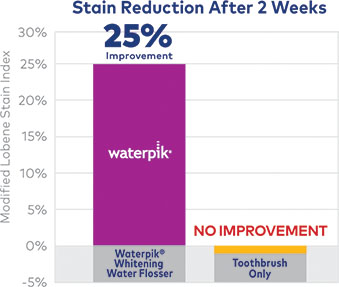
The most compelling evidence comes from a 2014 clinical study conducted at Salus Research in Fort Wayne, Indiana. Researchers used the MacPherson modification of the Lobene Stain Index, a standard method for measuring extrinsic stain intensity and coverage.
Study Details
Participants used a Waterpik Whitening Water Flosser with liquid dentifrice for 14 days of daily use. The target area was the mandibular incisors, which are the front lower teeth. The control group brushed only.
Results After Two Weeks
The group using the Waterpik Whitening Water Flosser with liquid dentifrice showed a 25% reduction in extrinsic stain. The brushing-alone group showed no measurable improvement in stain scores.
The study conclusion stated that daily use of the Waterpik water flosser with a liquid dentifrice removes more extrinsic stain than tooth brushing alone. This peer-reviewed finding confirms that water flossers with whitening additives significantly outperform brushing in reducing visible surface stains.
Waterpik Whitening Water Flosser Features That Work

The Waterpik Whitening Water Flosser is the only model with American Dental Association acceptance for both safety and stain removal efficacy. It is designed to deliver triple benefits: whitening, gum health, and fresh breath, all in one minute per day.
Whitening Infuser Technology
This patented system mixes water with a dissolvable whitening tablet, releasing a stain-lifting agent during flossing. The tablet dissolves slowly to ensure consistent delivery across all teeth.
Key features include 30 included fresh mint tablets, which provide a one-month supply. There is no bleach and no abrasives, making it safe for daily use. The mint flavor enhances user experience and breath freshness.
Performance Specifications
The device delivers 1,400 pulses per minute with 10 adjustable pressure settings ranging from 10 to 100 PSI. The reservoir holds 651 ml or 22 oz, providing approximately 90 seconds of use. Four specialized tips are included: two Precision Tips for general use, one Orthodontic Tip for braces, and one Plaque Seeker Tip for implants and crowns.
Dr. Chris Strandburg, DDS, describes this as a threefer because it whitens teeth, freshens breath, and makes gums healthy.
Where Stains Are Removed Most Effectively

Water flossers excel in areas prone to plaque and pigment accumulation, zones where traditional brushing and flossing often fall short.
Primary Target Zones
Between teeth is the first key zone. Food pigments and plaque collect in tight gaps. The water stream penetrates these spaces, flushing out debris and reducing yellowish film.
Along the gumline is another critical area. This area traps tannins from coffee and wine. Regular water flossing prevents the dark line that forms when plaque hardens into tartar.
Below the gums is also important. Even below the visible gumline, the pulsating jet reduces bacterial load and stain precursors, supporting both aesthetics and periodontal health.
Around dental work is essential. Crowns, bridges, and veneers can develop stains at the edges. The Plaque Seeker Tip removes up to three times more plaque than string floss, keeping restorations looking clean and seamless.
For orthodontic patients, braces create stain traps. The Orthodontic Tip cleans around brackets and wires, preventing the halo effect when braces are removed.
Water Flosser vs Other Oral Care Methods
Not all cleaning tools deliver the same stain-fighting power. Here is how water flossers compare to other options.
Manual brushing provides minimal stain reduction and misses about 40% of tooth surfaces. String floss removes debris but has low stain removal capability. An electric toothbrush may polish surface stains moderately. A standard water flosser brightens indirectly by cleaning between teeth. A whitening water flosser delivers 25% more stain removal than brushing alone. Professional whitening treats both intrinsic and extrinsic stains for the highest efficacy.
Important note: Water flossers do not bleach teeth or change internal tooth color. They improve perceived whiteness by removing surface-level grime and enhancing overall cleanliness.
Boosts and Maintains Whitening Results
Even if you have whitened your teeth professionally, results can fade quickly without maintenance. A water flosser helps extend the life of your bright smile.
Before Whitening: Better Preparation
Using a water flosser before whitening treatments clears plaque and biofilm so whitening gels make direct contact with enamel. This ensures even whitening without patchy spots caused by debris barriers.
After Whitening: Preventing Re-Staining
After whitening treatments, water flossers remove food particles and pigments immediately after meals. This reduces recurrence of extrinsic stains by keeping teeth clean between brushings.
Users report longer-lasting whitening effects when combining professional treatments with daily water flossing.
Limitations: What Water Flossers Cannot Do
Despite their benefits, water flossers have clear boundaries that users should understand.
No Bleaching Action
Water flossers do not contain peroxide or other bleaching agents. They cannot lighten intrinsic stains from tetracycline, trauma, or fluorosis. They are not a replacement for professional whitening when deep discoloration exists.
Standard Models Offer Indirect Benefits Only
Basic water flossers improve tooth appearance by removing plaque. But only whitening models actively reduce stains through infused agents.
For deep discoloration or internal staining, consult a dentist for professional treatment options.
Best Used as Part of a Complete Routine
A whitening water flosser works best when combined with other oral care habits.
Recommended Daily Regimen
Brush twice daily with fluoride or whitening toothpaste. Floss once with a whitening water flosser. Rinse with antibacterial mouthwash if desired. Limit stain-causing foods and drinks like coffee, tea, and red wine.
Maintenance Tips
Replace tips every three to six months. Clean the reservoir weekly to prevent mold. Use filtered water if tap water is hard or contains high mineral content.
Consistency is key because daily use delivers cumulative benefits in stain prevention and gum health improvement.
Why Dentists Recommend Water Flossers
Waterpik is the number one brand recommended by dental professionals, and the reasons are well-founded.
Professional Endorsements
The brand is ADA-Accepted for safety and effectiveness. It is backed by peer-reviewed clinical studies. Many dentists prescribe it for patients with periodontal disease, orthodontic appliances, dental implants, and stain-prone enamel.
The Waterpik 14 Day Challenge app helps users build the habit with daily reminders and progress tracking.
Final Verdict on Water Flosser Stain Removal
So, does a water flosser remove stains? Yes, but with conditions.
Yes, if it is a whitening model with infuser technology. No, if it is a standard water flosser without whitening additives.
The Waterpik Whitening Water Flosser stands out as the only device clinically proven to remove 25% more extrinsic stain than brushing alone. It is ADA-accepted, dentist-recommended, and delivers visible results in as little as four weeks without abrasives or bleach.
It will not replace professional whitening for deep stains, but it is an excellent tool for gradual brightening, preventing new stains, and maintaining a clean healthy smile. For anyone seeking a gentle effective way to enhance their smile appearance while improving gum health, a whitening water flosser offers a smart science-backed solution in under two minutes per day.
Frequently Asked Questions About Water Flossers and Stains
Can a water flosser replace professional teeth whitening?
No, water flossers cannot replace professional whitening. They remove extrinsic surface stains but do not bleach internal tooth color. Professional treatments use peroxide-based agents that lighten both surface and deep stains.
How long does it take to see stain removal results?
Most users see visible improvement within four weeks of daily use. The 2014 clinical study showed measurable results after 14 days of consistent use with a whitening water flosser.
Do all water flossers remove stains?
No, only specialized whitening water flossers with infuser technology actively remove stains. Standard water flossers improve tooth appearance indirectly by removing plaque, but they do not deliver active whitening agents.
Is water flossing safe for sensitive teeth?
Yes, most whitening water flossers have adjustable pressure settings. Start at the lowest pressure and gradually increase as your gums adjust. The gentle action is actually beneficial for sensitive gums compared to string flossing.
Can I use my water flosser with regular water only?
Yes, you can use regular water, but you will not get stain removal benefits without the whitening tablets. The whitening infuser tablets dissolve during use to deliver active ingredients that lift stains.
How often should I replace the water flosser tips?
Replace tips every three to six months for optimal performance. Worn tips lose their cleaning effectiveness and may not deliver the water pressure needed for thorough plaque and stain removal.