A cracked tooth isn’t just a minor dental annoyance—it’s a ticking time bomb for long-term oral health. Unlike bones or skin, teeth cannot regenerate or heal themselves. The outer enamel is a non-living tissue without blood flow, meaning once a crack forms, it won’t seal or repair over time. In fact, without professional intervention, even a small crack can deepen, reach the sensitive inner pulp, and lead to infection, severe pain, or complete tooth loss.
You might have noticed sharp pain when biting into food, sudden sensitivity to cold drinks, or a rough edge on your tooth. These are not signs to ignore. While clove oil or dental wax may temporarily dull the discomfort, they do nothing to fix the structural damage. The only true solution is prompt diagnosis and treatment by a dentist. This guide walks you through how to repair a cracked tooth—from recognizing early warning signs and managing symptoms at home, to understanding professional treatments like crowns, root canals, and implants based on the latest clinical evidence.
Identify the Type of Crack
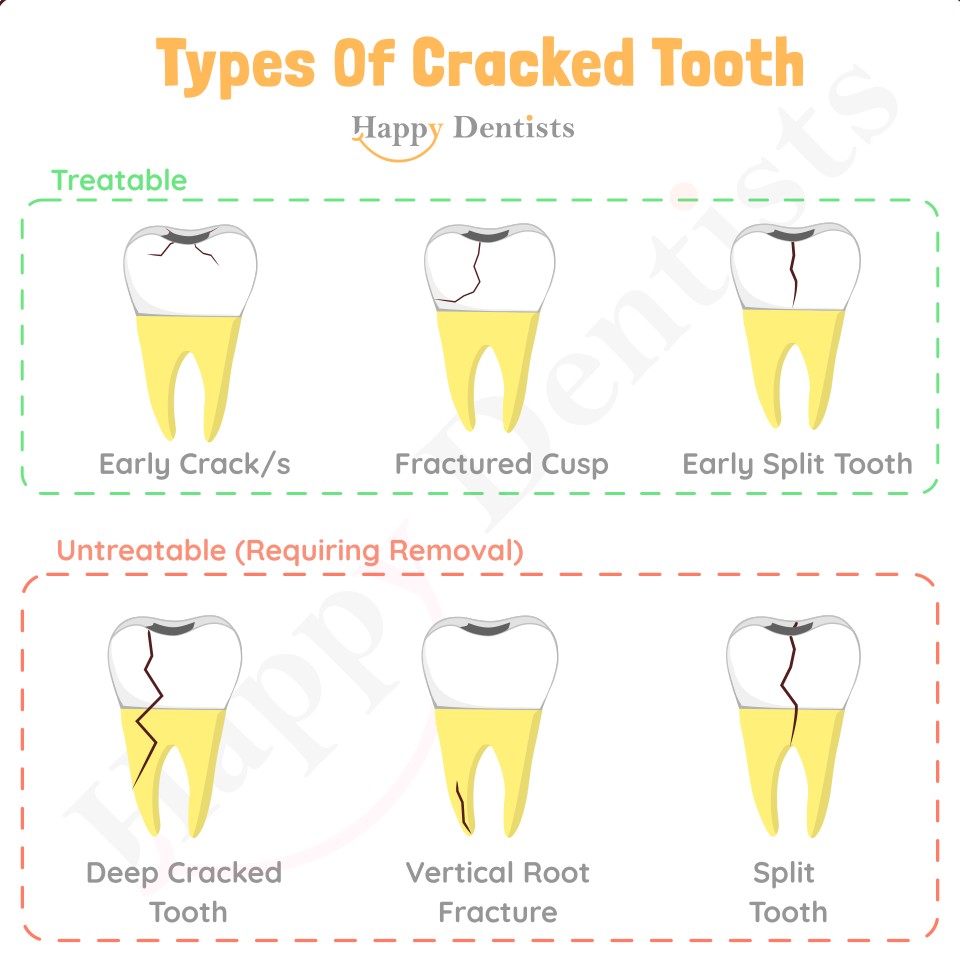
The treatment and survival of your tooth depend heavily on the type and depth of the crack. Not all fractures are equal, and mistaking a serious crack for a minor one can lead to irreversible damage.
Craze Lines vs. Serious Cracks
Craze lines are tiny, superficial cracks limited to the enamel layer. They’re common in adults and usually harmless—no treatment is needed unless for cosmetic reasons. But if you feel pain when chewing or prolonged sensitivity to temperature, the issue goes beyond a craze line.
A true cracked tooth starts at the chewing surface and extends downward, sometimes reaching the root. These cracks are often invisible on standard X-rays, making them hard to diagnose. A key indicator? Sharp pain when releasing biting pressure—this “rebound pain” occurs because the crack flexes open and closed, irritating the nerve inside.
Fractured Cusp or Split Tooth?
A fractured cusp happens when a portion of the chewing surface breaks off, typically around an old or large filling. The good news: it usually doesn’t extend into the pulp, so root canal treatment isn’t necessary. A dental crown can effectively restore strength and function.
However, if the crack divides the tooth into two or more movable segments, it’s classified as a split tooth. At this stage, the tooth cannot be saved as a single unit. Extraction is almost always required, though in rare cases, part of the root may be preserved.
Vertical Root Fracture: The Hidden Danger
Some cracks begin at the root and travel upward—often going undetected for months. These vertical root fractures mimic gum disease or abscess symptoms, such as localized swelling, deep gum pockets, or bone loss. By the time they’re diagnosed, significant damage has usually occurred.
Pro Tip: If your tooth is tender to touch or shows a single deep periodontal pocket, ask your dentist about a CBCT (cone beam CT) scan. This 3D imaging tool is far more effective than traditional X-rays at detecting hidden root fractures.
Recognize the Warning Signs
Early detection dramatically increases your chances of saving the tooth. Some cracks cause intermittent pain that comes and goes, leading people to delay care—often with costly consequences.
Pain When Biting Down
The most telltale sign of a cracked tooth is sharp, sudden pain when chewing—especially when you release pressure. This happens because the crack shifts under force, irritating the pulp. Try this simple test at home: bite down on a cotton roll or a Tooth Sleuth (a dental tool available in some offices). If pain flares when you stop biting, a crack is likely present.
Lingering Sensitivity to Temperature
If hot or cold foods trigger sensitivity that lasts more than a few seconds, the crack may have reached the dentin or pulp. While desensitizing toothpaste may help reduce discomfort, it won’t stop the crack from worsening. This is a red flag that professional evaluation is needed.
Swelling or Gum Tenderness
A crack can act as a gateway for bacteria, leading to infection. Watch for gum swelling, a pimple-like bump (dental abscess), or localized tenderness near the tooth. These signs suggest the pulp is infected—urgent dental care is essential.
Warning: Facial swelling, fever, or difficulty swallowing? Seek emergency dental care immediately. These could indicate a spreading infection that poses serious health risks.
Immediate At-Home Care
While waiting for your dental appointment, you can protect the tooth and manage discomfort. These steps won’t repair the crack but can prevent further damage.
Cover Sharp Edges with Dental Wax
If the crack leaves a jagged edge, use dental wax (available at pharmacies) to cover it. This prevents cuts to your tongue or cheek and reduces food trapping.
How to apply: Dry the tooth, pinch off a small piece of wax, and press it over the rough area. Reapply after eating or brushing.
Rinse with Warm Salt Water
A saltwater rinse helps cleanse the area, reduce inflammation, and prevent infection.
Instructions: Mix ½ to 1 teaspoon of salt in a cup of warm water. Swish gently for 30 seconds, 2–3 times daily—especially after meals.
Apply a Cold Compress for Swelling
Place an ice pack on the outside of your cheek for 15 minutes at a time. This reduces swelling and numbs pain. Never apply ice directly to the tooth—it can worsen sensitivity.
Use Over-the-Counter Pain Relievers
Ibuprofen (Advil, Motrin) is ideal—it reduces both pain and inflammation. Acetaminophen (Tylenol) helps with pain but not swelling. Avoid aspirin entirely—especially placing it on the gums, which can cause chemical burns.
Never use household glues, super glue, or DIY fillings—these are toxic, trap bacteria, and can permanently damage the tooth.
See a Dentist for Accurate Diagnosis
Only a dentist can confirm a cracked tooth and recommend the right treatment. Don’t rely on home tests or online advice—professional evaluation is essential.
What to Expect During the Exam
Your dentist will use multiple tools to detect and assess the crack:
- Magnified visual exam: Loupes or a dental microscope reveal fine fractures.
- Transillumination: A bright light passed through the tooth makes cracks appear as dark lines.
- Dye staining: Methylene blue highlights the crack path.
- Bite test: You’ll bite on a device to reproduce pain.
- CBCT scan: A 3D cone beam CT scan provides a full view of the crack’s depth and direction.
Expert Note: Standard X-rays often miss cracks. If your symptoms persist but X-rays are normal, insist on a CBCT scan.
When to Seek Emergency Care
Go to an emergency dentist if you experience:
– Severe, constant tooth pain
– Facial or jaw swelling
– Pus or abscess near the tooth
– Fever or general illness
These signs point to a spreading infection that requires immediate attention, possibly including antibiotics and urgent treatment.
Professional Repair Options Based on Crack Severity
The right treatment depends on the crack’s depth, location, and whether the pulp is involved.
Bonding for Minor Cracks
For small, superficial cracks in front teeth, dental bonding may suffice.
Procedure:
1. The tooth is etched with a mild acid.
2. A tooth-colored composite resin is applied and shaped.
3. A blue light hardens the material.
Best for: Cosmetic chips or shallow enamel cracks. Fast, affordable, and often requires no anesthesia. Not durable enough for molars.
Veneers for Front Tooth Cracks
Porcelain veneers are ideal for visible cracks on front teeth where appearance matters.
Process:
– A thin layer of enamel is removed.
– An impression is taken and sent to a lab.
– A temporary veneer is worn for 1–2 weeks.
– The final veneer is bonded permanently.
Note: Not suitable for back teeth or deep cracks. Veneers improve looks but don’t strengthen weakened teeth.
Crown to Protect a Damaged Tooth
For moderate to deep cracks, a dental crown is the gold standard.
Why it works: A crown encases the entire tooth, preventing further splitting and restoring strength.
Materials:
– Zirconia: Strong and natural-looking—ideal for front and back teeth.
– Porcelain-fused-to-metal (PFM): Durable with good aesthetics.
– Gold: Most wear-resistant—best for molars.
Procedure:
1. The tooth is reshaped.
2. An impression is taken.
3. A temporary crown is placed.
4. The permanent crown is cemented in 1–2 weeks.
Critical: Without a crown, a cracked tooth is up to 6 times more likely to fail.
Root Canal When the Nerve Is Exposed

If the crack reaches the pulp, root canal therapy is required before placing a crown.
Signs You Need a Root Canal
- Spontaneous pain
- Sensitivity to heat
- Swelling or abscess
- Lingering pain after stimulus
The Root Canal Process
- The tooth is numbed.
- The infected pulp is removed.
- The canals are cleaned, shaped, and sealed.
- A crown is placed to protect the now-brittle tooth.
Myth Busting: Root canals don’t cause pain—they relieve it. And yes, a tooth can be saved after root canal if it gets a crown promptly.
Extraction and Replacement for Severe Cracks
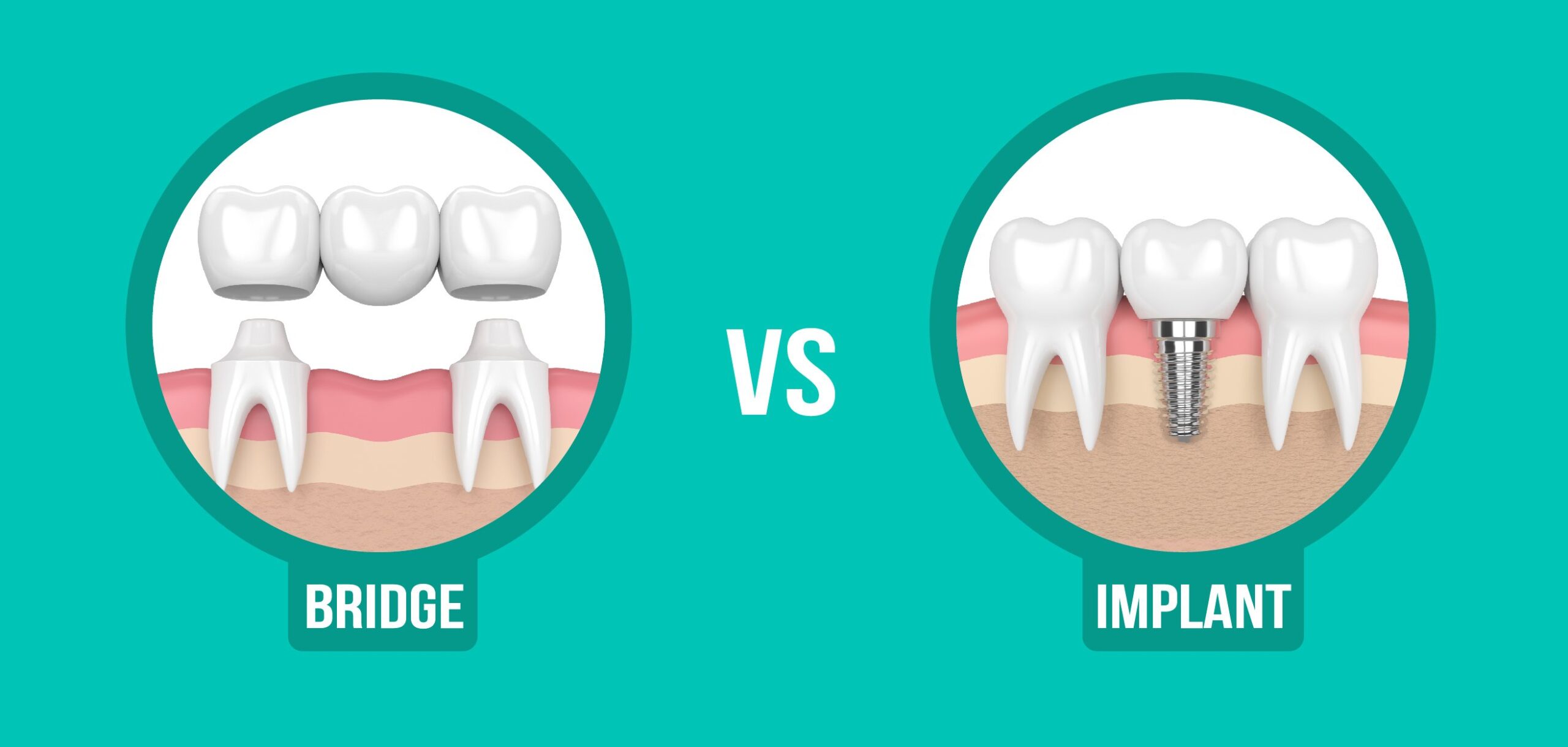
Some cracks, like split teeth or vertical root fractures, are beyond repair.
When Extraction Is Necessary
- Tooth is split into two movable parts
- Crack extends below the gum line
- Vertical root fracture confirmed
Replacement Options
- Dental Implant: Titanium post fused to the jawbone, topped with a crown. Over 95% success rate over 10 years.
- Bridge: Artificial tooth anchored to adjacent teeth. Faster but requires altering healthy teeth.
- Partial Denture: Removable and budget-friendly but less stable.
Evidence Insight: Implants outperform bridges in long-term survival and bone preservation.
Prevent Future Cracks
Once you’ve had a cracked tooth, your risk increases. Prevention is key.
Avoid Risky Habits
- Stop chewing ice, hard candy, or popcorn kernels
- Never use teeth to open packages or bottles
- Break the pen-chewing habit
Wear a Mouthguard
- Night guard if you grind your teeth
- Sports guard for contact activities
Fact: Up to 90% of root canal-treated teeth survive with a crown—only 30% without.
Summary: Key Steps to Repair a Cracked Tooth
- Recognize symptoms: Pain on biting, lingering sensitivity, swelling.
- Protect the tooth: Use dental wax, rinse with salt water, avoid chewing.
- See a dentist fast: No home remedy can repair a crack.
- Get the right treatment:
– Minor crack → Bonding or veneer
– Moderate crack → Crown
– Deep crack with nerve pain → Root canal + crown
– Split or root fracture → Extraction + implant - Prevent recurrence: Wear a guard, avoid hard foods, get regular checkups.
Final Note: A cracked tooth won’t heal on its own. But with prompt care, most can be saved. Don’t wait for the pain to return—act now. Your smile depends on it.