You’ve just had your wisdom teeth removed and now you’re wondering: how long does it take for wisdom tooth to heal? It’s one of the most common questions after oral surgery—and for good reason. While some people feel back to normal in just a few days, others may need several weeks to fully recover. The truth is, healing time isn’t one-size-fits-all. Most patients start feeling significantly better within 3 to 7 days, but complete healing of the soft tissue and bone sockets can take up to 6 weeks, especially in adults over 30.
In this guide, you’ll get a clear, day-by-day breakdown of what to expect during recovery, the key factors that speed up or slow down healing, warning signs of complications, and science-backed tips to recover faster. Whether you had one or all four wisdom teeth removed, understanding the process will help you manage pain, avoid setbacks, and return to your routine safely.
Healing Timeline: What to Expect Each Day

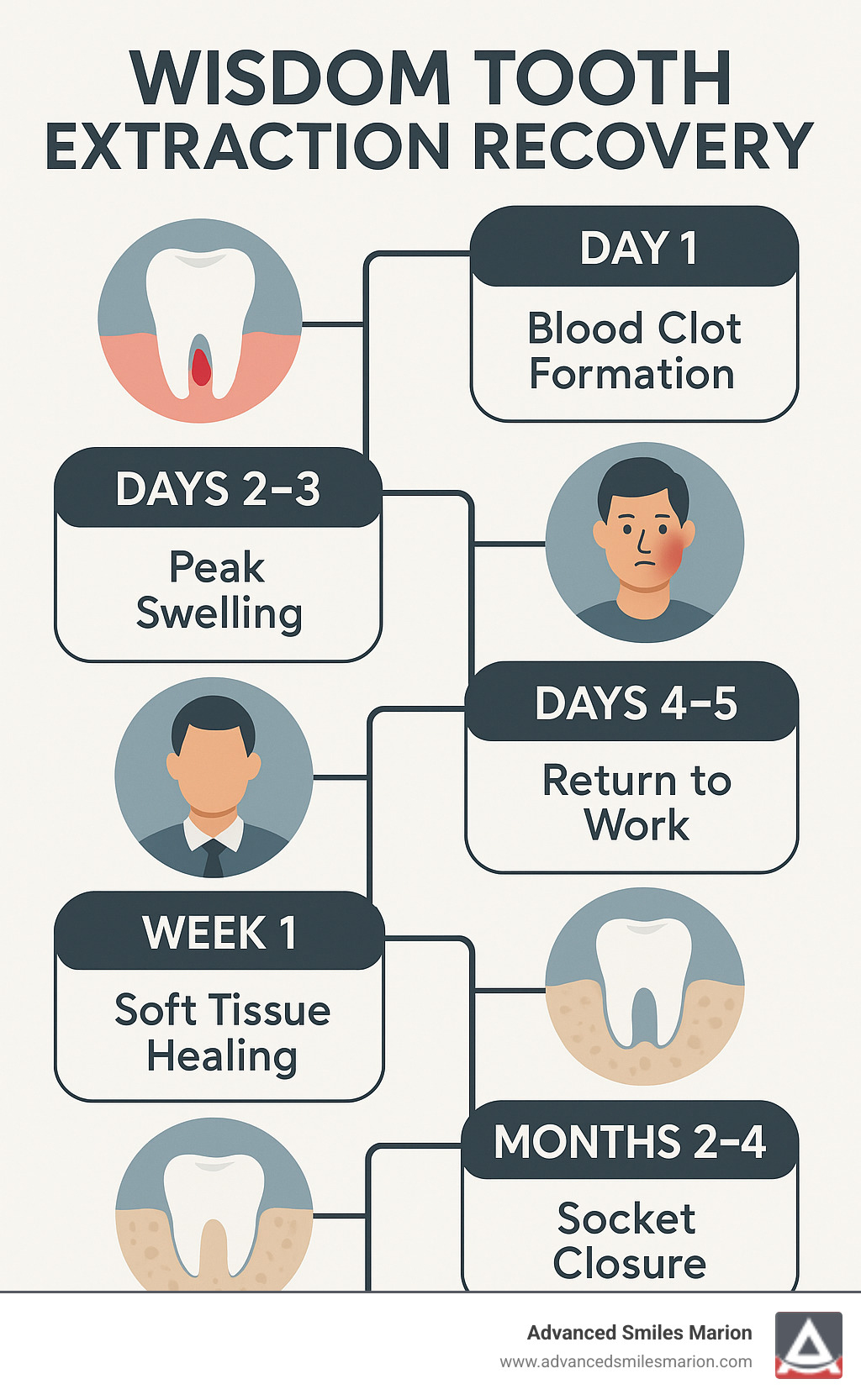
Day 1: Protect the Blood Clot
The first 24 hours after surgery are the most critical. Your body is forming a blood clot in each extraction site—this tiny but vital structure protects the underlying bone and nerves as healing begins. If it dislodges, you risk developing dry socket, a painful condition that delays recovery.
Symptoms you may experience include mild bleeding, numbness from anesthesia, throbbing pain, and a bad taste in your mouth. To support healing:
- Bite gently on gauze for 30–60 minutes at a time to control bleeding.
- Apply ice packs in 20-minute intervals (20 minutes on, 20 minutes off) to reduce swelling.
- Keep your head elevated while sleeping—use 2–3 pillows to prevent blood pooling.
- Stick to cool liquids like water, herbal tea, or broth. Avoid hot drinks.
- Take prescribed pain medication as directed—even before the anesthesia wears off.
Crucially, avoid spitting, rinsing, or using straws. These create suction that can pull the clot loose. Let saliva drain naturally instead.
Days 2–3: Swelling Peaks—Manage Discomfort
Swelling and bruising typically peak on days 2 and 3, not immediately after surgery. This is normal. As the anesthesia wears off, you may notice increasing pain and jaw stiffness. Don’t panic—this is part of the healing process.
Now is the time to:
– Continue ice therapy for up to 48 hours to minimize inflammation.
– Start gentle saltwater rinses (½ tsp salt in 8 oz warm water) after 24 hours. Do this 2–3 times daily, especially after eating.
– Eat soft, cool foods like yogurt, applesauce, mashed potatoes, or scrambled eggs.
– Rest completely—avoid lifting, bending, or exercise.
Pro Tip: Swelling that spreads to your neck or under your eyes is common and usually harmless. But if it’s accompanied by fever, difficulty breathing, or worsening pain, call your surgeon immediately.
Days 4–6: Pain Begins to Subside
By day 4, most patients notice a clear improvement. Pain levels start to plateau and gradually decrease. Swelling begins to fade, and jaw movement becomes easier.
Now you can:
– Switch to warm compresses to relax stiff jaw muscles.
– Resume light brushing, avoiding the surgical sites.
– Introduce soft solids like oatmeal, mac and cheese, or well-cooked pasta.
– Reduce pain medication as needed, but don’t stop antibiotics early.
Avoid alcohol, smoking, and vaping—they reduce blood flow to the gums and increase dry socket risk by up to 12 times. Even one cigarette can significantly delay healing.
Day 7: Follow-Up and Suture Check
Most oral surgeons schedule a check-up around day 7. This is when non-dissolvable stitches are typically removed. Your surgeon will examine the extraction sites to ensure proper healing.
At this point, you should:
– Feel minimal pain—only mild tenderness is normal.
– Have little to no swelling.
– Be able to speak and eat more comfortably.
If you’re still in significant pain, have pus, or notice exposed bone, tell your surgeon. These could be signs of infection or dry socket.
Days 8–14: Return to Daily Life
By day 10, most people feel nearly back to normal. Jaw stiffness continues to improve, and you can:
– Return to desk jobs or school.
– Resume light exercise after 7–10 days.
– Gradually reintroduce regular foods, starting with soft solids like rice, pasta, or cooked vegetables.
Keep using saltwater rinses until your mouth feels completely healed. Avoid crunchy, sticky, or spicy foods until at least day 14 to prevent irritation.
Factors That Affect Healing Time

Impacted vs. Erupted Wisdom Teeth
- Erupted teeth (fully visible) are easier to remove. Recovery typically takes 3–5 days.
- Impacted teeth (trapped under gum or bone) require cutting into the gum or removing bone. Healing takes 7–14 days or longer, especially if all four are removed at once.
More surgical trauma means more swelling and a longer recovery.
Age Matters: Teens Heal Faster
- Teens and early 20s: Softer jawbone and faster metabolism lead to quicker healing—most recover in 3–7 days.
- Over 30: Teeth are more firmly rooted, bone is denser, and healing slows. Full recovery may take 4–6 weeks.
Bone regeneration slows with age, so patience is essential.
Number of Teeth Removed
- Removing one or two teeth causes less trauma and shorter downtime.
- All four wisdom teeth removed at once increase swelling and pain. Most patients need 5–7 days off work.
Health and Lifestyle Choices
- Diabetes, autoimmune disorders, or poor circulation can impair healing.
- Smoking, vaping, or alcohol use drastically increase the risk of dry socket and infection.
- Good nutrition and hydration support tissue repair. Focus on soft foods rich in protein, vitamin C, and zinc.
Watch for These Warning Signs
Dry Socket: Days 3–5
Dry socket (alveolar osteitis) is the most common complication. It occurs when the blood clot dissolves or is dislodged too early.
Symptoms:
– Severe, radiating pain (to ear, jaw, or temple)
– Visible bone in the socket
– Bad breath or foul taste
– No swelling
Timing: Usually starts 3–5 days after surgery—often when you’ve stopped taking pain meds.
Treatment: Your dentist will clean the socket and apply a medicated dressing. Pain relief is often immediate. Healing resumes in 7–10 days.
Prevention: Avoid straws, smoking, and vigorous rinsing for at least 7 days.
Infection: After Day 3
Infection is rare but serious. It usually develops after day 3.
Symptoms:
– Increasing pain or swelling
– Pus or discharge
– Fever over 102°F (38.8°C)
– Foul odor
Action: Call your surgeon. Antibiotics are typically required.
Nerve Damage (Rare)
Lower wisdom teeth are close to the inferior alveolar nerve (controls lip/chin sensation) and lingual nerve (tongue).
Symptoms: Numbness, tingling, or burning in lip, chin, or tongue.
Most cases resolve in weeks to months. Permanent damage is very rare. Report numbness lasting more than 24–48 hours.
Excessive Bleeding
Some oozing is normal for 24 hours. But if bleeding soaks through gauze every 20–30 minutes, it’s a problem.
First aid: Apply firm pressure with gauze or a moist tea bag for 30 minutes. If bleeding continues, contact your surgeon.
Post-Op Care: Do’s and Don’ts
Do This:
- Rest 2–3 days—no heavy lifting or exercise for 7 days.
- Use ice packs for first 48 hours.
- Take all medications as prescribed—even if you feel fine.
- Stay hydrated with water, herbal tea, or broth.
- Rinse with warm saltwater after 24 hours.
- Sleep with head elevated (2–3 pillows).
Don’t Do This:
- ❌ Use straws – suction can dislodge clots.
- ❌ Smoke or vape – 12x higher dry socket risk.
- ❌ Drink alcohol – interferes with healing and meds.
- ❌ Eat hard, crunchy, or spicy foods (chips, nuts, popcorn).
- ❌ Spit or rinse vigorously – can pull out clots.
- ❌ Exercise or bend over – increases blood pressure.
Best Foods to Eat After Surgery
Days 1–3: Liquid & Soft Diet
- Water, herbal tea (cool)
- Broth-based soups (lukewarm)
- Yogurt, pudding, ice cream
- Applesauce, mashed potatoes
- Smoothies (no seeds, no straws)
- Scrambled eggs, cottage cheese
- Oatmeal (well-cooked)
- Mac and cheese (soft)
Foods to Avoid
- Hard or crunchy: chips, nuts, popcorn
- Sticky: gum, caramel
- Spicy or acidic: hot sauce, citrus
- Hot drinks: coffee, tea
- Alcohol and carbonated beverages
Reintroduce Solids by Day 5–7
- Soft rice, pasta, cooked vegetables
- Chew on the opposite side of mouth
- Return to normal diet by day 10–14
Speed Up Healing: 6 Proven Tips
- Rest fully for 3 days – healing happens while you rest.
- Stay hydrated – water supports tissue repair.
- Eat nutrient-rich soft foods – include protein, vitamin C, and zinc.
- Avoid smoking and alcohol – both impair healing.
- Follow all aftercare steps – this is the #1 factor in recovery speed.
- Attend your follow-up – ensures healing is on track.
Healing Timeline Summary
| Timeframe | What to Expect |
|---|---|
| Day 1 | Bleeding, pain, ice therapy, rest |
| Days 2–3 | Swelling peaks, pain management |
| Days 4–6 | Symptoms improve, start rinsing |
| Day 7 | Follow-up, suture removal |
| Days 8–10 | Return to work, soft solids |
| Weeks 2–3 | Soft tissue healed, normal diet |
| Weeks 4–6 | Full bone healing (especially over 30) |
Final Note: Most people heal from wisdom tooth extraction in 1 to 3 weeks, with full recovery taking up to 6 weeks in complex cases. The key to a fast, smooth recovery is strict adherence to aftercare instructions. Avoid straws, smoking, and hard foods. Stay hydrated, rest well, and attend your follow-up. By understanding the timeline and risks, you can minimize pain and get back to normal life faster—safely and confidently.