If you’ve ever stared at a spool of dental floss and thought, “I just can’t be bothered,” you’re not alone. Millions of people skip flossing not because they do not care about their teeth, but because it feels awkward, time-consuming, or uncomfortable. Enter the water flosser: a high-tech alternative that promises cleaner gums with minimal effort. But here is the real question: does a water flosser replace flossing?
The short answer is no, not completely. While water flossers are effective at improving gum health and boosting hygiene habits, they do not replicate the mechanical plaque removal that traditional floss provides. Most dentists and clinical studies agree that a water flosser works best as a supplement, not a substitute. This article breaks down how each tool works, what the science says, and who might benefit from switching or combining methods.
Why Interdental Cleaning Matters
Preventing Gum Disease and Tooth Decay
Brushing alone cleans only about 60% of your tooth surfaces. The rest, especially between teeth and under the gumline, harbor plaque, a sticky biofilm of bacteria that brushing cannot reach. Left unchecked, plaque hardens into tartar, leading to gingivitis, periodontitis, and even tooth loss. Interdental cleaning targets these hidden zones, disrupting bacterial colonies before they cause damage.
The Role of Daily Cleaning
Daily cleaning between teeth is not optional. It is essential. Whether you use floss, a water flosser, or interdental brushes, the goal is consistent plaque disruption. Skipping this step increases your risk of cavities between teeth, bad breath, and gum inflammation. The American Dental Association emphasizes that any interdental cleaning is better than none, but effectiveness depends on technique, tool choice, and frequency.
How Traditional Floss Works
Mechanical Plaque Removal
Dental floss, whether waxed, unwaxed, or PTFE-based, relies on direct contact. You guide it between teeth, curve it into a C-shape against each tooth surface, and move it up and down to scrape off plaque. This physical action removes mature biofilm that water alone cannot dislodge. When done correctly, floss reaches 1 to 3 millimeters below the gumline, disrupting subgingival bacteria linked to gum disease.
Benefits of String Floss
Traditional floss offers several advantages for daily interdental cleaning.
• Superior plaque control through physical scraping action
• Cost-effective and widely available at any store
• Portable enough to fit in a pocket or travel bag
• Minimal environmental waste, especially with reusable flossers
Common Flossing Challenges
Despite its effectiveness, only about one-third of adults floss daily. Many struggle with dexterity issues, discomfort or bleeding when starting, technique errors such as snapping floss, and time constraints. Some users find floss picks or holders easier, but even these do not solve the core problem of low compliance due to difficulty or dislike.
How Water Flossers Work
Hydrodynamic Plaque Disruption
A water flosser uses a pulsating stream of water to clean between teeth and along the gumline. Most models deliver 1,200 to 1,600 pulses per minute, creating turbulence that loosens food particles and reduces bacterial load. The water can reach up to 6 millimeters below the gumline, making it effective for deep pockets and orthodontic appliances.
Key Features and Uses
Water flossers come with several design elements that make them versatile.
• Adjustable pressure settings for sensitive gums or periodontal conditions
• Specialized tips for orthodontics, implants, periodontal care, and tongue cleaning
• Minimal hand movement required, making them easy to operate
• ADA-accepted models that have earned the ADA Seal for safety and efficacy
Who Benefits Most
Water flossers are particularly useful for specific groups.
• Braces wearers who need to clean around wires and brackets
• Implant or bridge patients who need to reach areas where floss may snag
• People with dexterity limitations, including elderly or disabled users
• Those with existing gum disease who need to reduce bleeding and inflammation over time
Clinical Evidence: Floss vs. Water Flosser
What Studies Show
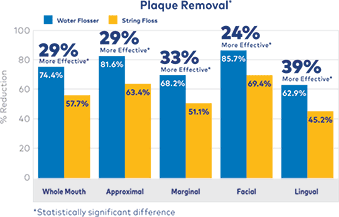
Research on water flossers versus string floss produces mixed results, often influenced by funding sources and study design.
Water Flosser Outperforms Floss
A 2013 University of Southern California study found water flossers 29% more effective than string floss at reducing plaque and gingival bleeding. However, one lead researcher was employed by Waterpik, Inc., which raises questions about potential bias in the findings.
Equal Effectiveness
A 2021 peer-reviewed review concluded water flossing is just as effective as string floss, but not significantly better. Both methods improved gum health when used consistently, with user compliance being the deciding factor.
Superior for Braces
In a 2022 study on orthodontic patients, water flossers matched super floss in plaque removal and showed higher compliance rates. This suggests water flossers are a viable alternative for those struggling with manual flossing.
Best for Caries Prevention
A 2022 study found that mechanical tools like floss and interdental brushes were superior to water irrigation in preventing interproximal cavities. The study emphasized that physical disruption of plaque is key for long-term decay prevention.
ADA and Expert Consensus
The American Dental Association recognizes water flossers as effective adjuncts but does not endorse them as replacements for floss. Devices with the ADA Seal are proven safe and effective, but the organization still recommends mechanical cleaning for optimal plaque control.
Can a Water Flosser Replace Floss
When It Can Help Replace Floss
There are specific situations where a water flosser can serve as a practical alternative.
• For patients with braces, implants, or bridges where water flossers clean more easily
• For users with dexterity issues such as arthritis, Parkinson, or post-stroke conditions
• For people who refuse to floss but will actually use a water flosser daily
• As a bridge to better habits, where patients start with a water flosser and gradually add traditional floss
When It Falls Short
There are limitations to what a water flosser can accomplish.
• In tight interdental spaces where water streams cannot penetrate as effectively as thin floss
• On mature, adherent plaque that lacks the scraping action needed for removal
• Without tactile feedback, meaning users may miss spots without knowing it
• For calculus prevention, since only mechanical disruption consistently prevents plaque from hardening into tartar
Dental Hygienist Analogy
Using a water flosser instead of floss is like spraying a dirty pan with water instead of scrubbing it. You will remove loose debris, but residue stays behind.
Alternative Interdental Tools
Interdental Brushes
Small, brush-like tools inserted between teeth. Highly effective for larger gaps, which are common in periodontitis patients. Easier to use than floss and often recommended as a first-line alternative.
Floss Picks
Pre-threaded flossers on plastic handles. More convenient than string floss but generate single-use plastic waste. Best for travel or beginners.
Wooden Interdental Sticks
Soft picks made of compressed wood. Gentle on gums and good for light cleaning, but less effective on heavy plaque.
Antimicrobial Mouthwashes
Mouthwashes like 0.2% sodium hypochlorite can reduce bacteria and gingivitis. One study suggests they may be as effective as flossing for plaque reduction. However, they do not remove physical debris and should be used as an adjunct, not a replacement.
Best Practices for Optimal Cleaning
Recommended Daily Routine
For most people, combining both tools delivers the best results.
Option 1 (Ideal for Most People):
1. Morning: Water flosser to flush out overnight bacteria.
2. Evening: Traditional floss or interdental brushes to remove plaque.
Option 2 (Orthodontic Patients):
1. Use water flosser with orthodontic tip after meals.
2. Floss once daily with floss threaders or super floss.
Option 3 (Dexterity-Impaired Users):
1. Use water flosser daily with appropriate tip.
2. Try electric flossers or interdental brushes with ergonomic handles.
Brushing and Professional Care
These additional steps support overall oral health.
• Brush twice daily with fluoride toothpaste
• Use a soft-bristled or electric toothbrush
• Visit your dentist every six months for professional cleaning
• Remember that tartar cannot be removed at home, only a hygienist can scale it off
Compliance: The Real Game-Changer
Why Behavior Matters Most
Even the best tool fails if you do not use it. Studies show only 30% of adults floss daily, often due to dislike of the process, difficulty reaching back teeth, or fear of bleeding gums. Water flossers often win on user experience. They are easier, more comfortable, and feel more thorough.
Choosing the Right Tool for You
Consider these factors when deciding between floss and water flossers.
• Cost: Floss is significantly cheaper than water flossers
• Portability: Floss fits in a pocket; most water flossers are bulkier
• Ease of use: Water flossers win for those with dexterity issues
• Plaque removal: Floss is superior for scraping off adherent plaque
• Braces-friendly: Water flossers excel at cleaning around orthodontic appliances
• Environmental impact: Floss generates less waste than water flossers
The best tool is the one you will use every day. If that is a water flosser, use it. Just know it is not the full solution.
Final Verdict: Does a Water Flosser Replace Flossing
No, But It Can Help in Specific Cases
A water flosser does not fully replace traditional flossing. It lacks the mechanical action needed to scrape off tightly adhered plaque, especially in tight spaces. For long-term prevention of interproximal cavities and tartar buildup, physical contact remains the gold standard.
For people with braces, implants, or mobility issues, a water flosser can be a practical and effective alternative. It improves compliance and gum health, especially when flossing is impossible or inconsistently done.
Best Strategy: Combine Both
Using both tools together delivers the best results. Floss at night to remove plaque. Water floss in the morning to flush bacteria. This dual approach maximizes plaque control, reduces bleeding, and supports long-term oral health.
Practical Tips for Users
Start with What Works for You
Follow these recommendations for the most effective routine.
- Hate flossing? Try interdental brushes or a water flosser first.
- Have braces? Use a water flosser daily and add floss threaders at night.
- Use floss picks? Rinse the pick between teeth to avoid spreading bacteria.
- Own a water flosser? Clean the reservoir weekly and replace tips every 3 to 6 months.
- New to water flossing? Start on low pressure to avoid gum trauma.
- Aim correctly: Hold the tip at a 90-degree angle to the gumline and move slowly.
- Do not share devices: Bacteria can colonize the reservoir, so use individual tips.
Expert Consensus Summary
| Source | Recommendation |
|---|---|
| American Dental Association | Water flossers are effective adjuncts but do not replace floss |
| Oral-B | Combine both for best results |
| Colgate Scientific Team | Floss is superior for plaque removal; water flossers help special needs patients |
| Dental Hygienists | Floss removes plaque. Water flossers rinse it. You need both. |
| University Health Center, Nebraska | Water flossing is the car wash. Floss is the sponge. |
Key Takeaways for Your Oral Hygiene Routine

A water flosser is a powerful tool, but it is not a magic bullet. It improves gum health, boosts compliance, and excels in hard-to-clean areas like braces and implants. However, it cannot replace the mechanical plaque removal that traditional floss provides. For complete oral hygiene, think of floss as the scrubber and the water flosser as the rinse. Used together, they offer the most effective defense against gum disease, tooth decay, and long-term dental problems.
Your teeth do not need convenience. They need complete cleaning. If you are relying solely on a water flosser, consider adding floss or interdental brushes to your routine. And if you are not cleaning between your teeth at all, start with a water flosser. It is not perfect, but it is a step in the right direction.
Frequently Asked Questions About Water Flossers vs. Flossing
Can I skip traditional flossing if I use a water flosser?
No, you should not skip traditional flossing entirely. Water flossers cannot fully replace floss because they lack the mechanical scraping action needed to remove tightly adhered plaque. Floss reaches tight spaces where water cannot effectively penetrate.
Is a water flosser better than floss for braces?
Yes, water flossers are generally better for braces. They clean around wires and brackets more easily than string floss. The American Dental Association recognizes water flossers as particularly effective for orthodontic patients.
How often should I use a water flosser?
Use a water flosser once daily, ideally in the morning. For optimal results, also floss at night with traditional floss or interdental brushes. Combining both methods provides the most complete cleaning.
Do dentists recommend water flossers?
Dentists recommend water flossers as effective adjuncts, not replacements for floss. The American Dental Association gives its Seal of Acceptance to certain water flossers, indicating they are safe and effective for plaque removal and gum health.
Can a water flosser remove tartar?
No, a water flosser cannot remove tartar. Only a dental professional can scale tartar off during a professional cleaning. Water flossers help prevent tartar formation by reducing plaque, but they cannot remove existing calculus.
What is the best interdental cleaning routine?
The best routine combines both tools. Use a water flosser in the morning to flush out bacteria and debris. Use traditional floss or interdental brushes at night to mechanically remove plaque. This dual approach provides superior plaque control and gum health.