If you have ever asked yourself whether a water flosser can truly give you whiter teeth, you are not alone. Many people assume that because water flossers clean between teeth and improve oral hygiene, they must also whiten teeth. The truth is more nuanced: a standard water flosser does not chemically whiten teeth, but it can significantly enhance the appearance of whiteness by removing plaque, debris, and surface stains.
For actual whitening effects, only specialized models like the Waterpik Whitening Water Flosser or those used with whitening additives deliver measurable stain reduction. These systems combine interdental cleaning with gentle whitening agents to reveal a brighter smile over time. In this guide, we will break down exactly how water flossers affect tooth color, which models actually whiten, and how to maximize results using science-backed methods.
How Water Flossers Improve Tooth Appearance
Removing Plaque That Dulls Teeth
Plaque buildup creates a film that makes teeth look dull and yellowish. Over time, plaque hardens into tartar, which has a visible yellow or brown tint and can only be removed by a dentist. A water flosser uses a pulsating stream of water to flush out plaque from between teeth and below the gumline, areas that traditional brushing often misses.
By consistently removing this buildup, water flossers prevent discoloration caused by plaque accumulation, reveal the natural whiteness of enamel underneath, and reduce the need for professional scaling that restores brightness. A clean tooth reflects light better, enhancing perceived luster and brightness, even without chemical whitening.
Clearing Debris That Causes Staining
Food particles and bacterial biofilm trapped between teeth create an environment where stains develop more easily. Coffee, tea, wine, and tobacco residues cling to these deposits, accelerating discoloration. Regular water flossing disrupts this cycle by rinsing away trapped debris before it sets in.
Daily use helps maintain a cleaner surface, making your teeth appear brighter and healthier, especially in hard-to-reach interdental spaces where staining starts early.
Enhancing Natural Tooth Color
While a water flosser will not change your tooth shade like bleaching agents do, it supports your teeth is natural whiteness. Think of it like cleaning a dirty window: you are not changing the glass, but removing grime makes it look clearer and brighter.
This preventive action is key for maintaining results after professional whitening treatments and avoiding rapid re-staining.
Can Water Flossers Whiten Teeth: The Real Answer
Standard Models Do Not Chemically Whiten
Most water flossers, including popular brands like Waterpik classic models, do not contain bleaching agents such as hydrogen peroxide or carbamide peroxide. Without these, they cannot penetrate enamel to break down deep intrinsic stains.
Using plain water, even daily, will not alter tooth color, though it will keep teeth cleaner and less prone to yellowing.
Whitening-Specific Models Deliver Real Results
Only certain models are designed to actively reduce surface stains. The Waterpik Whitening Water Flosser (WF-05/WF-06) stands out with its Whitening Infuser Technology, which releases a gentle, non-bleaching whitening agent from a dissolvable tablet into the water stream.
Clinical studies show this model removes up to 25% more stains than brushing alone, is as safe for enamel as regular toothpaste, and produces visible improvement in whiteness within 4 weeks. Unlike abrasive whitening toothpastes, this system targets interdental zones and gumlines, common areas for hidden staining, without damaging enamel.
Compatible With Whitening Additives
Some water flossers, like the SNOW Water Flosser, allow you to add whitening drops directly into the reservoir. Others can use pre-rinse products like Supersmile Whitening Pre-Rinse mixed with water.
This turns a standard cleaning session into a dual-action treatment: flossing plus stain reduction. However, only models explicitly designed for additive use should be used this way to avoid damage or clogging.
Important: Never use hydrogen peroxide or harsh chemicals unless recommended by the manufacturer, as these can degrade internal components or irritate gums.
How Whitening Water Flossers Work

Whitening Infuser Technology Explained
The Waterpik Whitening Water Flosser features a built-in compartment in the handle where you insert a dissolvable whitening tablet. As you floss, the tablet slowly dissolves, releasing a low-concentration, enamel-safe whitening agent into the water stream.
This agent works on contact with tooth surfaces, particularly in tight spaces where stains accumulate. Because the solution is delivered under pressure, it reaches areas that whitening strips or trays often miss. Each tablet lasts one full flossing session, and a pack of 30 provides a month is supply.
What Is in the Whitening Agent
The formula is free from hydrogen peroxide, silica, sulfates (SLS), charcoal, parabens, gluten, and BPA. Instead, it uses a proprietary, non-abrasive stain-lifting compound clinically tested for safety and efficacy. It is gentle enough for daily use, even for people with sensitive teeth or receding gums.
How Fast Do Results Appear
Users report noticeable improvements in natural whiteness within 4 weeks of daily use. Unlike dramatic bleaching effects, the change is subtle but consistent, ideal for those seeking a healthier, brighter smile without sensitivity or enamel wear.
Best results come from combining the device with whitening toothpaste, regular brushing, and avoidance of stain-causing foods and drinks.
Why Water Flossing Boosts Other Whitening Treatments
Cleans Before Whitening for Better Penetration
A dirty tooth surface blocks whitening agents from reaching enamel. Plaque and biofilm act as barriers, leading to patchy, uneven whitening when using strips, gels, or trays.
Using a water flosser before your whitening treatment ensures maximum exposure of enamel to the whitening agent, even application across all tooth surfaces, and more predictable and longer-lasting results.
Dentists recommend cleaning interdental spaces thoroughly before any whitening procedure, and water flossing is one of the most effective ways to do this.
Maintains Results After Whitening
After investing in a whitening treatment, maintaining results is crucial. One of the fastest ways to lose brightness is re-staining between teeth, where food and pigments linger.
Daily water flossing prevents this by flushing out staining particles after meals, reducing plaque that attracts new stains, and supporting gum health, which enhances overall smile aesthetics. Think of it as whitening maintenance, a simple step that extends the life of your brighter smile.
Best Practices to Maximize Whitening Effects
Pair With Whitening-Enhanced Floss
While water flossing cleans deeply, adding activated charcoal-infused floss gives an extra polish to surface stains. Use traditional floss first to remove larger debris, then follow with water flossing to rinse away loosened particles and deliver whitening agents deeper between teeth.
Charcoal floss picks are especially useful for tight contacts, braces, crowns and bridges, and hard-to-reach back teeth.
Note: Use charcoal products sparingly. While effective for surface stains, overuse may be abrasive.
Use a Whitening Pre-Rinse in the Reservoir
Even if you do not own a whitening-specific flosser, you can boost results by mixing a whitening pre-rinse like Supersmile into the water reservoir. These rinses contain enzymes that break down protein-based pellicle films, the sticky layer that holds stains on teeth.
Just add the recommended amount to the water tank before flossing. This method is safe for most standard water flossers and enhances stain resistance over time.
Follow a Complete Whitening Routine
For best results, integrate water flossing into a full regimen. First, water floss with whitening additive or tablet. Second, brush with fluoride-free nano-hydroxyapatite or whitening toothpaste on a dry brush. Third, rinse with a clear, light-colored mouthwash, avoiding red or orange rinses post-brushing because they can stain.
Do this twice daily, especially at night when saliva flow decreases and staining risk increases.
Limitations: What Water Flossers Cannot Do
No Effect on Intrinsic Stains
Water flossers, even whitening models, cannot treat deep internal discoloration caused by aging, tetracycline antibiotics, fluorosis, dental trauma, or amalgam fillings. These require professional interventions such as in-office bleaching, custom whitening trays, or veneers or bonding.
Not a Substitute for Professional Whitening
Do not expect dramatic shade changes like those from laser whitening or high-concentration gels. Water flosser whitening is preventive and maintenance-focused, not corrective. It is best used as a support tool, not a standalone solution.
Requires Consistency
Benefits are cumulative. Skipping days allows plaque and stains to rebuild. For visible results, use daily for at least 4 weeks, stick to one whitening method to track progress, and take before and after photos under consistent lighting.
Product Guide: Top Whitening-Capable Water Flossers

Waterpik Whitening Water Flosser (WF-05/WF-06)
This model uses Whitening Infuser technology with dissolvable tablets. It removes up to 25% more stains than brushing alone and eliminates 99.9% of plaque from treated areas. Features include 10 adjustable pressure settings, a 1-minute timer with 30-second pacer, and includes Classic Jet, Orthodontic, and Plaque Seeker tips (WF-06). It comes with a 3-year limited warranty and is ADA-Accepted. Price ranges from $79.99 to $120 depending on color.
SNOW Water Flosser
This portable model is compatible with SNOW Whitening Drops. It features a collapsible 8-ounce tank and three modes: Pulse, Normal, and Soft, ideal for sensitivity. Best for travelers and those already using the SNOW whitening system. Add 1 to 2 drops of whitening serum per session for enhanced stain removal.
Step-by-Step: Using a Whitening Water Flosser
1. Choose the Right Tip
Select the Classic Jet Tip for daily general cleaning, the Orthodontic Tip for braces, implants, and crowns, or the Plaque Seeker Tip to target plaque around restorations.
2. Insert Whitening Tablet
Open the flip-top cap on the handle, drop in one tablet, and close securely. The tablet dissolves during use, no pre-soaking needed.
3. Fill Reservoir With Warm Water
Use lukewarm water for comfort. Do not overfill; align with the max line.
4. Start at Low Pressure
Lean over the sink, close your lips slightly to reduce splashing, and begin flossing at the lowest setting. Gradually increase pressure as tolerated.
5. Aim at the Gumline
Hold the tip at a 90-degree angle to the gumline. Move slowly from tooth to tooth, pausing briefly between each.
6. Follow the 1-Minute Timer
The built-in timer ensures optimal duration. After 30 seconds, it pulses to remind you to switch arches from upper to lower.
7. Brush Immediately After
Proceed to brushing with whitening toothpaste. Applying paste to a dry brush increases effectiveness by preventing dilution.
Safety and Compatibility
Safe for Sensitive Teeth and Gums
Whitening water flossers are formulated to be non-irritating and enamel-safe. The low-concentration agents and pulsating action actually improve gum health by reducing gingivitis and inflammation. They are ideal for users with receding gums, sensitivity, or braces or dental work.
Compatible With Other Products
The flossers work with manual and electric toothbrushes. They are best paired with nano-hydroxyapatite or whitening toothpastes like Supersmile. Use clear or light-colored rinses after brushing to avoid staining, and avoid dark-colored mouthwashes immediately after whitening.
Final Verdict: Can a Water Flosser Make Teeth White
Yes, but only under specific conditions. Standard models improve appearance by cleaning but do not chemically whiten. Whitening-specific models like Waterpik WF-06 deliver measurable stain reduction and visible brightness in 4 weeks. Additive-compatible models like SNOW can whiten when used with whitening drops or pre-rinses. They are not a replacement for professional whitening or bleaching treatments. They are best used as part of a complete oral care routine for prevention and maintenance.
Frequently Asked Questions About Water Flossers and Teeth Whitening
Does a standard water flosser whiten teeth?
No. A standard water flosser using only plain water does not contain bleaching agents and cannot chemically whiten teeth. It can only improve the appearance of teeth by removing plaque and surface debris that make teeth look dull.
How long does it take to see results from a whitening water flosser?
Most users report noticeable improvements in natural whiteness within 4 weeks of daily use. The Waterpik Whitening Water Flosser specifically is clinically proven to remove up to 25% more stains than brushing alone within this timeframe.
Can I add hydrogen peroxide to my water flosser for whitening?
No. You should never add hydrogen peroxide or harsh chemicals to your water flosser unless specifically recommended by the manufacturer. These substances can damage internal components and irritate gums. Only use whitening products designed for use with your specific model.
What is the best water flosser for whitening teeth?
The Waterpik Whitening Water Flosser (WF-05/WF-06) is the top recommendation because it features Whitening Infuser Technology that releases a gentle whitening agent during use. It is ADA-Accepted and clinically proven to reduce surface stains.
Can water flossing replace professional teeth whitening?
No. Water flossers, even whitening-specific models, cannot produce the dramatic shade changes achieved by professional in-office bleaching or high-concentration whitening gels. They are best used as a supportive tool for maintaining results and preventing new stains.
Do water flossers help maintain whitening results?
Yes. Water flossers are excellent for maintaining whitening results because they remove food particles and plaque that cause re-staining, especially in hard-to-reach interdental spaces. Using a water flosser after consuming staining beverages like coffee or wine helps prevent new stains from forming.
Key Takeaways for Getting Whiter Teeth With a Water Flosser
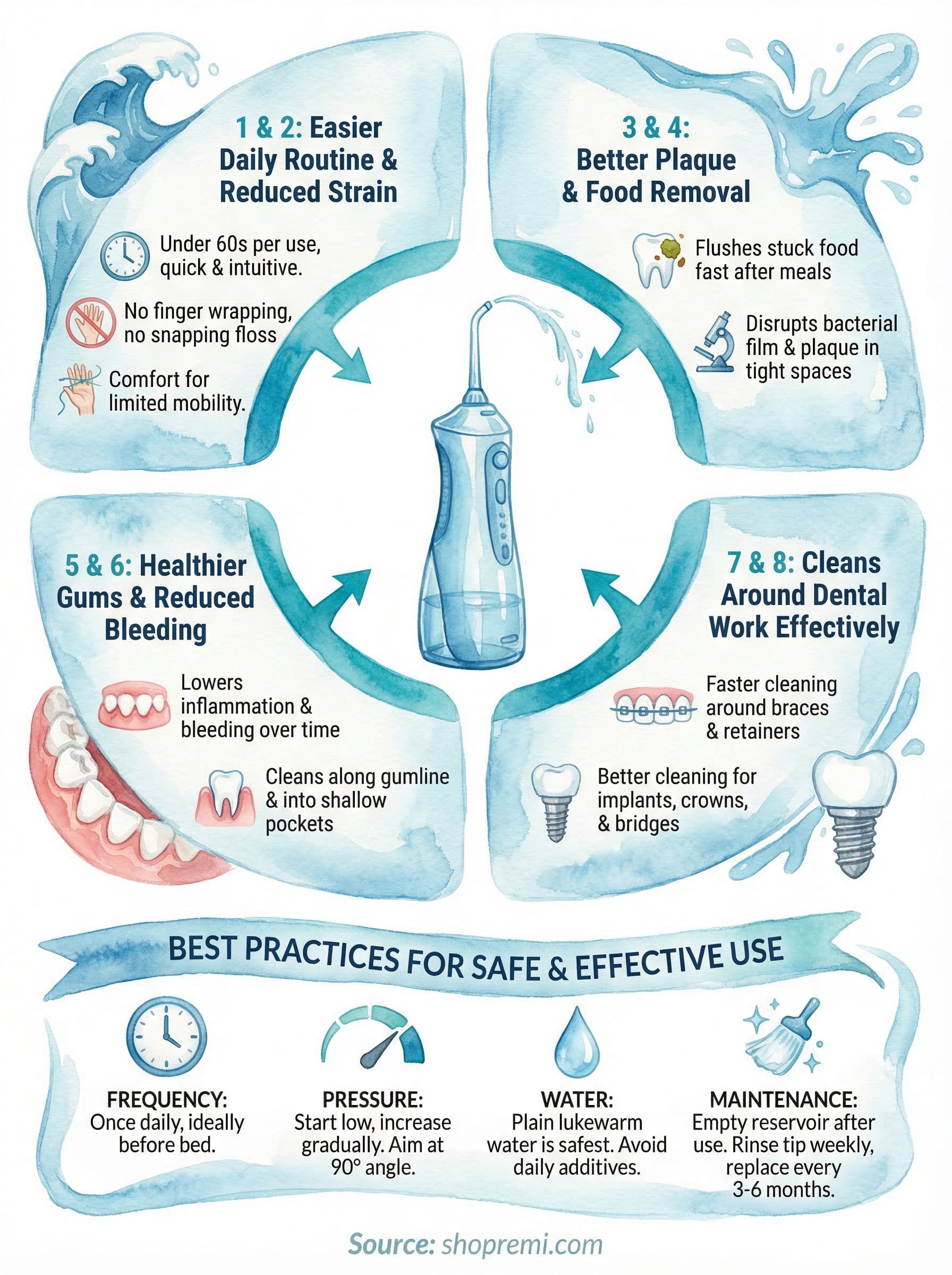
To get the whitest, healthiest smile with a water flosser, choose a whitening-enhanced model if you want active stain removal. Use it daily for at least 4 weeks to see results. Combine with traditional flossing and whitening toothpaste. Add whitening pre-rinse or drops if your model allows it. Brush after flossing with a dry toothbrush and whitening paste. Avoid DIY abrasives like baking soda or charcoal overuse. Drink staining beverages through a straw. See your dentist before starting any whitening plan, especially if you have restorations or sensitivity.
When used wisely, a water flosser is not just a tool for gum health. It is a smart ally in your whitening journey, helping you achieve a cleaner, brighter, and more confident smile safely and sustainably.