If your dentist just placed a temporary filling, you’re probably wondering: How long can I count on this to hold up? The short answer is 4 to 8 weeks—but the real timeline depends on several factors, from the material used to how you chew, eat, and care for your tooth. Unlike permanent fillings designed to last for years, temporary ones are meant to be short-term shields, protecting your tooth between appointments or while waiting for a crown, root canal, or final restoration.
Leaving a temporary filling in too long can lead to serious problems—like decay, infection, or even tooth loss. Yet many patients unknowingly stretch their use beyond safe limits due to scheduling delays or assuming “it still feels fine.” This guide breaks down exactly how long temporary fillings last, what affects their lifespan, how to care for them, and what to do if one falls out. You’ll also learn the differences between materials, costs, and red flags that mean it’s time to call your dentist—fast.
Typical Lifespan of Temporary Fillings
Most temporary fillings last between a few days and three months, with 4 to 8 weeks being the standard expectation. While some may hold for up to six months, this is not recommended and increases the risk of failure.
Your dentist chooses the material based on how long you’ll need protection—whether it’s a week for a crown or several weeks due to insurance delays. But even the strongest temporary materials degrade over time, especially under chewing pressure or poor oral hygiene.
⚠️ Never assume longevity equals safety. A filling that looks intact may already be leaking bacteria underneath, leading to secondary decay.
How Long Each Material Lasts
Different materials are used depending on the clinical need, and each has a distinct lifespan:
| Material | Average Duration | Best For |
|---|---|---|
| IRM (Intermediate Restorative Material) | 1–3 months | Longer-term protection, especially for molars |
| Cavit | 4–6 weeks | Quick sealing of margins, easy removal |
| Glass Ionomer Cement (GIC) | 2–8 weeks | Fluoride release, moderate strength |
| Zinc Oxide Eugenol (ZOE) | 1–4 weeks | Soothing deep cavities, pulp protection |
| Calcium Hydroxide | 1–2 weeks | Liner under fillings, not standalone |
IRM and Cavit are often preferred for longer waits, while ZOE is used when nerve calming is needed—but it’s weaker and not ideal for back teeth.
✅ Pro Tip: Ask your dentist which material was used and when you must return. Don’t rely on how the filling feels—symptoms often appear only after damage is done.
Factors That Shorten Filling Life

Even the best material can fail early if conditions aren’t ideal. Here’s what can cut your temporary filling’s lifespan short.
Tooth Location and Chewing Force
Back teeth (molars and premolars) bear the brunt of chewing—up to 130 pounds per square inch of force. A temporary filling in a molar is far more likely to crack or dislodge than one in a front tooth.
🦷 Rule of thumb: The harder you chew, the shorter the filling lasts—especially with soft materials like ZOE.
Size and Depth of the Cavity
Larger fillings cover more surface area, making them more vulnerable to breaking under stress. Deep cavities also leave less natural tooth structure to support the restoration, increasing the chance of fracture.
Diet and Eating Habits
What you eat plays a huge role in how long your filling survives.
❌ Foods That Risk Dislodging the Filling:
- Hard items: Nuts, ice, hard candy
- Sticky/chewy treats: Caramel, gum, gummy bears
- Crunchy snacks: Chips, toast, pretzels
- Tough meats: Jerky, steak
These foods can pull, crack, or crush a temporary filling—especially if you chew directly on it.
✅ Eat smart: Stick to soft foods like mashed potatoes, yogurt, scrambled eggs, and smoothies. Always chew on the opposite side.
Oral Hygiene Mistakes
Brushing and flossing are essential—but done wrong, they can cause harm.
- Aggressive brushing with a hard-bristled toothbrush can wear down the edges.
- Flossing too quickly—pulling floss straight up—can catch and yank the filling out.
✅ Floss safely: Slide the floss out sideways instead of snapping it upward.
Use an alcohol-free mouthwash or warm saltwater rinse to keep the area clean without irritating exposed dentin or gum tissue.
Teeth Grinding (Bruxism)
If you grind or clench your teeth—especially at night—you’re putting extra pressure on the filling. This can lead to early cracking or loosening, even with durable materials like IRM.
💡 Ask your dentist about a night guard if you suspect bruxism.
What to Do If the Filling Falls Out
It happens—and it’s not always an emergency, but it must be addressed quickly.
Immediate Steps to Take
- Call your dentist the same day—most offices reserve emergency slots for temporary filling issues.
- Avoid chewing on that side. The exposed tooth is sensitive and vulnerable to bacteria.
- Rinse with warm salt water after eating to keep the area clean.
- Take OTC pain relief like ibuprofen (Advil) or acetaminophen (Tylenol) if needed.
- Use over-the-counter dental cement (e.g., Dentemp, DenTek Temparin Max) as a 1–2 day patch only.
How to Apply Temporary Dental Cement
- Clean and dry the tooth (use a cotton swab).
- Roll a small piece of material into a ball.
- Press it firmly into the cavity.
- Bite down gently to shape it to your bite.
- Wait at least 1 hour before eating.
⚠️ Warning: This is not a fix—just a placeholder until you see your dentist.
When to Seek Emergency Care
Seek help immediately if you have:
– Severe, throbbing pain
– Swelling in the gums or face
– Fever
– Pus or foul taste (signs of abscess)
– Visible bump on the gum near the tooth
These could indicate infection spreading—possibly requiring a root canal or antibiotics.
Temporary vs. Permanent Fillings: Key Differences
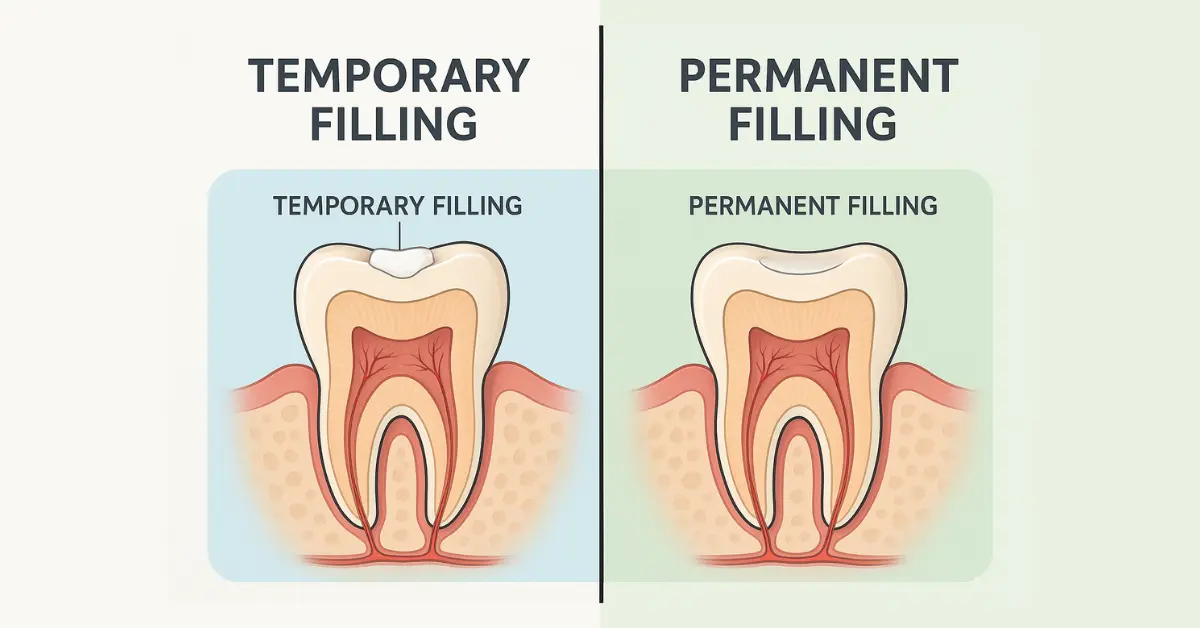
You can’t “upgrade” a temporary filling by leaving it in longer. The materials are completely different.
| Feature | Temporary Filling | Permanent Filling |
|---|---|---|
| Material | ZOE, IRM, Cavit, GIC | Composite, amalgam, porcelain, gold |
| Strength | Soft, easily removed | Hard, bonded, durable |
| Lifespan | Days to 3 months | 5–20+ years |
| Chewing | Avoid pressure | Normal function |
| Aesthetics | Often colored (white, blue, pink) | Tooth-colored or metallic |
| Cost | $50–$150 | $150–$450+ (filling), $800–$3,000+ (crown) |
❌ Myth: “If it’s still there, it’s working.”
✅ Truth: Bacteria can leak under the filling long before you feel pain.
Care Tips to Extend Filling Life
With smart habits, you can help your temporary filling last as long as intended—and avoid emergencies.
Eat Soft, Safe Foods
Stick to:
– Mashed potatoes
– Oatmeal
– Yogurt
– Bananas
– Scrambled eggs
– Smoothies
– Soft pasta
– Soup
Avoid hard, sticky, and chewy foods at all costs.
✅ Chew on the opposite side—every time.
Brush and Floss Gently
- Use a soft- or extra-soft bristled toothbrush.
- Brush lightly around the filling—don’t scrub.
- Floss carefully: slide floss out sideways, never pull straight up.
- Rinse with warm salt water or alcohol-free mouthwash.
Avoid Risky Behaviors
- Don’t bite pens, fingernails, or ice.
- Don’t test the filling with your tongue—constant poking loosens it.
- Avoid straws for 24–48 hours post-placement (suction can dislodge it).
Cost and Insurance Coverage
A temporary filling typically costs $50 to $150, depending on:
– Location
– Tooth complexity
– Material used
– Dental office fees
Most dental insurance plans cover 70–80% after the deductible, classifying it as basic restorative care.
💡 Remember: This is just the first step. You’ll also need to budget for:
– Permanent filling: $150–$450
– Dental crown: $800–$3,000+
– Root canal: $700–$1,500+
Ask for a treatment plan with cost estimates and inquire about:
– Payment plans
– Cash discounts
– Dental savings plans
Why Dentists Use Temporary Fillings
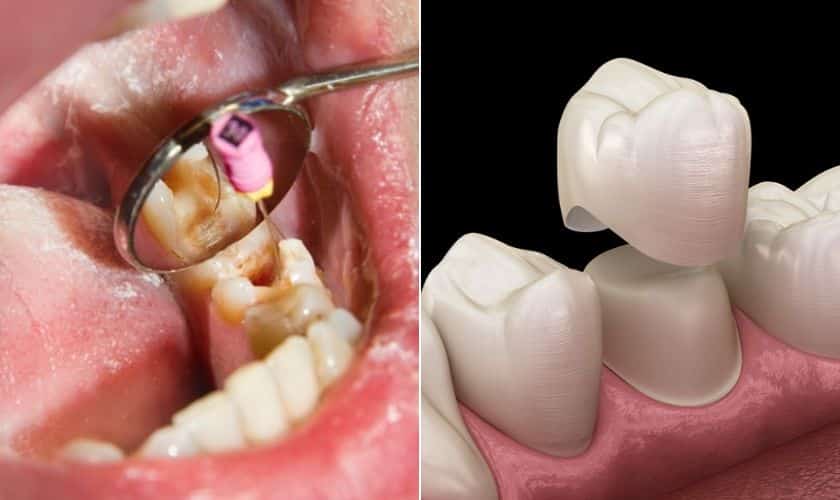
They’re not just placeholders—they serve critical roles in multi-step treatments.
Root Canal Treatment
After removing infected pulp, a temporary filling seals the access hole between visits. It prevents bacteria from re-entering while the tooth stabilizes.
Crown or Bridge Preparation
After reshaping a tooth, a temporary crown or filling protects it while the lab fabricates the final restoration—usually 2–3 weeks.
Diagnostic Monitoring
If a tooth is near the nerve, a medicated filling (like calcium hydroxide or ZOE) may be placed to:
– Calm inflammation
– Test if the nerve can heal
– Delay irreversible root canal treatment
This “wait-and-see” approach avoids unnecessary procedures.
Handling Treatment Delays
Sometimes permanent treatment is delayed due to:
– Insurance approval
– Financial planning
– Scheduling
– Medical reasons
A temporary filling buys time—but not indefinitely.
Side Effects and Warning Signs
Some discomfort is normal. Others mean trouble.
Normal After Placement:
- Mild soreness for 1–2 days
- Sensitivity to hot, cold, or pressure
- Slight gum irritation
These usually fade within a few days.
Red Flags (Call Your Dentist):
- Worsening or severe pain
- Swelling or fever
- Pus or bad taste
- Filling feels loose or uneven
- Visible gap or crack
Allergies to eugenol (in ZOE) are rare but possible—watch for rashes or itching.
FAQs Answered
How long should a temporary filling last?
4 to 8 weeks is typical, though some last up to 3 months. Never exceed your dentist’s recommended timeframe.
Can I eat after getting a temporary filling?
Yes, but wait until numbness wears off (1–3 hours) to avoid biting your cheek. Avoid chewing on the side for 24 hours.
Can I brush my teeth with a temporary filling?
Yes—but use a soft brush and avoid aggressive scrubbing around the site.
What if my filling falls out?
Call your dentist immediately. Use OTC dental cement only as a 1–2 day patch. Do not delay professional care.
Can I replace it myself?
No. Never attempt DIY removal or replacement—you risk infection, nerve damage, or tooth fracture.
Does it hurt to get a temporary filling?
The procedure is painless with local anesthesia. You may feel pressure. Mild soreness afterward is normal.
Why does it feel rough or high?
It may not be perfectly shaped. If it affects your bite, call for an adjustment—an uneven bite can cause pain or cracking.
Can I drink alcohol?
Yes, in moderation—but avoid alcohol-based mouthwashes, which can irritate. Stick to alcohol-free rinses.
Final Takeaways
- Temporary fillings last 4 to 8 weeks, max 3 months—not forever.
- Material, tooth location, diet, and hygiene all impact lifespan.
- Avoid hard, sticky, and chewy foods—chew on the opposite side.
- Brush gently, floss sideways—don’t yank the floss up.
- Never ignore a lost or loose filling—call your dentist right away.
- OTC kits are emergency-only—not a substitute for professional care.
- Attend your follow-up appointment on time—delaying risks decay, infection, or tooth loss.
Think of your temporary filling as a tooth bodyguard—it’s tough enough to protect, but not built for long-term battle. With proper care and timely follow-up, it does its job perfectly. But ignore it, and you’re inviting bigger problems down the road.
Bottom line: Your temporary filling is a bridge to permanent repair. Cross it safely—and make sure you reach the other side.