If you have ever struggled with traditional flossing, especially around braces, implants, or tight teeth, a water flosser might be the missing piece in your oral care routine. Also known as an oral irrigator or dental water jet, this device uses a pulsating stream of water to flush out plaque, food debris, and bacteria from hard-to-reach areas like between teeth, under the gumline, and around dental work. Unlike string floss, which relies on friction, water flossers use hydrodynamic pressure and micro-vortices to clean effectively, making them ideal for people with complex dental needs.
Research shows water flossers are up to 2X more effective than string floss at reducing gingival bleeding and improving gum health. Some models, like those from Waterpik, are ADA-approved, meaning they meet rigorous clinical standards for safety and plaque removal. This guide breaks down everything you need to know about how to choose a water flosser that fits your specific needs.
Identify Your Oral Health Needs
Braces or Retainers
If you wear braces, retainers, or clear aligners, food and plaque easily get trapped around brackets and wires. Traditional flossing is slow and often ineffective in these areas. A water flosser with an orthodontic tip can clean around hardware more efficiently, reducing the risk of white spot lesions and gum inflammation. Users consistently report better gum health during orthodontic treatment when using a water flosser daily.
Dental Implants or Bridges
Implants, crowns, and bridges create micro-gaps where bacteria accumulate, increasing the risk of peri-implantitis, a serious condition that can lead to implant failure. Standard floss may not reach these zones, but water flossers with implant or peri-implant tips deliver a gentle yet targeted stream that cleans without damaging soft tissue. These models are clinically proven to reduce inflammation and maintain long-term implant health.
Gum Disease or Receding Gums
For those with gingivitis or periodontitis, plaque builds up in subgingival pockets, spaces below the gumline that brushing and string floss cannot fully reach. Water flossers can penetrate up to 6 mm deep, flushing out bacteria and improving gum attachment. The Pik Pocket Tip, available on Waterpik models, is specifically designed for this purpose and is often recommended by dentists for moderate to severe gum disease.
Limited Dexterity or Mobility
Arthritis, Parkinson is disease, or post-stroke conditions can make manual flossing difficult or painful. A water flosser requires less hand strength and coordination, offering a gentler and more accessible alternative. Cordless models are especially helpful for users with limited mobility, as they are easier to maneuver and can be used in the shower.
All-on-4 or Full-Arch Prosthetics
With All-on-4 dental implants, traditional flossing is nearly impossible due to the solid bridge covering the arch. In these cases, a water flosser is not just convenient, it is often the only practical cleaning method. Models with subgingival cleaning capability and implant-specific tips are essential for maintaining hygiene and preventing infection.
Compare Water Flosser Types

Countertop Models: Power and Performance
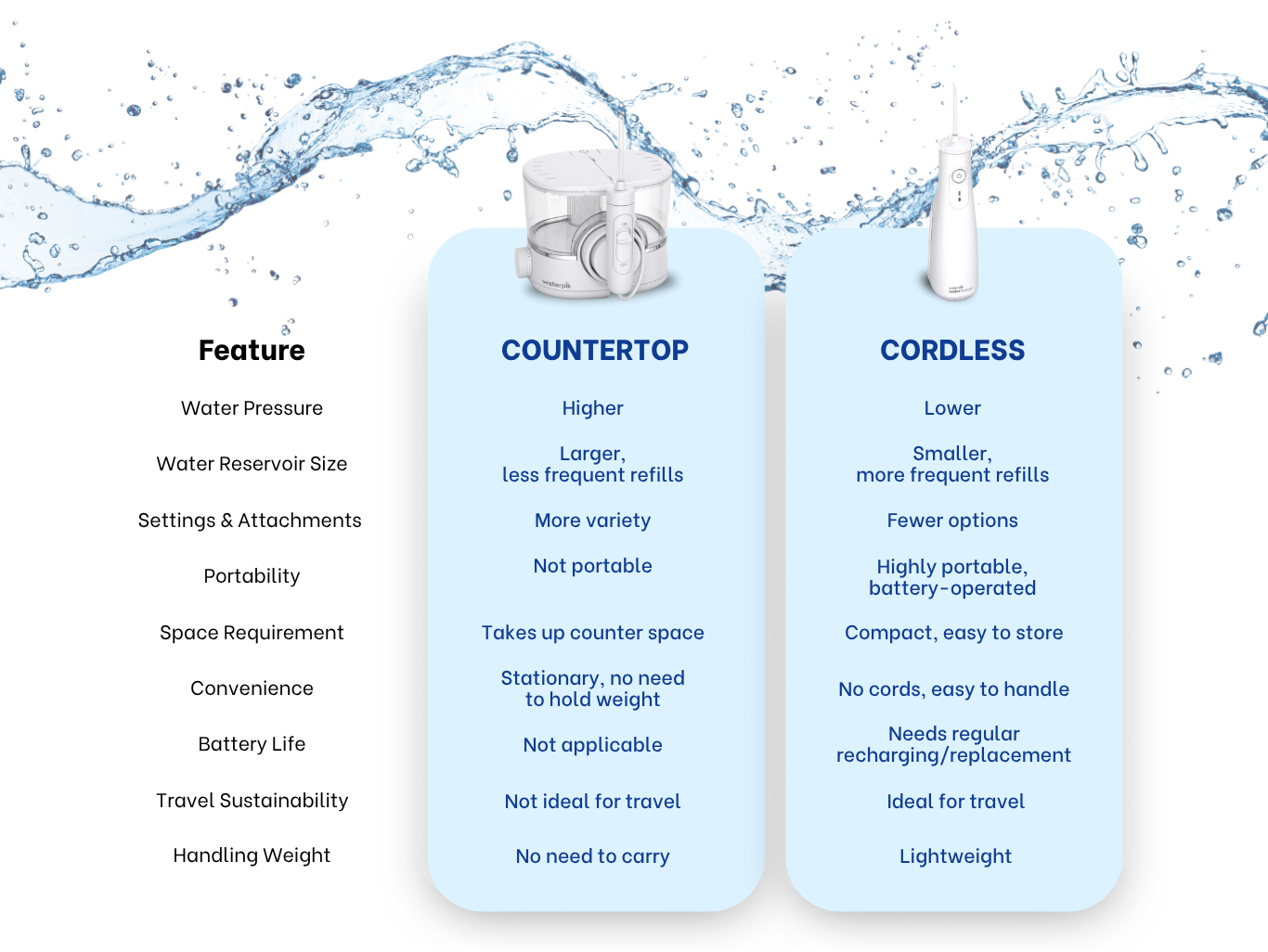
Countertop water flossers plug into an outlet and feature a large reservoir connected to a handheld wand via a hose. These are the most powerful models, ideal for home use and users who prioritize performance over portability.
Key specifications include pressure range up to 100+ psi, reservoir size of 500 to 800 mL providing 60 to 90 seconds of continuous use, and up to 10 adjustable pressure settings. These models are best for deep cleaning, gum disease, implants, and braces. The Waterpik Aquarius WP-660 is a top pick, as it is ADA-approved with 10 pressure settings and includes 7 tips.
Some countertop models, like the Waterpik ION, are rechargeable, offering cord-free flexibility without sacrificing power.
Cordless Models: Portability First
Cordless water flossers are compact, battery-powered devices with an integrated water tank in the handle. They are perfect for travel, small bathrooms, or shower use.
Key specifications include battery life of 2 to 4 weeks per charge, reservoir size of 200 to 350 mL which may require refills mid-use, and lower pressure than countertop models. These models are best for travelers, minimalists, and users with limited space. The Waterpik Cordless Pearl is a top pick, featuring a leak-resistant design, 3 pressure settings, and a 210 mL tank.
Some budget models require multiple refills to clean the entire mouth, which can reduce convenience.
Sonic-Fusion Models: Brush and Floss in One
The Sonic-Fusion combines an electric toothbrush and water flosser in a single unit. You can brush, floss, or do both simultaneously, cutting down routine time and counter clutter.
These models feature dual-function heads and multiple cleaning modes. They are best for time-conscious users and those with small bathrooms. The drawback is less customization than separate devices. The Waterpik Sonic-Fusion is ideal for those who want maximum efficiency.
Complete Care Systems: Premium Bundles
These kits include a high-end water flosser and a separate electric toothbrush, sold together. They offer full control over both routines and are ideal for users with complex dental needs.
These models are best for implants, braces, and gum disease. The drawbacks are higher cost and space requirement. The Waterpik Complete Care combines the Ultra Plus flosser with a professional toothbrush.
Key Features to Prioritize
Adjustable Pressure Settings
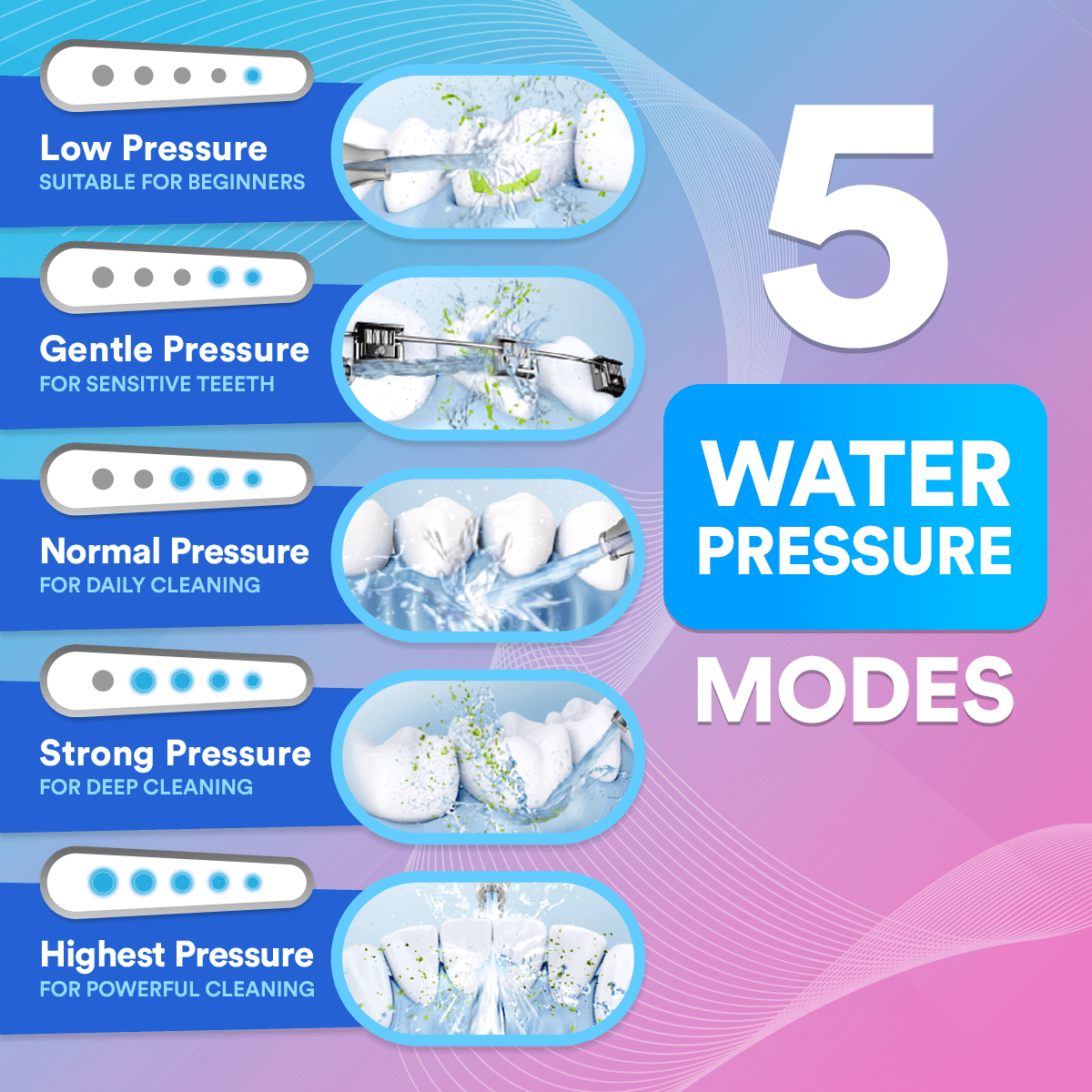
Not all gums are the same. If you have sensitivity or gum disease, starting at a low pressure prevents irritation. Look for at least 5 to 10 settings. Begin at setting 1 to 3 and increase over time. Adjustable pressure allows targeted cleaning, gentle on inflamed areas and strong on plaque-heavy zones.
The minimum effective pressure is 520 kPa for portable models and 550 kPa for countertop models.
Reservoir Capacity
Larger tanks mean fewer interruptions. Countertop models offer 500 to 800 mL capacity for 60 to 90 seconds without refilling. Cordless models offer 200 to 350 mL capacity for 30 to 60 seconds, often requiring mid-use refills. Look for detachable reservoirs for easy filling and cleaning.
Interchangeable Nozzle Tips
The right tip makes all the difference. Most models support universal attachments, so choose one with access to multiple types.
Essential tips include the classic jet tip for daily cleaning, orthodontic tip for braces and aligners, implant tip for gentle cleaning around implants, Pik Pocket Tip for gum pockets up to 6 mm, tongue cleaner for reducing bad breath, and gum massager for improving circulation.
Choose a model compatible with Waterpik tips, as they offer the widest selection and clinical backing.
Timer and Pulsing Modes
A 30-second quad timer prompts you to switch mouth sections. Auto shutoff at 1 to 2 minutes matches ADA brushing guidelines. Pulsing modes like Soft, Pulse, and Massage help desensitize gums. The ideal pulsation rate is 1200 pulses per minute.
On-Demand Water Flow
A button-controlled spray lets you activate water only when needed. This prevents mess, reduces waste, and improves control during use. This feature is essential for cordless models used in the shower.
Noise Level
Countertop models are generally quieter at 50 to 60 dB due to better insulation. Cordless units can be louder. If noise is a concern, check Consumer Reports ratings or look for sound-dampening design.
Charging and Power Options
Plug-in models offer no charging needed and steady power but require an outlet. Rechargeable models offer cord-free use but the battery degrades over 2 to 3 years. Induction models have no exposed ports but slower charging. USB models offer universal cable compatibility but port uncovering risks leaks.
Some Philips and budget models report internal plastic part failures within 6 to 18 months.
Evaluate Build Quality and Brand Reliability
Waterpik: Trusted and Research-Backed
Waterpik was founded in 1962 and offers the most ADA-approved models with extensive clinical research and wide availability of replacement parts. Some users report leaks in the Aquarius model after months of use.
Philips Sonicare: Premium Design, Mixed Durability
Philips Sonicare offers sleek integration with electric toothbrushes and high-end aesthetics. However, there are multiple reports of early failure within 1 year.
Budget Brands: Affordable but Risky
Models from Oralfree, Coslus, Nicwell, and H2ofloss cost $25 to $60. They are functional but inconsistent and often lack long-term support or replacement parts. They carry higher risk of planned obsolescence. These are great for trial use but not ideal for long-term reliability.
Check for ADA Approval
The ADA Seal of Acceptance means the device is safe and effective, removes plaque, reduces gingivitis, and meets clinical standards. Not all water flossers have it, so verify before buying.
Top ADA-approved models include the Waterpik Aquarius, Waterpik Ultra Plus, and Oral-B Water Flosser Advanced.
Consider Smart Features
While not essential, some models offer tech extras like Bluetooth app sync to track usage and habits, LED indicators showing battery and mode, UV tip storage to kill bacteria on tips, quick-charge for full charge in 3 to 4 hours, and leak-proof design ideal for travel.
Prioritize core performance over smart features unless tech integration is a personal priority.
Use It the Right Way
When to Use It
The best time to use a water flosser is before brushing. This dislodges debris and plaque and lets fluoride from toothpaste stay on teeth. If using prescription mouthwash like Oracare, use the water flosser last.
Water Temperature
Use warm water to reduce gum sensitivity. Cold water can cause discomfort, especially with exposed roots.
Can You Use Mouthwash
Yes, but mix no more than 50% mouthwash with water. Avoid thick or oil-based rinses. Rinse the reservoir thoroughly after use to prevent mold. Never use undiluted mouthwash, as it can damage internal components.
How Long to Floss
Aim for 60 to 90 seconds. Follow the 30-second timer to cover all quadrants. Refill cordless models as needed.
Maintain Your Device
Daily Maintenance
Empty the reservoir after use. Wipe the handle and base. Store dry.
Weekly Maintenance
Wash the reservoir with mild soap. Run a vinegar-water solution monthly to prevent mineral buildup.
Replace Tips Every 3 to 6 Months
Standard tips should be replaced every 6 months. Specialty tips like orthodontic and periodontal tips should be replaced every 3 months. Inspect for cracks, leaks, or mold.
Price Guide and Where to Buy
Countertop premium models range from $70 to $120, with Waterpik Aquarius and Ultra being common options. Countertop budget models range from $40 to $60, like Pylehealth and generic brands. Cordless premium models range from $60 to $90, like Waterpik Cordless Pearl. Cordless budget models range from $25 to $50, like Oralfree and Nicwell. Sonic-Fusion and Complete Care systems range from $100 to $180. Philips Power Flosser ranges from $90 to $130.
The best places to buy are Amazon for the best prices and fast shipping, the manufacturer site for warranties and bundles, and dentist offices for immediate access though at higher prices. Prime Day and Black Friday offer the best discounts.
Can It Replace String Floss or Brushing
Replace String Floss
Water flossers are not a complete replacement for string floss. Water flossers win at cleaning gum pockets, braces, implants, and wide gaps. String floss wins at cleaning tight contacts where water cannot penetrate. Use both for optimal hygiene. The exception is All-on-4 users who may rely solely on water flossing.
Replace Brushing
Water flossers cannot replace brushing. Brushing removes surface plaque and delivers fluoride. Water flossing targets interdental and subgingival areas. All three, brushing, flossing, and water flossing, work best together.
Top Picks by Category
Best Overall: Waterpik Aquarius WP-660
This countertop model features 10 pressure settings, a 650 mL tank, and 7 tips included. It is ADA-approved and dentist-recommended.
Best Cordless: Waterpik Cordless Pearl WF-13CD010
This rechargeable model features 3 pressure levels and a 210 mL leak-resistant tank. It is ideal for travel.
Best Budget: Pylehealth PH1857
This plug-in countertop model features adjustable pressure and a large tank. It costs under $60.
Best for Implants or Braces: Waterpik Ultra Plus WP-150
This model offers the highest pressure and is compatible with all specialty tips. It delivers clinical-grade performance.
Best All-in-One: Waterpik Sonic-Fusion
This model lets you brush and floss together with three cleaning modes. It saves time and counter space.
Final Checklist: How to Choose a Water Flosser
Assess your needs first. Do you have braces, implants, gum disease, or dexterity issues? Pick the type that fits your lifestyle. Choose countertop for power, cordless for portability, or Sonic-Fusion for convenience. Prioritize features like adjustable pressure, large tank, multiple tips, and timer. Check for ADA approval to ensure clinical effectiveness. Choose a reliable brand like Waterpik for trust or budget brands for trial. Use it daily with warm water before brushing and replace tips regularly. Combine with floss and brush for complete oral care.
The best water flosser is not the most expensive, it is the one you will use consistently. Whether you need deep cleaning for gum disease or a travel-friendly option for your next trip, there is a model that fits your life. Choose wisely, maintain it well, and your gums will thank you.
Frequently Asked Questions About Choosing a Water Flosser
What is the most important feature to look for in a water flosser
The most important feature is adjustable pressure settings. This allows you to customize the water pressure to your comfort level, especially important if you have sensitive gums or gum disease. Look for models with at least 5 to 10 pressure settings.
Can I use a water flosser if I have braces
Yes, water flossers are highly recommended for braces. Look for a model that includes an orthodontic tip, which is specifically designed to clean around brackets and wires more effectively than traditional floss.
How often should I replace the tips on my water flosser
Replace standard tips every 6 months and specialty tips like orthodontic or periodontal tips every 3 months. Regular replacement ensures optimal cleaning performance and hygiene.
Are water flossers better than string floss
Water flossers are more effective at reducing gingival bleeding and improving gum health, making them excellent for gum disease and dental work. However, string floss still excels at cleaning tight contacts. Using both together provides the best results.
Do I need ADA approval when choosing a water flosser
ADA approval is not mandatory, but it ensures the device meets rigorous clinical standards for safety and effectiveness. ADA-approved models like those from Waterpik have been clinically proven to remove plaque and reduce gingivitis.
How do I know which type of water flosser is right for me
Choose a countertop model if you prioritize power and performance at home. Choose a cordless model if you travel frequently or have limited bathroom space. Choose a Sonic-Fusion if you want to combine brushing and flossing in one device.
Key Takeaways for Choosing a Water Flosser
Choosing the right water flosser starts with understanding your specific oral health needs. Whether you have braces, implants, gum disease, or limited dexterity, there is a model designed for your situation. Prioritize features like adjustable pressure settings, adequate reservoir capacity, and interchangeable tips that match your dental needs.
Waterpik remains the most trusted brand with extensive clinical research and ADA-approved models. While budget options exist, they often lack long-term reliability and customer support. The investment in a quality water flosser pays off in improved gum health and more effective cleaning around dental work.
Remember that a water flosser complements but does not replace traditional brushing and flossing. Use it daily before brushing with warm water, maintain it regularly, and replace tips on schedule. The best water flosser is the one you will use consistently, so choose based on your lifestyle and needs rather than fancy features you may never use.