
If your water flosser has lost pressure, emits a musty smell, or spits water unevenly, the problem likely lies in the internal tubing. Unlike the reservoir or nozzle, the water flosser tube cannot be scrubbed or removed on most models. Yet it is prone to limescale, mold, biofilm, and clogs from daily use. The good news is you can effectively clean it using simple liquid-based flushing methods.
This guide reveals the best science-backed techniques to keep your flosser’s internal system clean, safe, and running like new. You will learn how to flush, descale, disinfect, and maintain your water flosser tube using household items like vinegar and hydrogen peroxide, plus smart prevention tips to avoid mold and mineral buildup.
Vinegar Flush: Best for Limescale & Odors

The number one recommended method for cleaning water flosser tubing is a vinegar flush. White vinegar contains acetic acid that dissolves mineral deposits and kills common microbes without damaging food-grade plastics.
Mix the Right Solution
Use one part white vinegar to two parts warm water, or add one to two tablespoons of vinegar per full reservoir. Never use undiluted vinegar unless your manual specifically allows it.
Why it works. Acetic acid breaks down calcium and magnesium, which are common culprits in hard water buildup.
Run and Soak the System
- Fill the clean reservoir with the vinegar solution.
- Reattach to the base unit.
- Turn on the flosser and run the entire solution through the system. No tip is needed.
- Turn off and let sit for 10 to 15 minutes to allow descaling action.
- Rinse thoroughly with two full reservoirs of clean warm water.
Visual cue. After the second rinse, the water should run clear and odor-free.
How Often to Do It
Perform a vinegar flush monthly for soft water users, every four to six weeks if your tap water is hard, and weekly in high-humidity areas or if you notice early pressure loss.
Pro tip. Pair vinegar flushes with distilled water use to reduce scaling by up to 90 percent.
Citric Acid: Odorless Descaling Option
If you dislike the smell of vinegar, citric acid is a powerful food-safe alternative that targets limescale without lingering odor.
Prepare the Solution
Dissolve two to three teaspoons of citric acid powder in 250 milliliters of warm water. Fill the reservoir completely.
Flush and Soak
- Run the solution through the flosser until empty.
- Let it sit in the tubing for 10 to 15 minutes.
- Rinse with two full cycles of clean water.
When to use it. Every one to three months depending on water hardness, or ideal for weekly maintenance in hard water zones when rotated with vinegar.
Safety note. Citric acid is safe for plastics and seals when rinsed properly.
Hydrogen Peroxide: Deep Disinfection
When mold, bacteria, or post-illness contamination is a concern, a hydrogen peroxide flush delivers strong sanitization.
Use the Correct Mix
Dilute three percent hydrogen peroxide with water at a two to one ratio. Example. 200 milliliters water plus 100 milliliters peroxide.
Never use full-strength peroxide. It can degrade rubber seals over time.
Clean and Rinse
- Fill reservoir and run through the system.
- Let sit for 10 to 15 minutes.
- Flush with two full reservoirs of clean water.
Best use cases. After recovering from a cold, sore throat, or oral infection, when you detect a musty or sour smell, and as a monthly disinfection boost when alternating with vinegar.
Denture Tablet Flush: Mold and Biofilm Killer
Denture cleaning tablets are a user-validated innovation for tackling stubborn mold and organic buildup in sealed tubing.
How to Use
- Drop one tablet into a full reservoir of warm water.
- Wait for it to dissolve completely. This takes two to five minutes.
- Run the solution through the flosser.
- Follow with two to three full rinse cycles of clean water.
Why it works. Tablets contain oxidizing agents that break down biofilm and kill mold.
Frequency. Monthly for general users, every two to three weeks if mold is recurring, and essential for multi-user or humid environments.
Daily Maintenance: Prevent Stagnation
The most effective cleaning happens every day, not just during monthly deep cleans.
Empty Reservoir After Use
Never leave water sitting overnight. Pour out unused water immediately after flossing.
Why. Stagnant water breeds bacteria and mold within hours.
Flush with Clean Water
Run warm tap water through the system for 10 to 15 seconds after each use to clear residual particles.
Dry Properly
Detach the reservoir and store it upside down without the cap. Leave the cap off to promote airflow. Store the unit in a well-ventilated area.
Weekly Nozzle and Handle Care
Nozzles and handles connect directly to the tubing, so neglecting them reintroduces contaminants.
Clean the Nozzle
- Remove from the handle.
- Soak in two to one water-to-vinegar or two to one water-to-peroxide for five to 10 minutes.
- Rinse under running water.
- Air-dry before storing.
Safety. Do not boil unless the manual allows it. Some plastics can warp.
Handle Tip Soak for Countertop Models
- Detach the nozzle.
- Submerge the handle tip in vinegar solution for five to seven minutes.
- Rinse and dry fully.
Monthly Deep Cleaning Routine
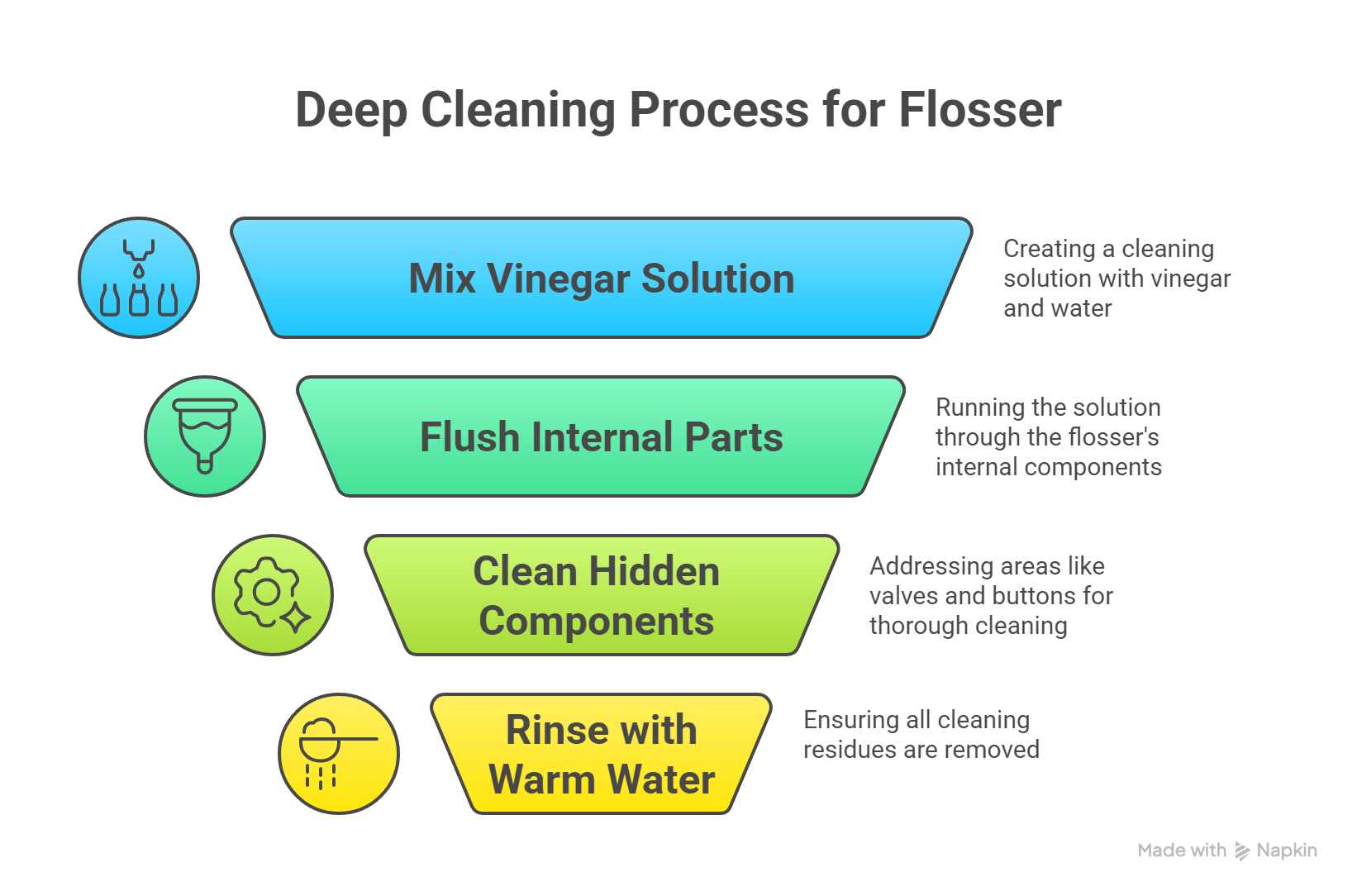
Follow this six-step system for complete internal hygiene.
Prepare Your Cleaner
Choose one of the following. Vinegar solution, citric acid mix, or denture tablet.
Run Solution Through System
Activate the flosser and let it pump the entire solution through the tubing.
Let It Soak
Turn off and allow the solution to dwell for 10 to 15 minutes. This enhances descaling and disinfection.
Rinse Thoroughly
Flush with two full reservoirs of clean water. Never skip this step. Residual cleaner can irritate gums.
Clean the Reservoir
Hand-wash with a soft brush or run through the dishwasher on the top rack only.
Inspect the Check Valve
- Push up from underneath to remove the black rubber valve.
- Massage under warm water for 30 to 45 seconds to clear debris.
- Reinsert securely.
Verification. After cleaning, check for strong consistent water flow and no odor.
Prevent Mold and Buildup: Smart Habits
Since most tubing is sealed and non-removable, prevention is your best defense.
Use Distilled or Filtered Water
Tap water contains minerals that cause limescale. Switching to distilled or filtered water reduces buildup by up to 90 percent.
Bonus. Extends time between deep cleans and protects internal seals.
Never Store With Mouthwash
Leaving undiluted mouthwash in the reservoir degrades rubber parts and leaves sticky residue. Always rinse immediately after use.
Store Upright and Ventilated
Keep the flosser detached and upright in a dry area. Avoid enclosing it in cabinets where moisture lingers.
Replace Tips Regularly
Old nozzles harbor bacteria and reduce pressure. Replace every six months for single users, every three to four months in hard water areas, and every three months in multi-user homes.
Signs Your Tube Needs Cleaning
Watch for these red flags that indicate your water flosser tube needs attention.
Low Water Pressure
Likely cause is mineral clogs in tubing or nozzle. Fix. Perform a vinegar or denture tablet flush.
Sputtering or Irregular Pulsing
Cause is airlock or biofilm obstruction. Fix. Run several warm water cycles and purge the system.
Musty or Moldy Smell
Cause is microbial growth in damp tubing. Fix. Deep clean with peroxide or denture tablet and improve drying routine.
Cloudy or Discolored Stream
Cause is biofilm shedding or limescale particles. Fix. Immediate descaling and disinfection.
Black Specks in Water
Cause is mold or degraded internal material. Fix. Clean thoroughly. If specks persist, replace the unit.
Brand-Specific Tips

Waterpik
Tubing is non-removable. Use one to two tablespoons vinegar per reservoir monthly. Remove black check valve before dishwasher wash. Avoid heated dry cycle.
Oral-B
Tubing is sealed and inaccessible. Perform vinegar flush every one to three months. Press and hold power button to purge trapped water.
Philips Sonicare
Tubing is integrated and prone to mold. Use vinegar or approved solution monthly. Strict drying is essential due to user complaints about mold.
Generic Models
Usually non-removable tubing. Use one to one vinegar/water or citric acid every one to two months. Some allow commercial descalers.
Safety Warnings
Avoid these common mistakes that could damage your device or harm your health.
Do not use bleach. It is corrosive and toxic if not rinsed completely.
Never use boiling water. It can warp the reservoir and damage seals.
Avoid undiluted hydrogen peroxide. It is harsh on rubber components.
Do not submerge the base unit. Wipe with a damp cloth only.
Always check your manual. Some cleaners may void your warranty.
Rinse thoroughly after every chemical flush to prevent oral irritation.
Final Maintenance Schedule
Daily tasks include emptying the reservoir after use, flushing with clean water, and drying the reservoir upside down.
Weekly tasks include nozzle soak in vinegar or peroxide and handle tip cleaning.
Monthly tasks include vinegar or citric acid flush, denture tablet flush, reservoir dishwasher wash, check valve cleaning, and nozzle replacement every three to six months.
Frequently Asked Questions About Cleaning Water Flosser Tube
Can I use bleach to clean my water flosser tube?
No. Bleach is corrosive and toxic if not rinsed completely. It can damage plastic components and rubber seals. Stick to vinegar, citric acid, hydrogen peroxide, or denture tablets.
How often should I clean the internal tube of my water flosser?
Perform a deep clean monthly for most users. If you have hard water, live in a humid area, or share the device with others, clean every two to four weeks.
Why does my water flosser smell musty even after cleaning?
Musty smells indicate mold or biofilm growth inside the sealed tubing. Use a denture tablet flush or hydrogen peroxide treatment, and improve your drying routine by storing the reservoir detached and upside down.
Can I remove the internal tube for cleaning?
On most models, the tubing is sealed inside the motor base and cannot be removed. You must rely on liquid flushing methods. Check your user manual for specific guidance.
Does using distilled water really reduce the need for cleaning?
Yes. Distilled water eliminates up to 90 percent of mineral content that causes limescale. This significantly reduces cleaning frequency and protects internal seals.
What should I do if black specks appear in the water stream?
Black specks indicate mold or degraded internal material. Deep clean with a denture tablet or peroxide flush. If specks persist after thorough cleaning, replace the unit.
Key Takeaways for Cleaning Your Water Flosser Tube
The key to a clean water flosser tube is consistent daily habits, not just occasional deep cleans. Empty the reservoir after every use, flush with clean water, and store the reservoir detached and upside down to promote drying.
Use liquid-based cleaning methods monthly. Vinegar flushes dissolve limescale and kill odors, while denture tablets tackle stubborn mold and biofilm. Citric acid offers an odorless alternative, and hydrogen peroxide provides deep disinfection after illness.
Prevention matters most. Switch to distilled water, replace tips every three to six months, and never leave mouthwash in the reservoir. These simple habits extend your device life to three or more years and keep your water flosser hygienic and effective.