You bite down on your morning toast and wince at a sharp, sudden pain. When you check in the mirror, you spot a dark pit or visible hole in one of your molars. If your dentist isn’t available for days—or if cost or access is a barrier—the idea of filling a hole in a tooth at home might feel like your only option. The keyword “how to fill a hole in a tooth at home” reflects a real and urgent concern for many people facing dental pain without immediate care.
While you cannot permanently fix a cavity at home, over-the-counter (OTC) emergency dental kits can offer temporary relief for a lost filling, cracked tooth, or exposed cavity. These solutions are designed to protect the tooth, reduce sensitivity, and prevent food buildup—but only as a short-term bridge to professional treatment.
This guide walks you through exactly how to use temporary filling materials safely, how long they last, and what dangers to avoid. You’ll also learn when to seek emergency care, how to manage pain, and why skipping a dentist visit risks serious complications like infection, abscess, or even tooth loss.
Use FDA-Cleared Temporary Filling Kits (Not DIY Pastes)
The only safe way to temporarily fill a hole in a tooth at home is with dental-grade emergency kits like Dentemp OS or Temparin. These are available online and in pharmacies and are specifically formulated for oral use.
Why These Kits Work
These products contain a soft, moldable compound made from:
– Zinc oxide: Forms the base and has mild antibacterial properties
– Eugenol: A natural pain reliever derived from clove oil
– Paraffin and resins: Help the material seal the cavity and resist moisture
When applied correctly, they block food particles, reduce temperature sensitivity, and soothe nerve irritation.
“These products are the same as those that can be used to cover an exposed tooth surface.”
— Dr. Warren Scherer, DDS
Never use super glue, household cement, epoxy, or homemade pastes (like garlic, salt, or essential oils). These are toxic, can burn gum tissue, and may lead to poisoning or permanent damage.
Step-by-Step: Apply a Temporary Filling Safely

Follow this precise method to maximize the effectiveness and lifespan of your temporary fix.
Clean and Dry the Tooth Completely
Start by brushing and flossing the affected tooth to remove debris. Rinse your mouth with warm salt water (½ tsp salt in 8 oz water) to reduce bacteria and soothe inflammation.
Use a clean cotton swab or gauze to dry the cavity thoroughly. Moisture is the #1 reason temporary fillings fail—wet surfaces prevent proper adhesion.
Pro Tip: Work in bright light with a handheld mirror. If you can’t see the hole clearly, you risk improper application.
Insert and Shape the Filling Material
Take a pea-sized amount of the temporary compound and roll it between clean fingers to warm and soften it.
Press it firmly into the cavity using a Q-tip or applicator tool. Overfill slightly, as the material compresses when you bite down.
Close your mouth slowly and grind side-to-side gently to shape the filling to your natural bite.
If the filling feels too high or causes discomfort, use a clean fingernail or cotton swab to file down the excess.
Let It Set Without Disturbance
Most temporary fillings harden in 2–5 minutes, but they need at least 2 hours to fully set. Avoid eating, drinking, or rinsing during this time.
Once set, the material should feel smooth and stable, with no gaps or sharp edges.
“The temporary material usually takes a few minutes to harden and it takes about 2 hours to completely set.”
— Source: Article 3
How Long Does a Temporary Filling Last?
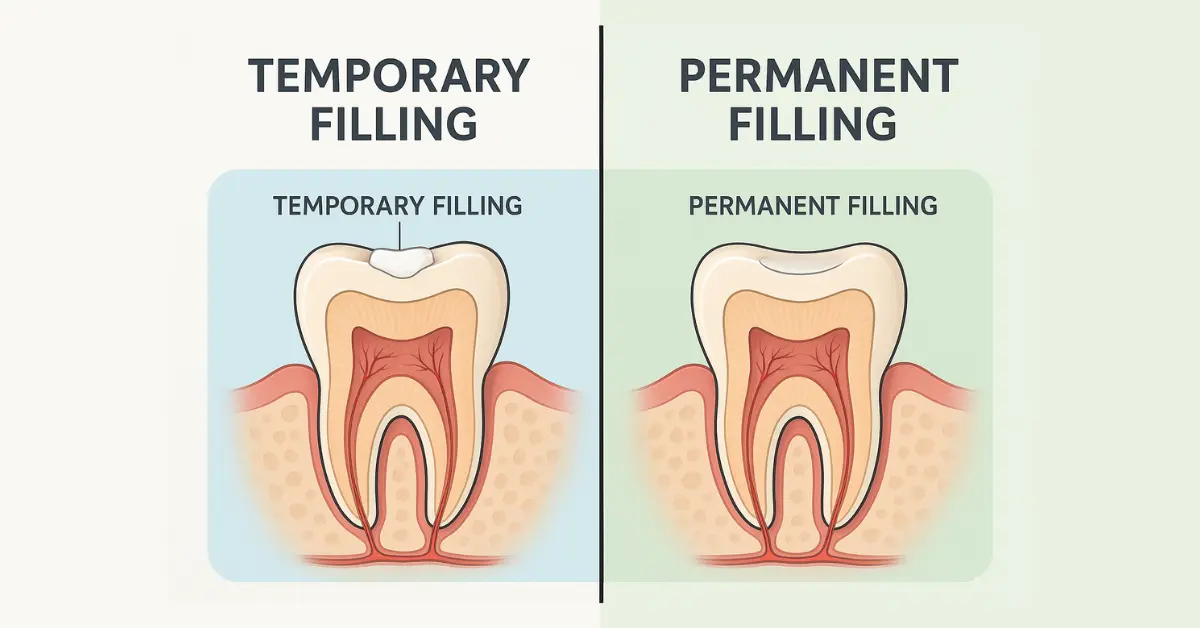
Expect 1 to 4 weeks of protection—if you’re careful.
Extend Its Lifespan With Smart Habits
To prevent early dislodgement:
– Avoid sticky foods: Gum, caramels, and taffy can pull the material out
– Skip hard items: Ice, nuts, and hard candy add pressure
– Stay away from acids and sugar: Soda and citrus degrade the material
– Chew on the opposite side of your mouth
Even if the filling stays intact, see a dentist within 24–48 hours. Delaying care allows decay to progress beneath the surface.
Warning: A temporary filling masks pain but doesn’t stop decay. Bacteria continue spreading, risking infection and nerve damage.
Risks of DIY Tooth Fillings: What You’re Not Fixing
Filling a cavity at home without removing decay is like putting a bandage on an infected wound—it may look better, but the problem worsens underneath.
Sealing in Decay and Infection
The biggest danger? Trapping live bacteria inside the tooth. Unlike a dentist, you can’t remove infected dentin or softened enamel at home.
Without proper cleaning:
– Decay continues to eat through the tooth
– The pulp becomes inflamed
– An abscess or nerve death may follow
“Without cleaning out an infection and sanitizing the tooth, you’re only sealing the damage inside.”
— Source: Article 4
This can turn a simple filling into a root canal—or result in tooth extraction.
Using Toxic or Unsafe Materials
Never use:
– Super glue or epoxy: These are not biocompatible and can burn oral tissues
– Aspirin on the gum: Causes chemical burns and delays healing
– Homemade remedies: Garlic, clove oil, or oil pulling may soothe pain but do not fill cavities
Only use FDA-cleared, dental-specific products. Even natural doesn’t mean safe when it comes to dental structure.
Causing Bite Misalignment and Jaw Pain
An uneven or overfilled temporary filling changes how your teeth meet. Even a 0.5mm difference can cause:
– Jaw pain and headaches
– TMJ (temporomandibular joint) dysfunction
– Excessive wear on opposing teeth
“DIY fillings can change your bite… Even small differences in our teeth can result in changes in our bites.”
— Article 6
If you develop pain when chewing or notice jaw fatigue, the filling likely needs adjustment—only a dentist can fix this safely.
What to Do When You Can’t See a Dentist Right Away
If professional care is delayed, take these steps to protect your tooth and manage symptoms.
Manage Pain with Safe Methods
Use:
– Ibuprofen (Advil, Motrin): Reduces both pain and inflammation
– Acetaminophen (Tylenol): For pain relief if you can’t take NSAIDs
– Topical gels (Orajel, Anbesol): Apply benzocaine-based gel directly to the area for short-term numbing
Never place aspirin directly on the gum—it causes tissue burns.
Protect the Exposed Tooth
If you don’t have a filling kit:
– Use sugar-free gum to cover the hole temporarily
– Apply orthodontic wax to shield sharp edges
– Avoid chewing on that side and stick to soft, lukewarm foods
Watch for Emergency Warning Signs
Seek immediate dental care if you experience:
– Facial or gum swelling
– Fever
– Pus or foul taste (signs of abscess)
– Severe, throbbing pain that won’t stop
These indicate a spreading infection that could become life-threatening without drainage and antibiotics.
“If there is swelling and bleeding around the gums, see a dentist as soon as possible because it may indicate something more serious.”
— Dr. Tom A. Howley Jr., DDS
Alternatives to DIY: Access Professional Emergency Care
Even if your regular dentist is unavailable, professional help is often accessible.
Visit an Urgent Dental Clinic
Many clinics offer weekend, evening, or holiday hours for emergencies. They can:
– Clean and temporarily fill cavities
– Prescribe antibiotics for infection
– Stabilize the tooth until permanent treatment
Go to a Dental School or Residency Program
Dental schools often run low-cost emergency clinics staffed by students under expert supervision. Services are significantly cheaper and follow strict safety protocols.
Hospital dental residencies may also have on-call dentists for urgent cases.
“There are areas or facilities that you can visit over a weekend without necessarily waiting for your dentist.”
— Dr. Warren Scherer, DDS
Ask About Financial Assistance
Cost shouldn’t block care. Call local offices to ask about:
– Payment plans
– Sliding scale fees
– Charity programs or community health centers
Many dentists offer flexible options to help patients afford treatment.
“You can call a few dental offices in your area and ask about payment plans or how treatment can be made affordable for you.”
— Article 4
Prevent Cavities: Avoid Future Dental Emergencies
The best “home fix” for a cavity? Never getting one in the first place.
Daily Habits That Prevent Decay
- Brush twice daily with fluoride toothpaste
- Floss every night to clean between teeth
- Use antibacterial mouthwash if recommended
- Limit snacking, especially sugary or acidic foods
- Visit your dentist every 6 months for cleanings and X-rays
Children and high-risk adults benefit from dental sealants, which coat molars and prevent decay in deep grooves.
“The better job you do at keeping up with the conditions in your mouth, the less likely dental emergencies are to occur.”
— Dr. Tom A. Howley Jr., DDS
Why Only a Dentist Can Truly Fix a Cavity

A dentist doesn’t just “fill a hole.” They perform a precise, multi-step restoration you can’t replicate at home.
Decay Removal and Sterilization
Using a dental drill, the dentist removes all infected tissue and sanitizes the cavity with antiseptic solutions. This stops decay in its tracks.
At home, you can’t see or access hidden decay—leaving it behind ensures the problem returns.
Durable, Bonded Fillings
Dentists use composite resin, amalgam, or glass ionomer—materials that:
– Bond to tooth structure
– Withstand years of chewing
– Match natural tooth color (in composites)
Temporary kits lack adhesion and wear down quickly.
Perfect Bite Adjustment
The dentist checks your bite with articulating paper and polishes the filling for comfort. DIY shaping can’t match this precision.
Summary: Key Facts About Filling a Hole in a Tooth at Home
| Aspect | What You Need to Know |
|---|---|
| Can you fill a hole at home? | Only temporarily with OTC kits—never permanent |
| Best material | Zinc oxide-eugenol (e.g., Dentemp OS, Temparin) |
| How long it lasts | 1–4 weeks with care; degrades over time |
| Biggest risk | Sealing in decay and infection |
| Missing steps at home | Decay removal, sterilization, bonding |
| When to see a dentist | Within 24–48 hours after application |
| Emergency alternatives | Urgent clinics, dental schools, hospital residencies |
| Safe pain relief | Ibuprofen, acetaminophen, benzocaine gels |
| Never use | Super glue, aspirin on gums, homemade pastes |
Final Note: The Only Real Fix Is Professional Dental Care
Knowing how to fill a hole in a tooth at home can be a useful stopgap—but there is no safe, permanent DIY solution. Temporary kits are tools to manage symptoms, not cure decay.
“These DIY filling kits are not without their risks… you can make the issue much worse for yourself.”
— Article 6
Delaying professional treatment risks irreversible damage, costly procedures, and even systemic infection.
Use OTC materials only as a bridge to professional care. Schedule your dental visit immediately, even if pain subsides. The longer you wait, the worse the outcome.
“The only ‘fix’ you can get if you have a hole in your tooth is professional treatment.”
— Article 6
Your oral health is too important to risk with shortcuts. Protect your smile—with real care, not temporary fixes.