Losing a tooth through extraction leaves more than just an empty space—it triggers a chain of biological changes that can affect your smile, bite, and even facial structure over time. If you’re wondering how to fill gap after tooth extraction, you’re not alone. Millions face this decision each year, and the right choice depends on your oral health, budget, and long-term goals. Left untreated, the gap can cause neighboring teeth to shift, lead to jawbone loss, and make future restorations more complex.
The good news? There are proven, effective solutions—from temporary fixes like flippers and retainers to permanent options like dental implants and bridges. Each has its own timeline, cost, and benefits. Whether you lost a molar or a front tooth, understanding your options early helps prevent complications and restores both function and confidence. This guide breaks down every method to fill the gap, when to act, and what to expect—so you can make an informed decision with your dentist.
Immediate Risks of Leaving a Gap

Teeth Shift Within Weeks
After extraction, adjacent teeth begin drifting into the empty space within weeks. This movement alters your bite, increases wear on remaining teeth, and may cause jaw pain or TMJ issues. Over time, misalignment makes future restorations harder—sometimes requiring orthodontic treatment just to reopen space for an implant or bridge.
Opposing teeth can also super-erupt, growing longer due to lack of contact. This is common with lower molars when upper teeth overgrow into the gap, disrupting chewing and increasing fracture risk.
“Missing teeth cause adjacent teeth to shift, affecting your bite and forming misalignment.” – Article 2
Bone Loss Begins Quickly
The jawbone needs stimulation from tooth roots to maintain density. Once a tooth is gone, alveolar bone resorption starts immediately. You can lose up to 25% of bone width in the first year alone. Over time, this weakens the jaw, changes facial contours, and may lead to a sunken appearance around the mouth.
Severe bone loss limits your ability to get dental implants later—often requiring bone grafting to rebuild volume, which adds time and cost.
Facial and Functional Impact
Missing back teeth reduces chewing efficiency by up to 30%, forcing you to favor one side and straining your jaw. Front tooth gaps affect speech and self-confidence. Long-term, bone loss contributes to premature aging, especially in the lower face, where support diminishes.
Evaluate Your Replacement Options
Consider Location and Number of Teeth
Where the gap is located determines your best solution. Front teeth demand high aesthetics—implants or bridges are often preferred. Back teeth endure heavy chewing forces, so durability matters most. Single gaps allow for targeted fixes like implants or Maryland bridges. Multiple missing teeth may require partial dentures or implant-supported bridges.
“Anterior teeth demand high aesthetic standards; posterior teeth require strength for chewing.” – Resource Document
Assess Jawbone and Gum Health
Adequate bone density is essential for implants. If bone has already shrunk, grafting may be needed first. Healthy gums are non-negotiable—active periodontal disease must be treated before any permanent restoration.
Your dentist will use X-rays or CBCT scans to evaluate bone volume and plan treatment accurately.
Match Solution to Budget and Lifestyle
Implants cost more upfront but last decades. Dentures are affordable but need replacement every 5–10 years. Some patients prefer non-surgical options; others want a permanent, natural-feeling fix. Consider how much time you’re willing to invest and how much maintenance you’ll tolerate.
| Factor | Influences Choice |
|---|---|
| Cost | Implants > Bridges > Dentures |
| Surgery | Implants require it; others don’t |
| Maintenance | Removables need nightly care |
| Longevity | Implants last longest |
Use Temporary Solutions Early
Prevent Shifting With Retainers
A custom space maintainer (retainer) fits over your teeth and blocks adjacent ones from moving into the gap. It’s ideal if you plan an implant but need 3–6 months to heal.
- Worn at night or full-time
- Non-invasive and reversible
- Preserves space for permanent work
“Retainers serve as space holders, preventing neighboring teeth from drifting.” – Article 3
Start within 2–3 months post-extraction to stop early shifting. Without it, reopening space later may require braces.
Restore Smiles With Flipper Teeth
A flipper tooth is a lightweight, removable partial denture made of acrylic with one artificial tooth. It’s the most common temporary option for front gaps.
- Fast and affordable ($300–$500)
- Can be worn immediately
- Improves appearance and speech
But flippers are not durable—they break easily and don’t prevent bone loss. They also press on the healing ridge, potentially speeding up resorption.
“A flipper tooth can be used during the healing period.” – Article 6
Clean nightly and avoid hard foods to extend its life.
Try Immediate Dentures for Full Coverage
Immediate dentures are placed right after extraction, so you never go toothless. Ideal for multiple extractions, especially in the upper jaw.
- Fabricated before surgery
- Protects extraction sites
- Maintains facial shape and confidence
However, gums shrink during healing, so the fit worsens over 3–6 months. You’ll need relines or rebasing to adjust. Eventually, most switch to conventional dentures or implants.
“Immediate dentures offer a quick and convenient solution… allowing time for your gums to heal.” – Article 4
Choose Permanent Replacement Options
Opt for Dental Implants When Possible
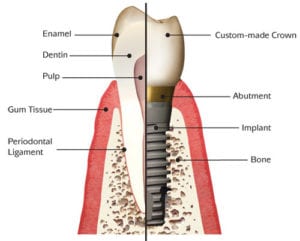
Dental implants are the gold standard for replacing missing teeth. A titanium post replaces the root, fused to the jawbone through osseointegration.
How Implants Work
- Implant post: Screw inserted into the jaw
- Abutment: Connector piece
- Crown: Natural-looking porcelain cap
Benefits
- Lasts 20+ years or a lifetime
- Prevents bone loss by stimulating the jaw
- No impact on neighboring teeth
- Feels and functions like a real tooth
“Dental implants are durable, look and feel like natural teeth, and help prevent bone loss.” – Article 2
Timeline
- Extract tooth (if needed)
- Bone graft (optional)
- Wait 3–6 months for healing
- Place implant
- Wait 3–6 months for integration
- Attach crown
Total time: 6–9 months on average
Immediate Implants: Faster but Riskier
Some cases allow implant placement the same day as extraction. This works only if:
– No infection
– Strong, healthy bone
– Intact front (buccal) bone wall
A bone graft is usually added to fill gaps between the round implant and oval socket. Success rates are slightly lower than delayed placement.
“Documented failure rates for ‘immediates’ are a bit higher.” – Article 5
Restore With Fixed Dental Bridges
A bridge fills the gap using crowns on adjacent teeth to support a false tooth (pontic).
Types
- Traditional bridge: Most common; requires filing down healthy teeth
- Maryland bridge: Bonded with wings; less invasive but weaker
Pros and Cons
| Feature | Traditional Bridge | Maryland Bridge |
|---|---|---|
| Cost | $1,500–$3,000 | $1,000–$2,500 |
| Durability | 10–15 years | 5–10 years |
| Tooth Prep | Enamel removed | Minimal |
| Bone Support | ❌ No stimulation | ❌ |
Bridges are faster than implants—usually done in 2–3 weeks. But they don’t stop bone loss under the pontic, and decay can form under crowns if hygiene lapses.
“Bridges are less durable than artificial tooth roots.” – Article 2
Implant-Supported Bridges for Multiple Gaps
When replacing 3+ teeth, an implant-supported bridge is stronger and healthier. Two or more implants anchor a fixed bridge, sparing natural teeth and preserving bone.
“An implant-supported bridge replaces many missing teeth in a row by securing the teeth at both ends with dental implants.” – Article 6
Cost: $5,000–$15,000, depending on implants and span.
Consider Removable Dentures for Affordability
Partial Dentures
Replace one or more missing teeth with a removable acrylic or metal-frame appliance.
- Clasps attach to natural teeth
- Cost: $500–$2,500
- Easy to adjust as gums change
But they can feel bulky, may affect speech, and accelerate bone loss due to pressure on the ridge.
Full Dentures
Used when all teeth are missing. Upper dentures cover the palate; lowers are horseshoe-shaped.
- Conventional: Removable
- Implant-retained: Snaps onto 2–4 implants for stability
“Some patients opt for non-removable dentures. The dentist keeps them in place with dental implants.” – Article 6
All-on-4: Premium Full Arch Solution
Four strategically placed implants support a full set of fixed teeth. No slipping, no adhesives.
- Cost: $15,000–$30,000 per arch
- Heals in 3–6 months
- High satisfaction and function
Ideal for patients who want permanent, stable teeth without daily removal.
Preserve Bone With Grafting

Stop Resorption Early
Socket preservation grafting is the best way to maintain bone after extraction—especially if you’re planning an implant later.
During extraction, the dentist fills the socket with bone graft material (synthetic, donor, or autogenous) and covers it with a membrane or collagen plug.
- Prevents 30–50% of expected bone loss
- Maintains ridge height and width
- Increases implant success rate
“Ridge preservation grafting may be unnecessary in the posterior maxilla… the body will fill in the extraction site with bone by itself.” – Article 5
But for front teeth or thin ridges, grafting is highly recommended.
Know When Advanced Grafts Are Needed
If bone has already shrunk, you may need:
– Block bone graft: For large defects
– Sinus lift: To add height in the upper jaw
– Guided Bone Regeneration (GBR): Uses a membrane to direct growth
Healing times:
– Socket graft: 4–6 months
– Sinus lift/block graft: 6–9 months
“Place the implant between six to 12 months later.” – Article 5
Delaying beyond a year risks graft resorption.
Act Within the Critical Time Window
First 48 Hours: Plan Immediately
Even before extraction, discuss replacement options. If getting an immediate denture or implant, your dentist must prepare in advance.
- Take impressions ahead of time
- Order graft material if needed
- Schedule follow-up visits
2–3 Weeks: Watch for Shifting
Teeth can start moving within weeks. If you’re not getting an implant soon, wear a temporary retainer or flipper to hold the space.
2–3 Months: Deadline for Action
By 8–12 weeks, significant shifting may occur. Bone remodeling accelerates. This is the maximum safe delay before permanent planning.
“Aim to have a solution in place no later than two to three months after extraction.” – Article 3
3–6 Months: Healing Completion
Most implants require 3–6 months of healing for full osseointegration. The hard outer cortical bone reforms by 6–9 months, critical for long-term stability.
“You’ll see that hard outer shell of bone form in six to nine months.” – Article 5
Choose a Skilled Provider
Ask About Experience and Tools
Implant success depends heavily on the clinician’s skill.
Ask:
– How many immediate implant placements have you done?
– Do you use 3D CBCT scans for planning?
– Will you perform bone grafting if needed?
– What is your implant success rate?
– Are you board-certified in oral surgery or prosthodontics?
“These are advanced techniques not taught to competence in dental school.” – Article 5
Choose a specialist—periodontist, oral surgeon, or prosthodontist—for complex cases.
Verify Imaging and Planning
Modern treatment relies on digital planning. A CBCT scan shows bone depth, nerve location, and sinus position—avoiding complications during surgery.
Avoid providers who rely only on 2D X-rays for implants.
Compare Costs and Insurance Coverage
| Option | Average Cost (USD) | Notes |
|---|---|---|
| Dental Implant | $3,000–$5,000 | Includes surgery, abutment, crown |
| Traditional Bridge | $1,500–$3,000 | Per unit; involves two crowns |
| Maryland Bridge | $1,000–$2,500 | Less invasive, shorter lifespan |
| Partial Denture | $500–$2,500 | Metal vs. acrylic base |
| Full Denture | $1,000–$4,000 | Upper usually more expensive |
| Implant-Retained (All-on-4) | $15,000–$30,000 | Per arch; premium stability |
| Flipper Tooth | $300–$500 | Temporary only |
| Socket Bone Graft | $300–$800 | Often included in implant cost |
Insurance often covers bridges and dentures but not implants. Check your plan or consider financing options.
Final Note: Filling the gap after tooth extraction is one of the most important decisions for long-term oral health. Acting early prevents shifting and bone loss, while choosing the right solution restores function, aesthetics, and confidence. Whether you choose implants, bridges, or dentures, the key is planning now—not later. Talk to your dentist immediately, explore your options, and invest in a healthy, lasting smile.