A snaggle tooth—one that juts out, twists, or sits crooked among otherwise straight teeth—can be a unique trait or a daily source of frustration. While some people proudly wear their misaligned tooth as a signature feature (especially in cultures like Japan, where “yaeba” or double teeth are seen as youthful and endearing), others struggle with the practical and emotional toll. It can make brushing harder, affect your bite, cause speech issues, or make you hesitate to smile freely.
The truth is, a snaggle tooth won’t fix itself. Left untreated, it can lead to long-term dental problems and even jaw pain. But the good news? Modern dentistry offers more options than ever to correct it—whether you want a fast cosmetic fix or a permanent, health-focused solution. From invisible aligners to instant veneers, you can achieve a confident, functional smile without years of metal braces. This guide breaks down every proven method, so you can choose the best path forward.
Why Your Snaggle Tooth Developed
Before fixing a misaligned tooth, it helps to understand why it’s there. A snaggle tooth doesn’t appear randomly—it’s usually the result of genetics, growth patterns, or habits formed in childhood.
Genetic Jaw and Tooth Size Mismatch
If your jaw is too small or your teeth are naturally larger, there’s simply not enough space. This crowding forces one tooth—often the upper canine—to rotate or push outward. Since jaw and tooth size are largely inherited, crooked teeth often run in families.
Premature or Delayed Baby Tooth Loss
Baby teeth act as placeholders. If one falls out too early due to decay or injury, nearby teeth can shift into the gap, blocking the adult tooth’s path. On the flip side, if a baby tooth lingers too long, the permanent tooth may erupt behind or beside it, creating a visible snaggle.
Childhood Habits That Shift Teeth
Long-term thumb sucking, pacifier use beyond age 3, or tongue thrusting apply constant pressure on the front teeth. Over time, this can push teeth forward, alter jaw development, and create misalignment—even after the habit stops.
Impacted or Misdirected Eruption
Sometimes, a tooth grows sideways or gets stuck beneath the gum due to blockages like cysts or dense bone. This is common with canines and often results in a tooth that appears angled or partially erupted—classic snaggle tooth territory.
Risks of Ignoring a Snaggle Tooth
While a slightly crooked tooth might seem harmless, leaving it untreated can lead to real health and functional issues.
Harder to Clean, Higher Cavity Risk
A misaligned tooth creates tight spaces where food and plaque collect. Brushing and flossing become less effective, increasing your risk of:
– Tooth decay
– Gum disease (gingivitis or periodontitis)
– Persistent bad breath
Over time, poor hygiene around a crooked tooth can lead to serious gum infections or even tooth loss.
Uneven Bite and Jaw Pain
A snaggle tooth disrupts your bite, causing uneven pressure on other teeth. This can lead to:
– Excessive enamel wear
– Cracked or chipped teeth
– TMJ (temporomandibular joint) pain
– Chronic headaches or migraines
Speech and Airway Problems
Depending on its position, a snaggle tooth can interfere with tongue placement, causing a lisp or difficulty with “s” and “z” sounds. In severe cases, misalignment can narrow your airway, contributing to mouth breathing, snoring, or even mild sleep apnea.
Emotional and Social Impact
Even a single crooked tooth can affect self-esteem. Many people avoid smiling, laughing, or being photographed. This can lead to social anxiety and a reluctance to engage fully in personal or professional settings.
Can a Snaggle Tooth Fix Itself?
No. A snaggle tooth will not straighten on its own. Once a tooth has erupted in the wrong position, it won’t naturally shift into alignment. In fact, without treatment, minor misalignment often worsens over time due to natural tooth drift, gum disease, or tooth loss. Waiting only increases the risk of complications.
Best Ways to Fix a Snaggle Tooth

The right treatment depends on the severity of misalignment, your budget, timeline, and whether you prioritize function or appearance. Here are the most effective options available today.
Clear Aligners for Mild to Moderate Cases
Clear aligners like Invisalign or Aalto are ideal for gradually straightening a slightly rotated or protruding tooth—without metal braces.
How it works: Custom 3D-printed trays apply gentle pressure to move the tooth into place. You wear each set for 1–2 weeks, 20–22 hours a day. Treatment typically takes 4 to 18 months.
What to expect:
– Digital scan of your teeth
– A simulation showing your tooth movement
– New aligners every 1–2 weeks
– Remote or in-person check-ins
Pros:
– Nearly invisible
– Removable for eating and brushing
– No food restrictions
– Comfortable and discreet
Cons:
– Requires discipline—must be worn most of the day
– Less effective for severely rotated or impacted teeth
– Doesn’t correct major jaw issues
Cost: $1,500–$8,000
Best for: Adults and teens with mild to moderate misalignment who want a discreet option.
Traditional Braces for Complex Alignment
If your snaggle tooth is severely rotated, impacted, or affecting your bite, traditional braces are the most powerful solution.
Metal vs. ceramic braces:
– Metal: Most effective and affordable
– Ceramic: Tooth-colored for a less noticeable look, but more fragile
How it works: Brackets are bonded to each tooth and connected by a wire. Adjustments every 4–6 weeks gradually guide the tooth into position. Treatment lasts 6 to 24 months.
Visual cue: You’ll see the tooth slowly rotate and align over time.
Pros:
– Handles all types of misalignment
– Can correct bite and jaw issues
– Most predictable results
Cons:
– Visible (except lingual braces)
– Can irritate cheeks and lips
– Dietary restrictions (no sticky or hard foods)
– Requires frequent orthodontist visits
Cost: $3,000–$9,000
Best for: Severe cases or when jaw alignment is also an issue.
Veneers for Instant Cosmetic Fix
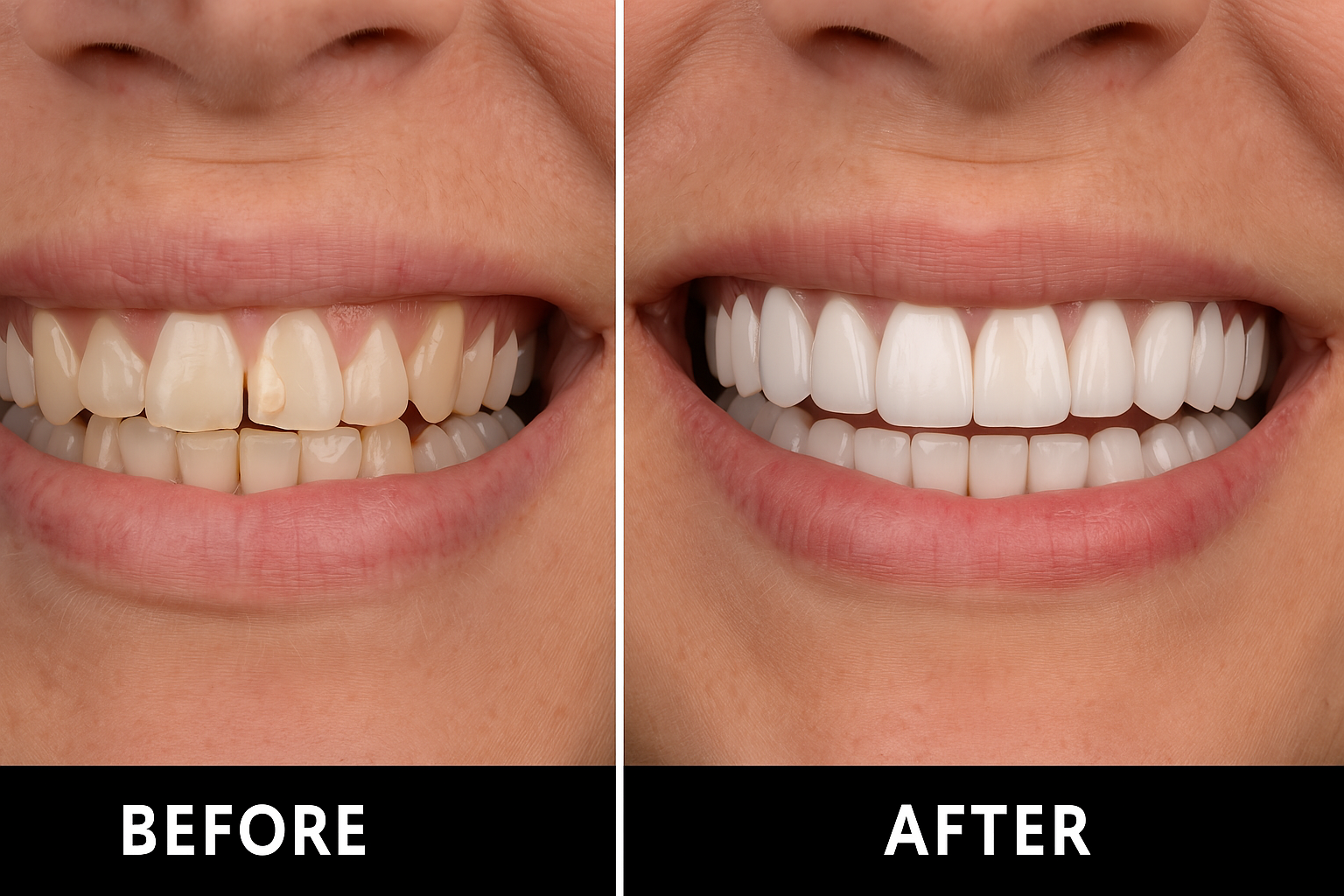
Want a straight smile in just 1–3 visits? Veneers reshape the tooth’s appearance without moving it.
Porcelain vs. composite:
– Porcelain: Durable, stain-resistant, lasts 10–20 years
– Composite: Lower cost, less enamel removal, lasts 5–7 years
The process:
1. Shave 0.3–0.5 mm of enamel
2. Take an impression (for porcelain)
3. Bond the veneer with UV light
Warning: Enamel removal is permanent. Once done, you’ll always need a covering.
Best candidates:
– Minor misalignment
– Healthy tooth underneath
– Not a teeth grinder
Cost: $500–$2,500 (porcelain), $300–$1,500 (composite) per tooth
Best for: Quick aesthetic improvement—ideal for professionals or anyone wanting immediate results.
Tooth Contouring for Minor Adjustments
If your snaggle tooth is only slightly protruding or jagged, contouring can smooth it out in one visit.
How it works: A dentist uses a sanding drill or laser to gently reshape the enamel. No anesthesia needed.
Risks:
– Enamel doesn’t grow back
– Over-contouring increases sensitivity and decay risk
Cost: $50–$500 per tooth
Best for: Small chips or minor overlaps—not for significant misalignment.
Dental Bonding for Budget-Friendly Reshaping
Bonding uses tooth-colored resin to reshape a snaggle tooth, making it look straighter.
Procedure:
1. Etch the tooth surface
2. Apply and sculpt resin
3. Harden with UV light
4. Polish to blend in
Done in one visit, often in under an hour.
Pros: Affordable, no enamel removal, painless
Cons: Less durable, stains easily, may need touch-ups every 3–7 years
Cost: $300–$600 per tooth
Tooth Extraction and Implant (Last Resort)
If the tooth is severely damaged, impacted, or causing pain, extraction followed by an implant may be necessary.
Options:
– Implant: Titanium post fused to jawbone—$3,000–$5,000
– Bridge: Crowns on adjacent teeth support a false tooth—$1,500–$3,500
Best for: Non-restorable teeth or when alignment can’t be corrected.
How to Choose the Right Fix
Ask yourself:
– How severe is the misalignment?
Mild: aligners, veneers, bonding
Moderate: clear aligners or braces
Severe: braces or surgery
-
What’s your budget?
Most affordable: bonding or contouring
Highest upfront cost: implants or veneers -
How fast do you want results?
Fastest: veneers or bonding (1–3 visits)
Longest but most effective: braces or aligners -
Cosmetic or functional goal?
Want better bite and hygiene? Choose orthodontics.
Want a perfect smile fast? Veneers may be better.
What to Expect: From Consultation to Results
- Dental evaluation: X-rays, scans, bite analysis
- Treatment plan: Timeline, cost, expected outcome
- Active treatment: Follow instructions—especially wear time for aligners
- Post-treatment care: Retainers are essential to prevent relapse. Most wear them nightly for life.
Pro tip: Practice proper tongue posture (tongue on palate) to support long-term alignment.
Cost Comparison at a Glance
| Treatment | Cost | Duration | Longevity |
|---|---|---|---|
| Clear Aligners | $1,500–$8,000 | 4–18 months | Permanent (with retainer) |
| Braces | $3,000–$9,000 | 6–24 months | Permanent (with retainer) |
| Porcelain Veneers | $500–$2,500/tooth | 2–3 visits | 10–20 years |
| Dental Bonding | $300–$600/tooth | 1 visit | 3–7 years |
| Tooth Contouring | $50–$500/tooth | 1 visit | Permanent |
| Dental Implant | $3,000–$5,000 | 3–6 months | 20+ years |
Insurance tip: Orthodontic treatment may be covered, especially for children. Cosmetic procedures usually aren’t.
Prevention Tips
For children:
– First orthodontic check-up by age 7
– Stop thumb sucking and pacifier use by age 3
– Treat cavities early
– Encourage chewy foods (apples, carrots) to stimulate jaw growth
For adults:
– Wear a retainer if you’ve had braces
– Use a night guard if you grind your teeth
– Maintain gum health—gum disease can cause shifting
Final Thoughts: Fix It on Your Terms
A snaggle tooth won’t fix itself—but you have more control than ever. Whether you choose invisible aligners for a healthy, lasting fix or veneers for an instant transformation, the goal is the same: a smile you’re proud to show. Don’t let hesitation keep you from better oral health and confidence. Start with a consultation, explore your options, and take the first step toward a straighter, stronger smile—your way.