You’re sipping your morning coffee when a sharp, electric jolt shoots through one tooth. It’s not just sensitivity—it’s a sign your tooth root is exposed. Unlike the enamel-covered crown, the root lacks natural protection and is covered only by cementum, a softer layer that wears down easily. When gums recede, this vulnerable surface becomes open to temperature changes, bacteria, and decay. Left untreated, exposed roots can lead to root caries, infection, bone loss, or even tooth loss. The good news? With the right treatment, you can stop the damage, reduce pain, and restore your smile. This guide breaks down every proven solution—from non-invasive bonding to advanced gum graft surgery—and reveals what you can do at home to support healing and prevent further recession.
Recognize the Warning Signs of Exposed Roots
Catching root exposure early can mean the difference between a simple fix and complex surgery. Many people ignore the first signs until discomfort becomes unbearable.
Visible Changes in Tooth Appearance
Exposed roots dramatically alter your smile. Look for these telltale visual cues:
– Teeth appear longer than normal due to gum recession
– Yellow or dark bands near the gumline—this is cementum, not enamel
– Gaps between teeth and gums where food collects
– Uneven gumline, making some teeth look “naked” at the base
These aren’t just cosmetic issues. They signal that protective gum tissue has pulled away, leaving the root surface vulnerable to decay and infection.
Sensitivity That Disrupts Daily Life
The root contains microscopic tubules that lead directly to the nerve. Once exposed, even mild stimuli can trigger pain:
– Sharp pain from hot or cold drinks
– Discomfort when eating sweet, sour, or salty foods
– Pain when breathing cold air, especially during exercise
– Stinging during brushing, even with soft toothpaste
If brushing has turned into a chore, root exposure is likely the culprit.
Loose or Shifting Teeth
In advanced cases, root exposure comes with structural damage:
– Teeth feel wobbly when touched
– Gaps widen between teeth
– Biting feels uneven or uncomfortable
This indicates significant bone and tissue loss, requiring urgent professional care to prevent tooth loss.
Identify the Underlying Cause
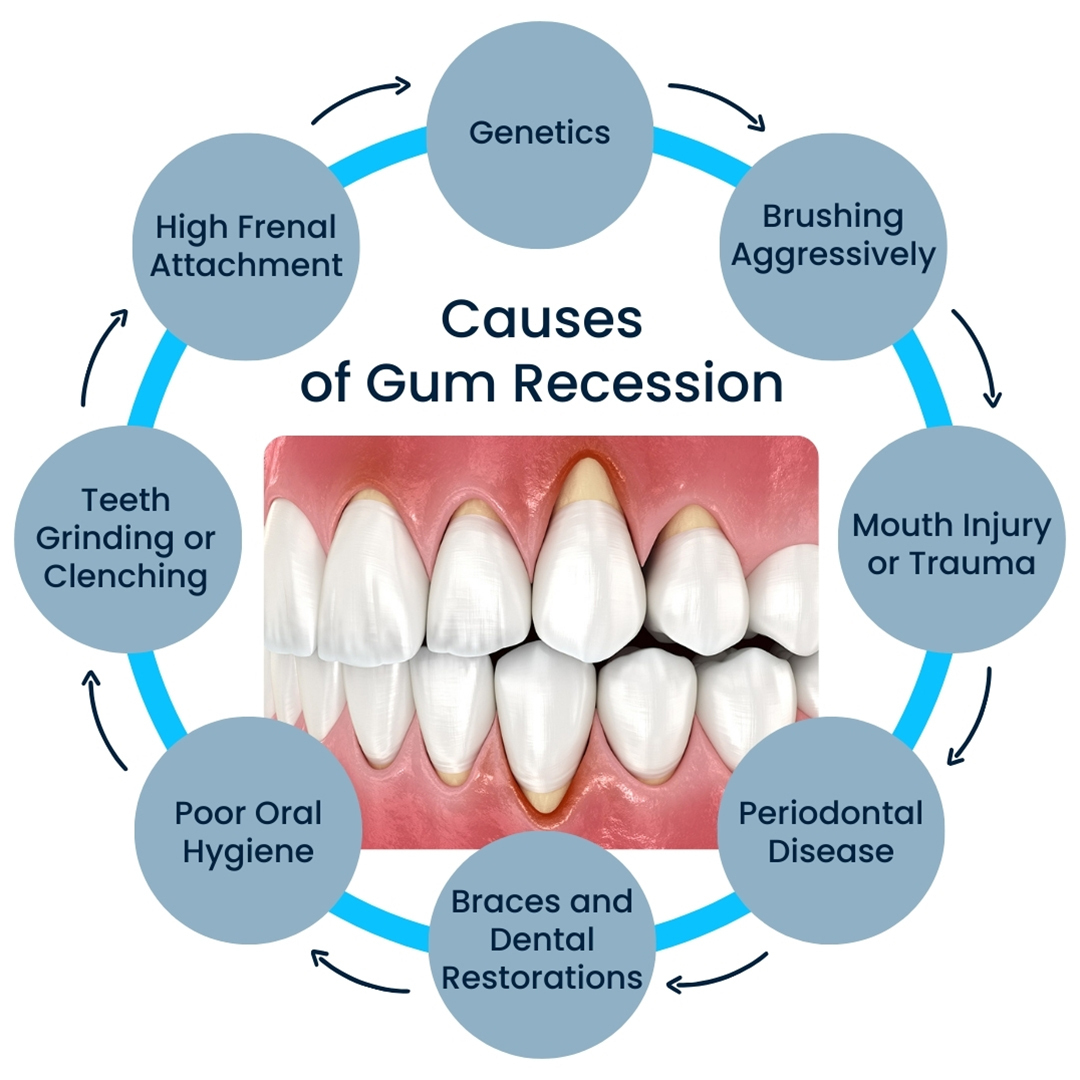
Treating exposed roots effectively means addressing why the gums receded in the first place.
Gum Disease Is the Leading Cause
Periodontitis, the advanced stage of gum disease, destroys the bone and connective tissue that hold teeth in place. It starts as gingivitis—marked by red, swollen, bleeding gums. Without treatment, infection spreads below the gumline, forming deep pockets that pull gums away from roots. If you’ve noticed bad breath, bleeding during brushing, or pus around teeth, gum disease may be driving your root exposure.
Aggressive Brushing Wears Gums Down
Using a hard-bristled toothbrush or scrubbing horizontally can erode gum tissue over time. A 1993 study confirmed that excessive brushing force significantly increases recession risk. If your toothbrush bristles flare outward quickly, you’re likely brushing too hard.
Genetics Play a Role
Some people are born with thin or weak gum tissue, making them prone to recession even with excellent hygiene. If family members have long-looking teeth or gum problems, you may have inherited a higher risk. This doesn’t mean treatment isn’t possible—it means prevention and early care are even more critical.
Teeth Grinding Adds Pressure
Bruxism, or nighttime teeth grinding, exerts extreme force on teeth and gums. Over time, this trauma loosens supporting tissues and contributes to gum recession. Common signs include:
– Waking up with jaw pain or headaches
– Flat or worn-down teeth
– Increased sensitivity
A custom night guard can protect your gums and prevent further damage.
Misaligned Teeth Create Uneven Stress
Crooked teeth or a poor bite (malocclusion) place uneven pressure on certain teeth. This forces some teeth to bear more load, accelerating gum wear and recession in specific spots. Orthodontic treatment can correct alignment and reduce future risk.
Professional Treatments That Work
Once gum tissue recedes, it won’t grow back on its own. Only professional treatments can restore coverage and protect roots.
Dental Bonding for Mild Exposure
Best for: Minor root exposure with sensitivity or cosmetic concerns.
Bonding uses tooth-colored composite resin to cover the exposed root:
1. The tooth is cleaned and etched for better adhesion.
2. Resin is applied and shaped to mimic natural tooth structure.
3. A curing light hardens the material in minutes.
Pros: One-visit procedure, no surgery, immediate results
Cons: Doesn’t treat gum loss, may stain, lasts several years
Also known as composite resin restoration, bonding is ideal for fast, non-invasive fixes.
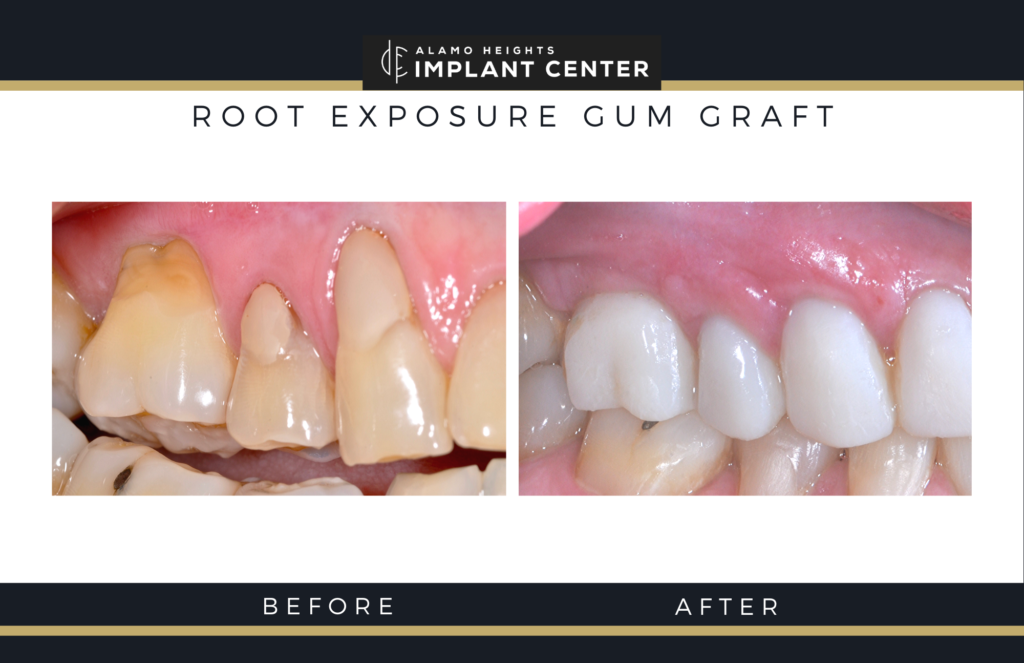
Gum Graft Surgery: The Gold Standard
Best for: Moderate to severe recession.
Gum grafting is the most effective way to cover exposed roots:
– Tissue is taken from the palate or a donor source.
– It’s grafted onto the receded area and secured.
– Healing takes 4–6 weeks, with natural-looking results.
Benefits: Protects root and bone, reduces sensitivity, stops recession
Also called: Mucogingival grafting—high success rate when done by a periodontist.
Pinhole Surgical Technique (PST)
Best for: Patients wanting minimal downtime.
PST is a modern alternative:
– A tiny pinhole is made in the gum.
– Existing tissue is loosened and stretched over exposed roots.
– No cutting, no sutures, no donor site.
Advantages: Less pain, faster healing, no incisions
Limitations: Not for all cases, requires a skilled specialist
Ideal for visible front teeth with multiple recession sites.
Laser Treatment for Gum Regeneration
Best for: Recession caused by gum disease.
LANAP (Laser Assisted New Attachment Procedure) uses laser energy to:
– Remove infected tissue
– Sterilize pockets
– Stimulate gum and bone regeneration
Benefits: Minimally invasive, less bleeding, faster recovery
Often used alongside grafting for optimal results.
Deep Cleaning to Stop Infection
Best for: Early to moderate gum disease.
Scaling and root planing removes plaque and tartar below the gumline:
– Scaling: Clears bacteria from tooth surfaces
– Root planing: Smoothes roots to prevent reinfection
Done under local anesthesia, this is often the first step before grafting.
Pocket Reduction Surgery
Best for: Deep periodontal pockets (>5 mm).
In flap surgery:
– Gums are lifted back
– Tartar and bacteria are removed
– Gums are repositioned and sutured
Reduces pocket depth and prevents further bone loss. Often combined with grafting.
Dental Crowns for Severely Damaged Teeth
Best for: Teeth with extensive wear or after root canal.
A dental crown covers the entire tooth, including the exposed root. Made from porcelain or ceramic, it restores strength and appearance. Crown lengthening may be done first to expose more tooth for a secure fit.
Gingival Mask for Non-Surgical Option
Best for: Patients who can’t undergo surgery.
A gingival mask is a removable silicone or acrylic prosthesis that covers receded gums. Custom-fitted, it improves aesthetics and protects roots—ideal for multiple recession sites.
Desensitizing Treatments for Pain Relief
Best for: Managing sensitivity.
Professional desensitizing agents block dentin tubules and reduce nerve signals. At-home options include:
– Toothpastes with potassium nitrate (e.g., Sensodyne)
– Stannous fluoride formulas that seal tubules
Results may take 2–4 weeks of daily use.
Orthodontic Correction for Misalignment
Best for: Recession from crooked teeth.
Braces or Invisalign shift teeth into proper position, eliminating uneven pressure. Correcting alignment reduces future recession risk and improves hygiene.
Night Guards for Teeth Grinding
Best for: Bruxism-related recession.
A custom-fitted mouthguard absorbs grinding forces, protecting gums and teeth. Combined with stress management, it prevents further damage.
Can You Fix Exposed Roots at Home?
No. Gum tissue cannot regrow or reattach naturally. Home remedies won’t reverse exposure—but they can slow progression and support healing.
Prevent Further Damage with Proper Hygiene
- Use a soft-bristled toothbrush
- Brush gently in circular motions
- Angle brush 45° toward gumline
- Floss daily
- Use fluoride toothpaste
Replace your toothbrush every 3–4 months.
Use Desensitizing Products
- Potassium nitrate toothpastes numb nerve endings
- Stannous fluoride forms a protective barrier
Use consistently for 2–4 weeks.
Support Gum Health with Diet
- Vitamin C (citrus, berries): Boosts collagen
- Calcium (dairy, kale): Strengthens bone
- Antioxidants (green tea, berries): Reduce inflammation
Stay hydrated to maintain saliva flow.
Try Natural Remedies (With Caution)
- Oil pulling: Swish coconut oil for 15–20 minutes
- Aloe vera gel: Soothes inflamed gums
- Green tea rinse: Fights bacteria
These are supportive only—never a substitute for professional care.
When to See a Dentist Immediately
Exposed roots won’t heal on their own. Delaying treatment increases the risk of:
– Root decay
– Infection or abscess
– Bone loss
– Tooth loss
See a dentist if you notice:
– Persistent sensitivity
– Visible root surfaces
– Bleeding or swollen gums
– Pus or bad taste
– Loose teeth
A dentist or periodontist can recommend the best treatment—whether bonding, grafting, or deep cleaning.
Prevent Future Recession
Even after treatment, prevention is essential.
Master Proper Brushing Technique
- Use a soft-bristled brush
- Apply gentle pressure
- Use circular motions
- Brush two minutes, twice daily
An electric toothbrush with a pressure sensor helps prevent over-brushing.
Schedule Regular Dental Cleanings
Visit your dentist every 6 months. Professional cleanings remove tartar and catch problems early.
Avoid Tobacco
Smoking and chewing tobacco:
– Increase plaque
– Reduce blood flow to gums
– Impair healing
Quitting improves treatment outcomes.
Wear a Night Guard If You Grind
Ask your dentist for a custom-fitted mouthguard to protect your teeth and gums.
Correct Bite and Alignment Issues
If your teeth are crooked, orthodontic treatment can prevent uneven wear.
Exposed tooth roots are serious but treatable. While home care cannot reverse recession, professional treatments like gum grafting, bonding, and laser therapy can restore protection and comfort. Early action prevents decay, infection, and tooth loss. Combine expert treatment with excellent oral hygiene to preserve your smile for life. If you’re experiencing sensitivity or visible root exposure, don’t wait—see your dentist today.