Losing a front tooth can feel like a personal crisis. Whether it happened due to trauma, decay, or you were born without one, the gap affects more than your smile—it impacts how you speak, chew, and carry yourself in social situations. That whistling sound when you talk? The way you avoid photos or cover your mouth when laughing? These are real consequences of a missing front tooth. But here’s the good news: modern dentistry offers multiple ways to fix it—some instantly, others permanently. From affordable temporary flippers to lifelong dental implants, you can restore both function and confidence. This guide breaks down every option for how to fix a missing tooth in front, so you can choose the best solution based on your age, budget, oral health, and goals.
Wear a Flipper or Temporary Denture Right After Tooth Loss
When a front tooth goes missing, appearance matters immediately. These options restore your smile within days—sometimes the same day.
Get a Dental Flipper Within One Visit
A dental flipper is the fastest, most budget-friendly way to fill a front tooth gap. Made of lightweight acrylic with a false tooth attached, it clips onto nearby teeth and can be ready in just one appointment.
- Cost: Typically under $300
- No surgery or tooth grinding required
- Can be worn immediately after extraction
Flippers are ideal if you’re waiting for an implant (which takes 3–6 months to heal) or want to test how a replacement looks before committing. They’re removable, so you take them out to eat and clean. But don’t chew gum or sticky candy—flippers aren’t built for heavy use.
💡 Pro Tip: Treat your flipper as a trial run. If the tooth shape, color, and position look natural, your dentist can replicate that design in your permanent crown or bridge.
Upgrade to a Flexible Partial Denture for Better Fit
For a more secure and comfortable option, consider a removable partial denture (RPD) made with a metal framework or flexible material like Valplast.
- Stronger and thinner than basic flippers
- Uses nearly invisible pink or clear clasps
- Lasts years with proper care
These are excellent if you’re missing more than one tooth or want something less bulky. While they still don’t prevent bone loss, they offer better stability and aesthetics than standard flippers.
🔍 What to Watch For: Ask your dentist about aesthetic clasps that blend with your gums. Avoid hot water when cleaning—it can warp the plastic.
Permanent Fixes That Look Natural and Last Years
Long-term solutions not only restore your smile but also protect your oral health by preventing teeth from shifting and bone from deteriorating.
Choose a Dental Implant for the Most Natural, Long-Lasting Result
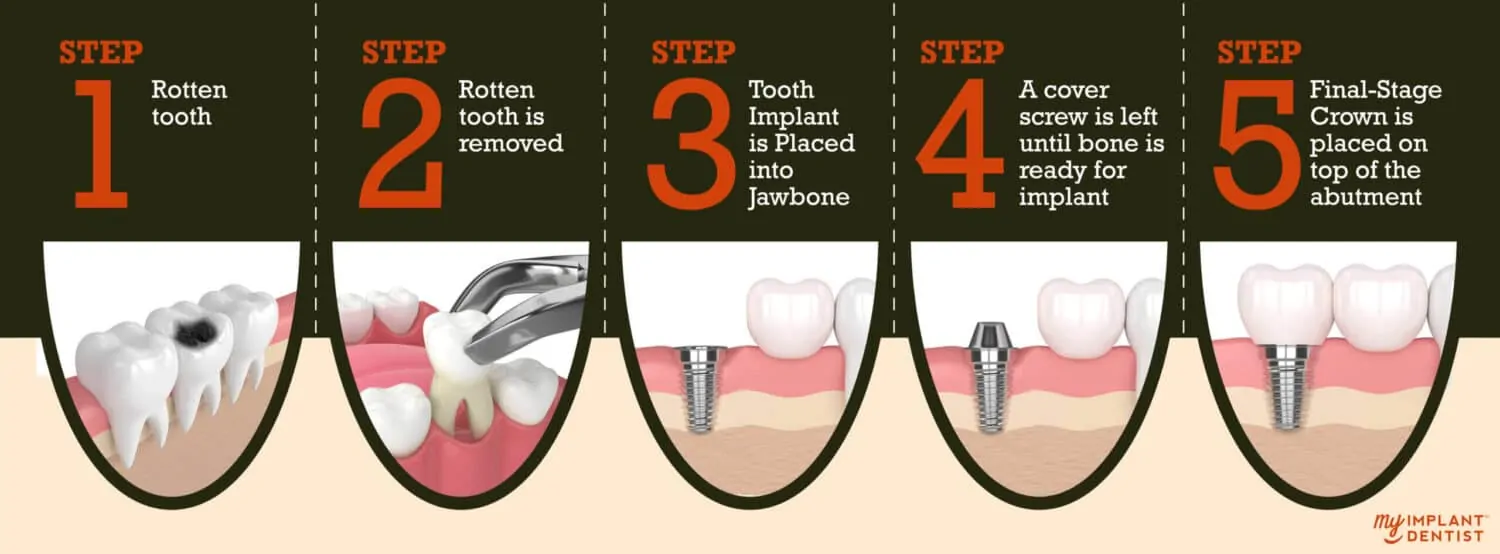
A dental implant is considered the gold standard for replacing a missing front tooth. It replaces both the root and crown, offering unmatched stability and a lifelike appearance.
How the Implant Process Works:
- A titanium post is surgically placed into your jawbone.
- It bonds with the bone over 3–6 months (a process called osseointegration).
- An abutment and custom-made porcelain or zirconia crown are attached.
- Success rate: 95–98% over 10 years
- Lifespan: Can last a lifetime with good hygiene
- Cost: $3,000–$6,000 per tooth
Implants let you eat, speak, and smile confidently. Because they stimulate the jawbone, they prevent the facial sagging that comes with bone loss.
⚠️ Important Limitations:
– Requires adequate bone density—some patients need a bone graft ($200–$1,200) first
– Not recommended for patients under 18–21 (jaw still growing)
– Risk of osteonecrosis in those on IV bisphosphonates (used for osteoporosis)
✅ Best For: Healthy adults seeking a permanent, low-maintenance, natural-looking tooth replacement.
Consider a Fixed Bridge If You Can’t Get an Implant
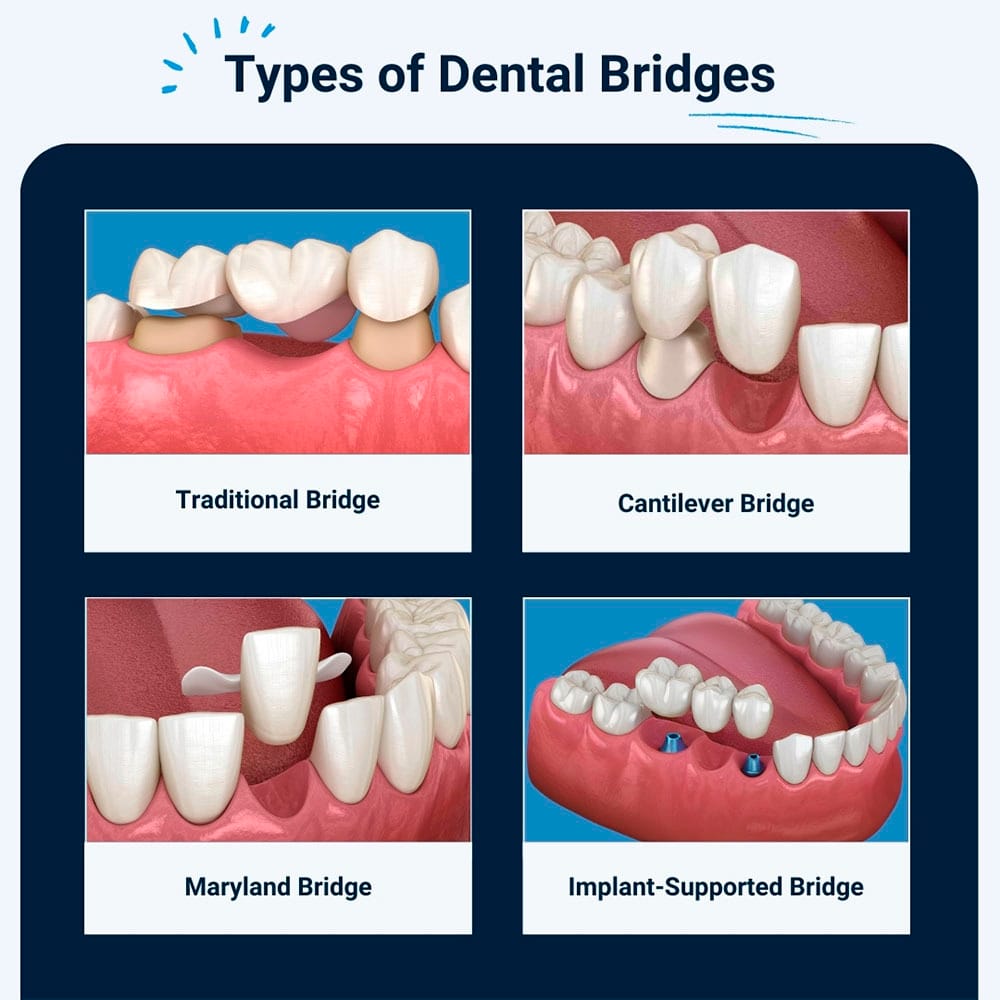
A dental bridge fills the gap by anchoring a false tooth (called a pontic) to the neighboring teeth. It’s fixed in place—no removal needed—and usually completed in just 2–3 visits.
Types of Bridges:
- Traditional Bridge: Requires crowns on both adjacent teeth. Strong but involves grinding down healthy enamel.
- Cantilever Bridge: Anchored on only one side—used when only one supporting tooth is available.
- Maryland Bridge: Bonded to the back of neighboring teeth with metal or porcelain wings. Minimally invasive and popular for front teeth.
- Monodent Bridge: Uses tiny composite nubs—least invasive of all.
Maryland bridges are often preferred for front teeth because they preserve healthy tooth structure. However, they’re not as strong under pressure and may need rebonding every few years.
🔍 Red Flag: Food can get trapped under the pontic, increasing decay risk. You’ll need to floss with a threader or water flosser daily.
✅ Best For: Younger patients, those avoiding surgery, or when the adjacent teeth already need crowns.
Close the Gap with Braces or Invisalign Instead
In some cases, you don’t need to replace the tooth—you can move surrounding teeth into the space using orthodontics.
This is common when a lateral incisor is congenitally missing (a genetic condition affecting about 1 in 10 people). Orthodontists use braces or clear aligners like Invisalign to shift the canine into the gap, then reshape or veneer it to look like an incisor.
- Treatment time: 6 months to 2+ years
- Cost: $3,000–$8,000
- No artificial tooth needed—just your natural teeth
After closing the space, the moved canine is often reshaped and covered with a veneer for a natural look.
✅ Advantages:
– No implants, bridges, or dentures
– Improves overall bite and alignment
– No long-term maintenance beyond regular brushing
🚫 Drawback: Once teeth are moved, you can’t later place an implant. This option is permanent and irreversible.
✅ Best For: Teens or adults with crowding or missing lateral incisors.
Budget-Friendly Removable Options
If cost is a concern or you’re not ready for surgery, removable dentures offer a practical alternative.
Use a Removable Partial Denture for Multiple Missing Teeth
A removable partial denture (RPD) replaces one or more missing front teeth and clips onto existing ones.
- Acrylic version: Cheapest ($300–$1,000)
- Metal framework (cobalt-chrome): Stronger, thinner, lasts decades ($1,500–$2,000)
- Flexible thermoplastic (e.g., Valplast): Nearly invisible clasps, comfortable fit
Modern RPDs are lightweight and discreet, with designs that hug your gums naturally. While less stable than implants, they’re non-invasive, repairable, and can last many years.
🔍 Care Tips:
– Remove and clean daily
– Soak overnight in denture solution
– Never use hot water—it can warp the acrylic
✅ Best For: Budget-conscious patients, those missing multiple teeth, or elderly individuals.
When Leaving the Gap Might Be Acceptable
Some people choose not to replace a missing front tooth—and in rare cases, that’s okay.
It’s Okay to Do Nothing If…
- You’re elderly with no functional issues
- The gap helped relieve severe crowding
- You’re comfortable with your appearance
- You’re planning orthodontic closure
However, leaving a gap comes with risks:
– Adjacent teeth tilt into the space
– Opposite tooth may over-erupt (e.g., lower front tooth grows upward)
– Jawbone shrinks over time, leading to facial aging
– Increased stress on remaining teeth
✅ Only recommended if you’re symptom-free, not concerned about looks, and not planning future treatment.
Compare All Options at a Glance
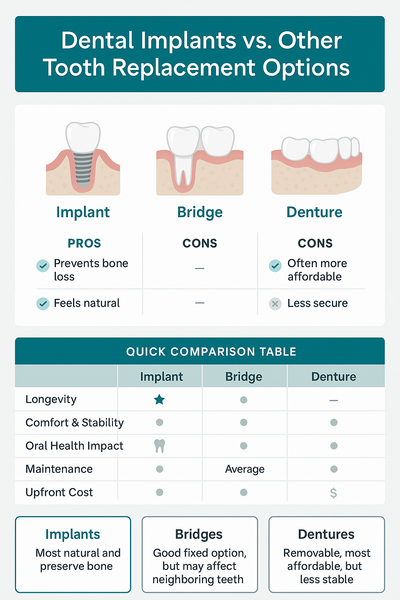
| Option | Cost | Timeline | Bone Preservation | Best For |
|---|---|---|---|---|
| Dental Implant | $3,000–$6,000 | 3–12 months | Yes | Most adults with good bone |
| Maryland Bridge | $1,000–$2,500 | 2–3 weeks | No | Young patients, minimal prep |
| Traditional Bridge | $1,500–$5,000 | 2–3 weeks | No | Damaged adjacent teeth |
| Removable Partial | $300–$2,000 | 2–3 weeks | No | Multiple missing teeth, budget |
| Dental Flipper | <$300 | 1 visit | No | Temporary use |
| Orthodontic Closure | $3,000–$8,000 | 6+ months | N/A | Missing lateral incisors |
| No Treatment | $0 | N/A | No | Elderly, low-risk patients |
Choose the Right Option for Your Situation
Your best choice depends on your age, health, and goals.
Under 21? Avoid Implants
Jaws grow until around age 18–21. An implant placed too early may appear “short” later. Instead, use a Maryland bridge, orthodontic closure, or flipper as a placeholder.
Have Healthy Neighboring Teeth? Protect Them
If your adjacent teeth are intact, avoid grinding them down for a bridge. A dental implant preserves natural structure and is worth the investment.
On Bisphosphonates or Diabetic? Talk to Your Dentist
IV bisphosphonates increase the risk of jaw bone death after surgery. Smokers and diabetics have lower implant success rates. Improve health and hygiene first.
Need a Fast Fix? Start with a Temporary Solution
Get a flipper or temporary crown while you heal, save money, or decide on a permanent plan. You don’t have to walk around with a gap.
Final Steps: What to Expect During Treatment
Every journey starts with a dental consultation. Your dentist will:
– Take X-rays or a CBCT scan (3D image of your jaw)
– Check gum health, bite, and adjacent teeth
– Discuss your goals and budget
From there, you’ll get a personalized plan—whether it’s an implant, bridge, denture, or orthodontic treatment.
Keep Your Smile Strong for Years
No restoration lasts without care:
– Implants: Brush, floss with a threader, and watch for gum inflammation
– Bridges: Clean under the pontic daily with floss threaders
– Removables: Clean daily and soak overnight
– Maryland bridges: Avoid hard foods and check for loosening
Final Note: Fixing a missing tooth in front isn’t just about looks—it’s about protecting your long-term oral health, speech, and self-esteem. Whether you choose a $300 flipper or a $6,000 implant, the key is acting early. Start with a consultation, get a temporary fix if needed, and build a plan that fits your life. With the right solution, you can smile freely again—naturally, securely, and for years to come.