
A discolored tooth after a root canal can be frustrating—especially when the procedure saved your tooth from pain and infection, only to leave behind a gray, brown, or yellow tint. This change is common, particularly in front teeth, and while it doesn’t mean your root canal failed, it can take a toll on your confidence. The good news? You’re not stuck with it.
Tooth discoloration after root canal treatment happens because the tooth becomes non-vital—its blood supply and living pulp tissue are removed, leaving it dehydrated and prone to internal staining. Over time, pigments from broken-down blood, residual debris, or even certain dental materials can seep into the dentin, causing deep, intrinsic discoloration that surface whitening can’t fix.
The solution lies in targeted treatments designed specifically for non-vital teeth. From internal bleaching to restorations like crowns and veneers, modern dentistry offers effective ways to restore your tooth’s natural appearance. This guide walks you through the causes, prevention strategies, and the most reliable fixes—so you can make an informed choice and reclaim a bright, seamless smile.
Diagnose the Cause of Your Tooth Darkening
Before choosing a fix, it’s important to understand why your tooth changed color. Knowing the root cause helps determine which treatment will work best.
Non-Vital Tooth Structure and Dehydration
Once the pulp is removed during a root canal, the tooth no longer receives nutrients or moisture from blood vessels. As it dehydrates, the enamel loses its natural translucency and takes on a flat, lifeless appearance—often turning gray or dull over weeks or months.
Internal Staining from Blood Breakdown
If trauma caused the need for your root canal, internal bleeding may have occurred. Hemoglobin from blood trapped inside the tooth breaks down over time, releasing iron-based pigments that stain the dentinal tubules. This leads to intrinsic discoloration—deep within the tooth—making it resistant to regular whitening.
Residual Materials and Medications
Some disinfecting pastes used during root canal therapy, such as those containing phenolic compounds, can leave behind stains. Even gutta-percha, the rubber-like material used to fill the root canals, may contribute to discoloration if it leaks into the surrounding dentin.
Oxidation and Calcification
Organic remnants inside the tooth oxidize over time, darkening the internal structure. Additionally, the body may respond to past trauma by depositing calcified tissue in the pulp chamber, leading to a yellowish hue.
Visual clue: If your tooth darkens gradually and causes no pain, swelling, or sensitivity, the issue is likely cosmetic. However, new pain or gum swelling could signal a failed root canal—seek immediate dental evaluation.
Prevent Discoloration Before It Starts
While you can’t always stop discoloration entirely, early preventive steps during or right after your root canal can minimize it—especially for visible front teeth.
Use Aesthetic Sealing Materials
Ask your dentist to use tooth-colored or white sealants instead of dark cements when restoring the tooth. These materials reduce visible staining and improve long-term aesthetics.
Perform Immediate Internal Bleaching
Some dentists offer “walking bleach” treatment right after completing the root canal but before placing the final filling. This proactive approach can prevent noticeable discoloration from developing.
Ensure Thorough Cleaning and Sealing
Complete removal of pulp remnants and blood using irrigants like sodium hypochlorite and EDTA reduces the risk of future staining. A well-sealed restoration also blocks external contaminants from worsening internal discoloration.
Pro tip: If you’re about to undergo a root canal on a front tooth, discuss preventive options with your dentist. A few extra minutes now can prevent cosmetic work later.
Internal Bleaching: The Most Effective First Step

Internal bleaching, also known as non-vital or walking bleach, is the gold standard for treating intrinsic discoloration in root canal-treated teeth. Unlike surface whitening, it works from the inside out—targeting the source of the stain.
How Internal Bleaching Works
A bleaching agent—typically hydrogen peroxide or sodium perborate mixed with water—is placed inside the pulp chamber. It diffuses through the dentin, breaking down pigment molecules that cause darkening. Because the stain originates internally, this method is far more effective than external whitening.
Step-by-Step Procedure
- Confirm Healing: Your dentist ensures the root canal is complete, symptom-free, and properly sealed.
- Access the Pulp Chamber: The temporary or old filling is removed to expose the chamber.
- Protect the Root Filling: A barrier (glass ionomer or composite) is placed over the gutta-percha to prevent bleach from leaking into surrounding tissues.
- Insert Bleaching Agent: The whitening gel is packed into the chamber.
- Seal Temporarily: A temporary filling closes the access.
- Wait 3–7 Days: The bleach works internally; some protocols extend this to 1–2 weeks.
- Evaluate and Repeat: You return for check-ups. The process is repeated 2–3 times until the desired shade is reached.
- Final Restoration: Once whitened, the tooth receives a permanent filling or is prepared for a crown or veneer.
Success rate: Most patients see visible improvement after the first application, with optimal results in 2–3 visits.
Best Cases for Internal Bleaching
- Moderate gray or brown discoloration
- Front teeth with cosmetic concerns
- Structurally sound teeth without major damage
Pros and Cons
Benefits:
– Minimally invasive
– Preserves natural tooth structure
– Cost-effective ($200–$500)
– High success for intrinsic stains
Risks:
– Rare risk of cervical resorption if bleach leaks (prevented by proper barrier)
– Color may not perfectly match adjacent teeth
– Results can fade after 3–7 years
Expert note: Internal bleaching is often the best first-line treatment—affordable, effective, and less invasive than restorations.
Combine Internal and External Whitening for Uniform Results
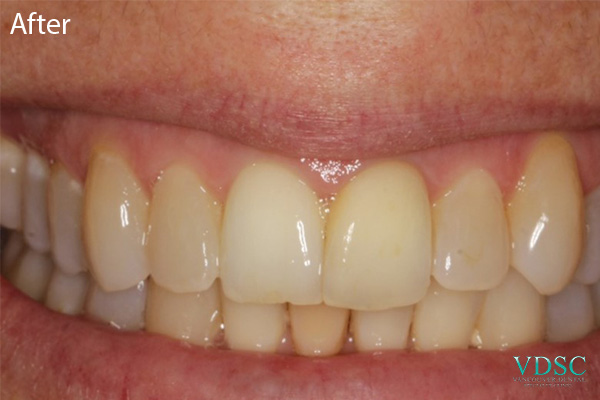
Even after internal bleaching, your treated tooth may still appear slightly different from your natural teeth. That’s where external whitening comes in.
Why Combine Both Methods?
External whitening evens out your entire smile by lightening the surrounding vital teeth to match the newly whitened root canal-treated tooth.
Available Options
- Custom Trays: Dentist-fitted trays with carbamide peroxide, worn 1–2 hours daily for 1–2 weeks.
- In-Office Whitening: High-concentration hydrogen peroxide applied professionally for faster results.
- Whitening Strips: Over-the-counter strips can help maintain results but are less effective on non-vital teeth.
Important: External whitening alone won’t fix intrinsic discoloration. It should be used after internal bleaching to fine-tune shade matching.
Pro tip: A short course of external whitening post-bleaching helps blend the treated tooth seamlessly with your natural enamel.
Mask Stains With Composite Bonding
For mild to moderate discoloration, composite bonding offers a fast, affordable solution—especially if you want results in one visit.
How Bonding Works
Tooth-colored resin is applied to the front surface of the discolored tooth, masking the stain. The dentist shapes and polishes it to match your natural teeth.
Procedure Steps
- Surface Prep: Enamel is lightly etched or minimally reduced.
- Optional Stain Removal: A thin layer of enamel may be removed to access superficial internal stains.
- Apply and Sculpt Resin: Composite is layered, shaped, and hardened with a curing light.
- Polish: Final buffing ensures a natural finish.
Ideal Candidates
- Mild discoloration
- Budget-conscious patients
- Teeth with good structural integrity
Advantages and Drawbacks
Pros:
– Affordable ($300–$600)
– One-visit treatment
– Minimal tooth alteration
Cons:
– Less durable than porcelain
– Prone to staining from coffee, tea, smoking
– May need replacement every 5–10 years
– Thick layers on dark teeth can look bulky
Expert insight: Removing a small amount of enamel before bonding helps achieve a more natural, translucent result.
Restore Appearance With Porcelain Veneers
For long-lasting, natural-looking results—especially on front teeth—porcelain veneers are a top choice.
What Are Veneers?
Thin, custom-made porcelain shells bonded to the front of the tooth. They completely conceal discoloration and enhance shape, size, and alignment.
When to Choose Veneers
- Moderate discoloration not fully corrected by bleaching
- Desire for permanent, stain-resistant results
- Good enamel health and minimal structural damage
Procedure Overview
- Enamel Reduction: 0.3–0.7 mm of enamel is removed.
- Impressions: Sent to a lab for custom fabrication.
- Temporary Veneers: Worn during the waiting period.
- Bonding: Final veneer is cemented with strong adhesive.
Benefits
- Lifelike translucency
- Stain-resistant
- Long-lasting (10–15+ years)
- Improves tooth shape and alignment
Downsides
- Expensive ($900–$2,500 per tooth)
- Irreversible due to enamel removal
- May not mask very dark teeth without prior internal bleaching
Pro tip: Combine internal bleaching with veneers for the best aesthetic outcome on severely discolored teeth.
Rebuild and Conceal With Dental Crowns

For teeth that are both dark and weakened after root canal, a dental crown offers the most comprehensive solution.
Why Crowns Work
Crowns cap the entire tooth, providing full coverage. They’re ideal when:
– Discoloration is severe
– The tooth is structurally compromised
– You need maximum durability and aesthetics
Crown Materials
- Porcelain-fused-to-metal (PFM): Strong, but may show a dark line at the gum.
- All-ceramic or zirconia: Metal-free, highly aesthetic, perfect for front teeth.
Process Steps
- Tooth Preparation: Significant reduction to make space.
- Impression or Scan: Sent to the lab.
- Temporary Crown: Worn during fabrication (1–2 weeks).
- Final Cementation: Permanent crown is bonded.
Benefits
- Completely masks discoloration
- Strengthens weakened teeth
- Long-lasting (10–15+ years)
- Full control over color and shape
Considerations
- Most invasive option
- Highest cost ($1,000–$3,000 per tooth)
- Requires multiple visits
Expert note: For back teeth, crowns are often recommended after root canals for strength—even if discoloration isn’t a concern.
Choose the Right Treatment for Your Needs
| Treatment | Cost | Lifespan | Best For |
|---|---|---|---|
| Internal Bleaching | $200–$500 | 3–7 years | First-line fix for intrinsic stains |
| Composite Bonding | $300–$600 | 5–10 years | Budget-friendly, quick fix |
| Porcelain Veneers | $900–$2,500 | 10–15+ years | Natural, long-term aesthetics |
| Dental Crown | $1,000–$3,000 | 10–15+ years | Weak or severely discolored teeth |
Final advice: If the tooth is strong and you can invest, porcelain veneers offer the best balance of beauty and durability.
Maintain Your Results Long Term
Protect your investment with:
– Daily brushing and flossing
– Avoiding stain-causing foods and drinks
– Using a straw for dark beverages
– Regular dental check-ups every 6 months
– Touch-up bleaching every few years if needed
Final note: With the right treatment, you can enjoy a natural, confident smile again—no compromises.