Tooth gems have taken the beauty world by storm, offering a dazzling way to personalize your smile. Bonded directly to the enamel with dental-grade adhesive—similar to orthodontic brackets—these tiny crystals or resin ornaments can last for months. But when it’s time to remove them, doing so safely becomes critical. Improper removal can lead to chipped enamel, sensitivity, or long-term dental damage. Whether you’re considering at-home methods or planning a professional visit, this comprehensive guide walks you through every step. You’ll learn how to identify when DIY removal is safe, the correct tools and techniques to use, how to handle leftover adhesive, and when to seek expert help. Most importantly, you’ll understand how to protect your enamel—the foundation of a healthy, lasting smile.
Professional Removal: Safest Option for Intact Gems
Why Dentists and Orthodontists Are Best Equipped
While general dentists can perform tooth gem removal, many lack the specialized tools needed for safe, scratch-free results. Orthodontists, however, are ideal candidates—they routinely remove braces using the same precision instruments and techniques required for gem debonding. With training in minimizing enamel trauma, they apply controlled pressure to break the adhesive seal without damaging the tooth surface.
Step-by-Step Office Procedure

-
Examine the Gem and Tooth
The dentist evaluates whether the gem is on natural enamel, a crown, or veneer. They check for decay, gum irritation, or signs of sensitivity that could affect the procedure. -
Isolate the Area
Cotton rolls or a retraction cord keep the site dry and protect your gums and tongue during removal. -
Detach the Gem
Using a fine-tipped scaler, the dentist applies gentle rocking pressure at the base of the gem. No prying is used—only precise, lateral force to break the bond. -
Remove Adhesive Residue
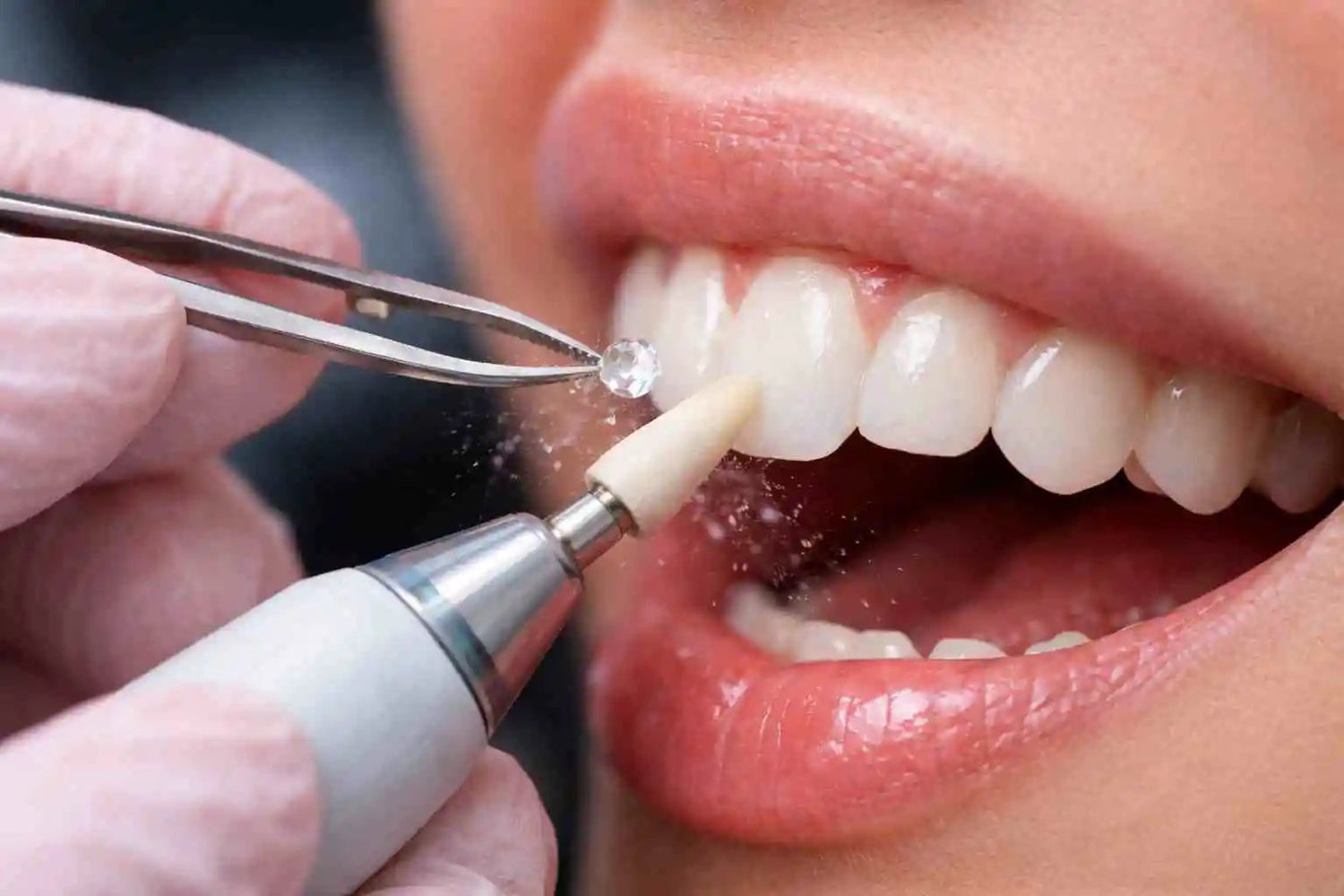
A low-speed dental handpiece with a polishing bur carefully sands down any leftover bonding material without harming enamel. -
Polish the Tooth Surface
A rubber cup and professional-grade polishing paste restore the tooth’s natural smoothness and shine. -
Final Check and Aftercare
The dentist inspects for micro-fractures, ensures no residue remains, and provides personalized aftercare instructions.
Time, Cost, and Pain Level
- Duration: 30–60 minutes for multiple gems
- Cost: $50–$150, often less than treating enamel damage from DIY failures
- Pain: Typically none—no anesthetic needed unless you’re highly sensitive
“Professional polishing restores the tooth’s original texture and appearance.” — Article 3
Can an Orthodontist Remove Tooth Gems?
Yes—orthodontists are often the best choice. Their daily work with braces equips them with the exact tools and expertise needed. If your general dentist declines, contact an orthodontic clinic instead.
“You could try asking your local orthodontic clinic… should be a piece of cake for them.” — Comment from AkaMeOkami (Article 5)
They’re trained to debond safely, making them a top pick for preserving enamel integrity.
When DIY Is Safe: Know the Signs
Looseness Determines Safety
Only attempt at-home removal if:
– The gem moves when touched by your tongue or finger
– Edges are visibly lifting from the tooth
– It’s been several months since application (adhesive weakens over time)
“If you feel it moving, you’re safe to remove it yourself.” — Article 6
When to Avoid Home Removal
Do not attempt DIY if:
– The gem is firmly attached
– Applied within the last 48–72 hours (peak bond strength)
– Bonded to a crown, veneer, or filling
– You feel pain, sensitivity, or bleeding
“Never use tweezers, nail tools, or floss sawing methods.” — Article 2, FAQ #3
Safe At-Home Removal Techniques
Tools You Need (and Should Avoid)
Use:
– Unwaxed dental floss or floss threader
– Soft-bristled toothbrush
– Magnifying mirror and bright light
– Warm salt water rinse (½ tsp salt in 8 oz water)
Avoid:
– Tweezers, nail clippers, scissors
– Metal picks, files, or probes
– Nail polish remover or glue solvents
“Don’t be that person who chips their enamel trying to pry gems off with nail files.” — Article 6
Floss Method: Recommended DIY Technique
- Cut 12–18 inches of unwaxed floss.
- Slide one end under the edge of the gem.
- Gently saw back and forth, like cutting soft butter.
- Work around all sides until the gem detaches naturally.
- Do not pull upward—let the floss break the bond.
“Work it back and forth gently, like you’re sawing through soft butter.” — Article 6
Gentle Wiggle Technique
- Wash hands thoroughly.
- Use your fingertip to apply tiny side-to-side wiggles at the gem’s edge.
- Repeat 30–60 seconds, rest, and repeat multiple times daily.
- Let time and motion weaken the adhesive gradually.
Ideal for gems that are slightly loose but not yet lifting.
Toothbrush Assist for Partially Detached Gems
- Brush around the gem’s edges with a soft toothbrush.
- Combine with floss to loosen the bond.
- Let daily brushing help wear down the adhesive over time.
“The brushing helps loosen the bond while the floss lifts the gem.” — Article 6
Dealing With Leftover Adhesive
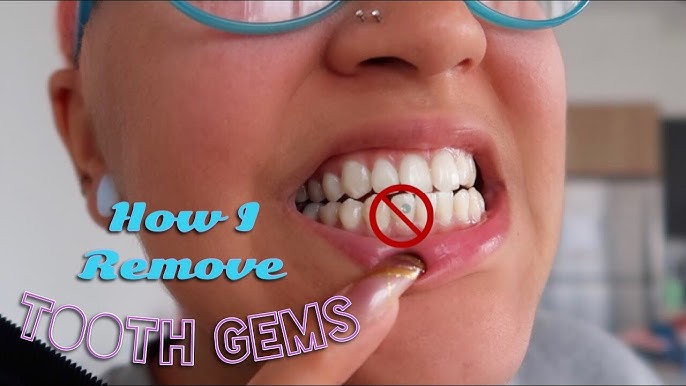
What Residue Looks Like
After removal, you may notice:
– A small white or clear bump
– A rough or raised spot that catches your tongue
– Visibility under bright light
This is normal but should be cleaned to prevent plaque buildup.
How to Remove Residue Safely
Natural Removal Through Brushing
- Brush twice daily with fluoride toothpaste
- Floss around the area to help lift edges
- Most residue wears away in 1–2 weeks
“Keep brushing consistently, and it’ll resolve.” — Article 6
Professional Cleanup for Stubborn Residue
If the bump remains after two weeks:
– Visit a hygienist for ultrasonic scaling or low-speed polishing
– Quick, painless, and often included in routine cleanings
“Hygienists have special tools that remove adhesive safely.” — Article 6
Risks of Improper Removal
| Risk | Consequence |
|---|---|
| Enamel Chipping | Caused by prying with metal tools |
| Micro-Fractures | Invisible cracks weaken tooth structure |
| Gum Injury | Cuts from sharp instruments |
| Plaque Buildup | From leftover adhesive |
| Tooth Sensitivity | Due to exposed dentin |
| Permanent Damage | May require fillings or crowns |
“Forcing removal can cause irreversible harm.” — Article 3
Signs You Need a Dentist Immediately
Stop all DIY attempts if you experience:
– Pain or sharp discomfort
– Bleeding gums
– Visible cracks or dents
– Swelling that won’t go away
– Gem won’t budge despite gentle effort
– Sensitivity lasting more than 3 days
Also consult a dentist if:
– The gem fell off within the first month (possible bonding failure)
– You see discoloration or decay near the site
– You suspect an allergic reaction
Aftercare: Protect Your Smile
First 24 Hours
- Rinse with warm salt water 1–3 times daily
- Brush gently with a soft toothbrush
- Avoid hot, cold, or sticky foods on the affected side
- Don’t chew hard candy or ice
Next 1–2 Weeks
- Use fluoride toothpaste to strengthen enamel
- Maintain regular brushing and flossing
- Avoid staining foods if the area looks dull
- Monitor for lingering sensitivity
Long-Term Care
- Schedule a dental checkup if you removed the gem yourself
- Wait at least several weeks before reapplying a new gem
- Repeated bonding on the same tooth can thin enamel over time
Frequently Asked Questions
Does removing a tooth gem hurt?
No. Proper removal should not hurt. You may feel light pressure, but no pain. If it hurts, stop and see a dentist.
“Pain or strong resistance is a sign to stop and consult a dental professional.” — Article 2
Can I reuse a tooth gem?
Not recommended. Gems retain old adhesive and won’t bond well a second time. Wait several weeks before reapplying.
“Wait at least several weeks before applying a new gem to the same spot.” — Article 6
What if the gem fell off on its own?
If after months, it’s likely natural breakdown. Clean the area. If within one month, contact your dentist—it may indicate poor bonding.
“If the gem fell off within the first month… contact your dentist.” — Article 6
Can I remove a gem from a crown or veneer?
Only a dentist should remove gems from crowns or veneers. DIY attempts can crack or fracture the restoration.
“Removal should be performed by a dental professional to avoid damage.” — Article 2
How do I know if I damaged my enamel?
Look for:
– Visible chips or cracks
– Persistent sensitivity
– Rough or jagged texture
– Dullness or discoloration
See a dentist immediately if any of these occur.
Best Tools for Safe Removal
LaserGlow Tooth Gem Removal Tool
- Fine-tip stainless steel jaws for lifting without scratching
- Ergonomic grip for precision
- Reusable and easy to sanitize
- Works on crystal, Swarovski, resin, and flat-back gems
Why It’s Better Than Tweezers
- Less pressure on enamel
- Designed specifically for dental use
- Higher success rate and safety
“I removed two gems using this tool, and both times it worked flawlessly.” — Julian A., Customer Review (Article 2)
Price and Availability
- $29.00 (originally $49.00)
- In stock (1990 units)
- Ideal for home users, beauty techs, and professionals
“A dedicated removal tool is the better option.” — Article 2
Final Note: Whether you choose professional or at-home removal, always prioritize enamel protection. No sparkle is worth permanent damage. With the right approach, you can safely return to a natural, healthy smile.