Flossing is one of the most effective ways to protect your teeth and gums, yet nearly half of adults skip it daily. While brushing cleans the surfaces of your teeth, it can’t reach the tight spaces between them—where plaque builds up and decay begins. How to use tooth floss correctly makes all the difference in preventing cavities, gum disease, and bad breath. Without flossing, you’re leaving 40% of your tooth surfaces uncleaned. This guide breaks down every step, tool, and tip to help you floss effectively—whether you’re a beginner or looking to improve your technique. You’ll learn the right way to hold floss, glide it between teeth, and use the essential C-shape method that dentists swear by.
Pick the Best Flossing Tool for Your Needs

Choosing the right flossing tool can make flossing easier and more effective. The American Dental Association (ADA) recommends selecting products with the ADA Seal of Acceptance to ensure safety and performance.
String Floss: The Gold Standard for Daily Use
String floss is the most widely used and budget-friendly option. Use 18 inches per session to ensure a clean section for each tooth.
– Waxed floss slides smoothly between tight teeth and resists fraying—ideal for beginners or those with closely spaced teeth.
– Unwaxed floss is thinner and may provide a “squeaky clean” sensation when the tooth surface is plaque-free.
– Flavored or colored floss adds a pleasant experience and can help you spot plaque buildup.
Dental Tape for Gaps Between Teeth
Dental tape is wider and flatter than traditional floss, making it perfect for people with larger spaces between teeth or sensitive gums. It’s gentle on tissue and less likely to cut into the gums, but it may not fit well between tightly packed teeth.
Super Floss for Braces, Bridges, and Implants
Super floss is specially designed for people with dental work. It features a stiffened end for threading, a regular floss section for cleaning, and a spongy middle for wide gaps. It’s essential for reaching under braces, bridges, and around implants—areas where plaque collects easily.
Floss Picks: Convenient but Less Hygienic
Floss picks are plastic-handled tools with a short strand of floss stretched between two prongs. They’re great for kids, travelers, or people with limited hand mobility.
– Pros: Easy to use, portable, and require no finger winding.
– Cons: You can’t use a fresh piece of floss for each tooth, which may transfer bacteria. For best hygiene, use a new pick each time.
Interdental Brushes for Tight Spaces and Braces
These tiny cone-shaped brushes clean between teeth like miniature bottle brushes. Available in multiple sizes, they’re excellent for gum recession, braces, or wide gaps. Slide them gently between teeth—never force them. They’re especially effective for cleaning around orthodontic wires and under bridges.
Water Flossers for Sensitive Gums and Dental Work
Water flossers use a pulsating stream of water to flush out plaque and food debris. They’re ideal for people with arthritis, braces, implants, or sensitive gums.
– Countertop models offer stronger pressure and larger water tanks.
– Cordless versions are travel-friendly but may have shorter battery life and less power.
Master the Correct Flossing Technique with String Floss
Using the right technique ensures you remove plaque without damaging your gums. Follow these steps to floss like a pro.
Cut and Wind 18 Inches of Floss
Start by cutting 18 inches of floss—enough to use a clean section for each tooth. Wrap most of it around the middle finger of one hand and the rest around the other. Leave 1–2 inches taut between your thumbs and index fingers for control.
For kids or limited dexterity: Tie the floss into a loop and place fingers inside. Use thumbs and index fingers to guide the floss.
Glide Floss Between Teeth Gently
Hold the floss tightly between thumbs and index fingers. Use a gentle back-and-forth (sawing) motion to slide it between teeth. Never snap it down—this can cut or bruise your gums.
Tip: Keep your mouth slightly open, not stretched wide. This gives you better finger control, especially for back teeth.
Curve Into a C-Shape at the Gumline
Once the floss reaches the gumline, curve it into a C-shape around one tooth. This step is crucial—it allows the floss to follow the tooth’s natural curve and clean below the gumline where plaque hides.
Why it matters: The C-shape ensures contact with the entire side of the tooth, not just a quick swipe between teeth.
Slide Up and Down the Tooth Surface
Gently move the floss up and down against the side of the tooth, from the gumline to the top. Apply light pressure away from the gum tissue. Repeat on the adjacent tooth in the same space.
Listen for the squeak: With unwaxed floss, a clean tooth often makes a faint squeaking sound—a sign you’ve removed the plaque.
Use Fresh Floss for Each Tooth
As you move to the next gap, unwind clean floss from one hand and wind the used section onto the other. Never reuse the same piece—this spreads bacteria and defeats the purpose.
Floss Every Tooth—Don’t Skip the Molars
Many people skip the back teeth because they’re hard to reach. But molars are cavity-prone due to deep grooves and tight contacts.
Reach Back Teeth Without Straining
- Don’t open your mouth too wide—this limits finger movement.
- Use a mirror or good lighting.
- Guide the floss with your fingers, even if your lips or cheeks get in the way.
- Focus on wrapping each molar with the C-shape, not just sliding through.
Pro tip: Start in one corner (e.g., upper right) and work your way around. This prevents missed spots.
How to Floss with Floss Picks the Right Way

Floss picks are convenient but require extra care to maintain hygiene.
Insert with a Sawing Motion
Hold the pick by the handle and gently saw the floss between teeth. Avoid forcing it into the gums.
Curve and Clean One Tooth at a Time
At the gumline, form a C-shape around one tooth and move the floss up and down. Then, clean the neighboring tooth in the same space.
Replace After Each Use
Since you can’t use fresh floss on a pick, use a new one per session if possible. Reusing spreads bacteria and reduces cleaning power.
Bonus feature: Some picks have a pick or brush end to remove food debris after flossing.
Use the Right Amount of Pressure
Flossing isn’t about force—it’s about control and consistency.
Avoid Too Much Force
- Can cause gum cuts, bleeding, and recession.
- Over time, may damage enamel near the gumline.
Don’t Use Too Little
- Won’t remove plaque effectively.
- Leaves behind bacteria that cause decay and bad breath.
Ideal Pressure
- Firm enough to feel contact with the tooth.
- Gentle enough to avoid pain.
- Initial bleeding is normal if you’re new to flossing—it usually stops within a week.
Warning: If bleeding persists beyond 7–10 days, see your dentist. It could signal gum disease.
When and How Often Should You Floss?
The American Dental Association recommends flossing at least once a day.
Best Time: Before Bed
- Saliva production drops at night, letting plaque stick and acid build up.
- Flossing before sleep removes food and bacteria, reducing overnight damage.
Can You Floss in the Morning?
Yes—if bedtime flossing doesn’t work for you. The key is daily consistency.
Floss Before or After Brushing?
- Flossing first removes plaque between teeth, so brushing can sweep it away. Studies show this order removes more bacteria.
- Brushing first may soften plaque, making flossing easier.
- Bottom line: Do what fits your routine. Consistency beats order.
Flossing Tips for Different Users
For Children: Start Early, Supervise Often
- Begin flossing when two teeth touch, usually around age 2–3.
- Parents should floss for kids until age 10–11, when hand coordination improves.
- Use kid-friendly floss picks or holders with fun colors or characters.
- Turn it into a habit with rewards like a “Floss Boss Badge.”
For Braces or Dental Work
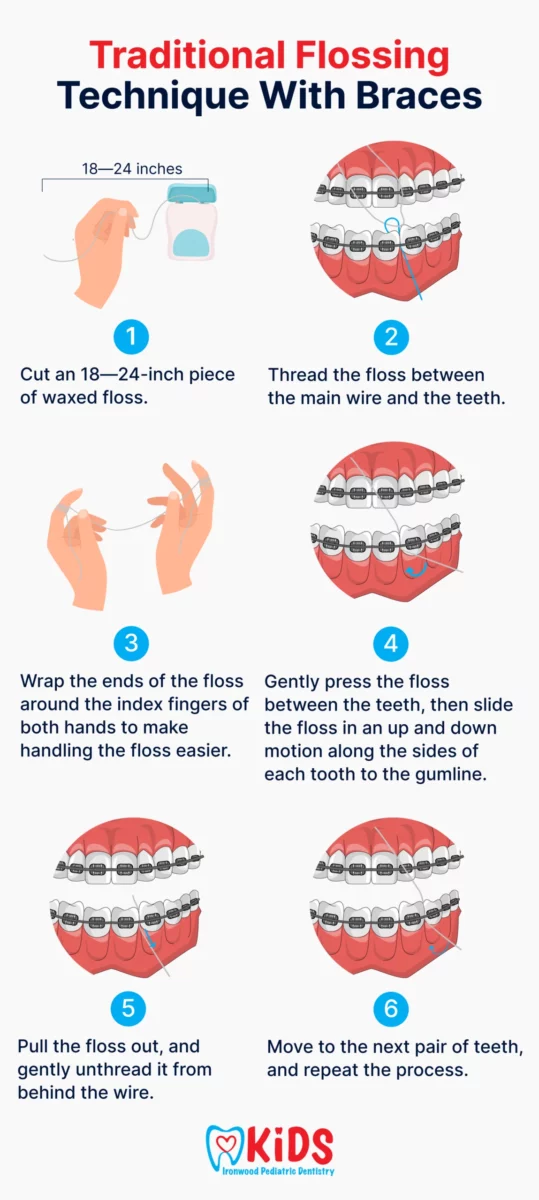
- Braces: Use super floss or a floss threader to slide under wires. Water flossers are also highly effective.
- Bridges or implants: Clean under restorations with interdental brushes or water flossers.
- Dentures: Floss natural teeth; clean dentures separately with a soft brush.
For Older Adults or Limited Dexterity
- Arthritis or hand pain? Try floss holders, interdental brushes, or water flossers.
- These tools reduce finger strain and improve reach.
- Look for ergonomic handles or adaptive devices.
Common Flossing Mistakes to Avoid
Even regular flossers make errors that reduce effectiveness.
Reusing the Same Floss Section
Using the same piece for multiple teeth spreads plaque and bacteria. Always use a clean section per tooth.
Snapping Floss Into Gums
This causes cuts, bleeding, and gum recession. Always glide gently with a sawing motion.
Skipping Back Teeth
The molars are the most decay-prone. Don’t ignore them—floss every tooth.
Ignoring the Gumline
Plaque hides under the gums. If you only floss the top, you’re missing the danger zone. Curve the floss below the gumline.
Using Improper Tools
Some people use fingernails, paper, or even forks—over 40% report pain from this. Stick to dental floss or approved tools.
Not Using Enough Floss
Short lengths prevent fresh sections. Use 18 inches every time.
Benefits of Daily Flossing
Flossing isn’t just about clean teeth—it’s a long-term investment in your health.
Prevents Cavities Between Teeth
Interproximal cavities (between teeth) are common without flossing. Floss removes plaque before it turns into decay.
Reduces Gum Disease Risk
Plaque hardens into tartar, which only a dentist can remove. Flossing daily prevents gingivitis and periodontitis—especially important for adults over 30.
Improves Breath
Floss eliminates trapped food and odor-causing bacteria, reducing halitosis.
Supports Whole-Body Health
Poor oral hygiene is linked to heart disease, diabetes, and inflammation. Flossing helps lower systemic risks.
Keeps Teeth Longer
Healthy gums mean stable teeth. Older adults who floss regularly are more likely to keep their natural teeth.
Final Tips for Success
- Pick one tool and stick with it—whether string floss, water flosser, or interdental brush.
- Master the C-shape technique—it’s the key to effective cleaning.
- Use 18 inches of floss and a fresh section for each tooth.
- Floss once daily, ideally at night.
- Be gentle—flossing isn’t about force, it’s about consistency and form.
- Ask your hygienist for a demo during your next dental visit. They can tailor advice to your mouth.
Dental Hygienist Tip: “The C-shape wrap is what turns a quick swipe into a real clean. That’s where the magic happens.”
Flossing takes less than two minutes a day but pays off for a lifetime. Make how to use tooth floss part of your daily routine—your smile, breath, and health will thank you.