
Is your TUREWELL water flosser not working? You are not alone. Many users experience sudden stoppages, weak pressure, or leaks, often due to simple oversights like a clogged nozzle or low water level. The good news: most issues are easy to fix at home with no tools required. In this guide, you will learn how to diagnose, troubleshoot, and resolve every common failure, from power problems to mineral buildup. Whether you own model FC165, FC168, or any compatible version, this step-by-step manual will restore full function fast. Let us get your flosser back in action.
Power Issues: Why Your TUREWELL Flosser Won Turn On
When your TUREWELL water flosser will not turn on, start here. Most fixes take under a minute.
Check Power Connection and Outlet
Ensure the unit is plugged into a working outlet. Unplug and re-plug the cord firmly into both the base and wall socket. Test the outlet by plugging in another device like a phone charger. If that does not work, the issue may be with the electrical supply, not the flosser.
- Some power strips have internal switches. Make sure it is turned on.
Verify Handle Switch Position
The ON/OFF switch is located on the handle, not the base. Slide it fully to the ON position before pressing the start button. If the switch feels loose or unresponsive, turn off the unit and inspect for debris or moisture.
Confirm Auto Shut-Off Is Not Triggering Early
The device shuts off automatically after 3 minutes of continuous use. If it stops sooner, check for loose power cord connections, intermittent power supply, or overheating after extended daily use. Wait 30 seconds before restarting. Do not force repeated starts in quick succession.
Weak or No Water Flow: Clear the Blockage

Low pressure or zero flow usually points to water delivery issues. Follow these steps in order.
Refill the Water Reservoir
A low water level can cause sputtering or no flow. Open the lid and fill to the 600ml (22 oz) max line with lukewarm water. Never operate the device dry, even briefly.
- The tank has clear markings. Refill mid-session if needed.
Reinstall or Replace the Nozzle
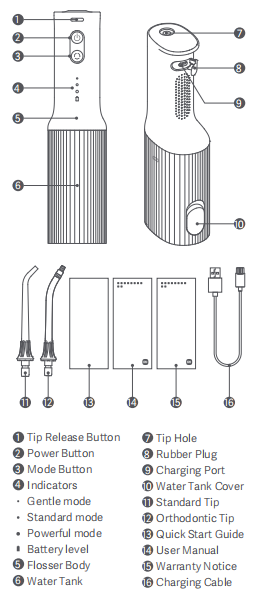
An improperly seated nozzle blocks water flow. Press the Tip Eject button, remove the tip, and reinsert until it clicks securely. If it still leaks or flows weakly, try a different nozzle.
- Cracked or warped tips reduce pressure and harbor bacteria. Replace every 3 to 6 months.
Clear a Clogged Nozzle
Mineral deposits or debris can clog the tiny opening. Remove the tip and rinse under warm running water. For stubborn buildup, soak in warm vinegar for 10 minutes, use the provided cleaning pin to gently clear the hole, then flush with clean water.
- Do not use metal wires. They can scratch or enlarge the nozzle.
Inspect for Kinked Hose or Bent Connector
Check the hose between the handle and base. A sharp bend or twist restricts water flow. Straighten it completely. Also, ensure the hose connector is fully seated into the base unit.
Leaking Water: Stop the Drips Now
Leaks often stem from simple assembly errors, but left unchecked, they can damage the motor.
Secure the Reservoir Lid
A loose lid causes overflow during operation. Close it until it clicks. Align the spout correctly so it seals over the intake valve.
- Some early batches had faulty lids. If sealing fails repeatedly, contact TUREWELL support.
Re-Seat the Water Tank
Remove and reinsert the reservoir. Push down firmly until it locks into place. Misalignment prevents a proper seal and causes base leakage.
Check Internal Seals and Hoses
If the unit leaks from the bottom even when empty, wipe the base and look for cracks. Inspect rubber gaskets around the tank and hose ports. Look for signs of wear or detachment.
- The IPX7 rating means the nozzle and reservoir are splash-proof, but the main base must stay dry.
Excessive Noise: Is Your Flosser Pumping Air
Some sound is normal, but loud pulsing or grinding indicates trapped air or damage.
Purge Air from the Pump System
Air bubbles cause erratic noise and reduced pressure. To bleed the system, fill the reservoir completely, point the nozzle into the sink, and run the device on medium pressure for 30 seconds. This forces air pockets out of the pump and tubing.
Stabilize the Unit on a Flat Surface
Place the flosser on a level countertop. The suction cups should grip firmly. Vibration increases noise on uneven or slippery surfaces.
- Avoid using on wet tiles or near sink edges where it can shift.
Pressure Problems: Adjust for Optimal Cleaning
Your TUREWELL water flosser has 10 pressure settings ranging from 30 to 125 psi. Wrong settings can mimic malfunction.
Start Low, Then Increase Gradually
Begin at level 1 to 3, especially with sensitive gums or periodontal tips. Sudden high pressure can feel painful and cause gagging. Adjust upward only as comfort allows.
- Most users find level 5 to 6 ideal for daily cleaning.
Match Tip to Pressure Setting
Different tips require different pressures. Use standard jet tip at levels 3 to 8, tongue cleaner at level 1 to 3, periodontal pocket tip at level 1 to 4 (never above), and orthodontic or plaque brush tip at levels 3 to 6. Using high pressure with delicate tips risks gum trauma.
Nozzle Guide: Use the Right Tip for the Job

Using the wrong tip leads to poor results and frustration.
Standard Jet Tip for Daily Use
Best for removing plaque along the gumline. Replace every 6 months. Use at a 90-degree angle to the gums, pausing between teeth.
- Start at the back molars and work forward.
Periodontal Pocket Tip for Deep Cleaning
Designed for sub-gum cleaning. Insert gently at a 45-degree angle. Never force it. If the soft tip separates from the shaft, replace immediately.
Orthodontic Tip for Braces
Cleans around brackets and wires. Glide slowly along each tooth, pausing to flush debris. Use with lower pressure to avoid dislodging wires.
Tongue Cleaner for Bad Breath
Reduces bacteria on the tongue surface. Place halfway back, pull forward slowly while running. Use only at the lowest setting.
Plaque Brush Tip for Implants and Crowns
Combines water jet with soft bristles. Gently contact the tooth surface and move along the gumline. Ideal for bridges and veneers.
Weekly Maintenance: Prevent Future Failures
Skip cleaning, and your flosser will clog fast, especially in hard water areas.
Descale with Vinegar Weekly
Mineral buildup kills performance over time. Mix 1 part white vinegar with 2 parts warm water. Fill the reservoir, run half the solution through, let sit for 20 minutes, finish flushing, then rinse with one full tank of plain water.
- Once a week if using tap water. Every 2 weeks if using filtered.
Clean and Store Tips Properly
After each use, rinse tips under running water, dry and store in the lid compartment, and replace every 3 to 6 months. Soak in vinegar monthly for deeper sanitation.
Empty Tank After Each Use
Never leave water sitting overnight. Empty the reservoir and leave the lid open to dry. This prevents mold, bacteria, and pump corrosion.
When to Contact TUREWELL Support
If you have followed all steps and your TUREWELL water flosser still is not working, it may be defective.
Signs of Manufacturing Defects
Persistent base leaks on a new unit, no power even with verified outlet, cracked housing or damaged cord, or pump failure after proper maintenance indicate defects.
- Contact TUREWELL support with proof of purchase. Most units are covered under warranty.
How to Reach Support
Visit the official TUREWELL website, message via Amazon or AliExpress order page, or include model number (e.g., FC165) and issue details.
- Some report slow response. Include photos of the issue for faster resolution.
Quick-Reference Troubleshooting Flowchart
Use this decision tree for fast fixes.
Flosser not turning on?
- Is it plugged in? Test outlet.
- Is switch on handle ON?
No water flow?
- Is tank full?
- Is nozzle clicked in?
- Is hose kinked?
- Is nozzle clogged? Clean it.
Weak pressure?
- Is pressure dial set too low?
- Has mouthwash residue built up? Descale.
- Are tips worn? Replace.
Leaking?
- Is lid closed?
- Is tank seated?
- Are seals damaged? Inspect.
Too loud?
- Bleed air by running 30 seconds.
- Stabilize on flat surface.
Frequently Asked Questions About TUREWELL Water Flossers
Why does my TUREWELL water flosser not turn on even when plugged in?
Check that the ON/OFF switch on the handle is slid to the ON position. Verify the outlet works by testing with another device. If the outlet is fine and the switch is on, the power cord or internal motor may be damaged.
How do I fix weak water pressure on my TUREWELL flosser?
Increase the pressure setting using the dial on the front panel. Clean or replace a clogged nozzle. Refill the 600ml reservoir to the max line. Descale with vinegar if mineral buildup is suspected.
What should I do if my TUREWELL water flosser is leaking?
Ensure the reservoir lid is closed and seated properly. Reinsert the reservoir firmly into the base. Check for cracks in the housing or damaged internal seals. If leaking persists on a new unit, contact support.
How often should I replace the nozzles?
Replace standard jet tips and tongue cleaners every 6 months. Replace periodontal pocket tips, orthodontic tips, and plaque brush tips every 3 months, or sooner if cracked or warped.
Can I use mouthwash in my TUREWELL water flosser?
Yes, but dilute it with water and flush the system with a full reservoir of plain water after each use. Undiluted mouthwash can cause clogging and damage internal components.
Why is my water flosser making loud noises?
Loud pulsing or grinding usually means air is trapped in the pump. Run the device on medium pressure for 30 seconds with the nozzle pointed into the sink to purge air. Ensure the unit is on a stable, flat surface.
Key Takeaways for Fixing Your TUREWELL Water Flosser
Your TUREWELL water flosser not working is usually caused by simple issues you can fix at home. Start with the basics: check power connections, verify the handle switch is ON, ensure the reservoir is full, and confirm the nozzle is properly seated. Weak pressure typically stems from clogged nozzles or low water levels, while leaks usually indicate a loose lid or misaligned tank. Clean your unit weekly with vinegar solution to prevent mineral buildup, and replace tips every 3 to 6 months to maintain optimal performance. This guide covers all compatible models including FC165, FC168, FC169, FC166, FC163, FC162, FC188, and FC288. If your device still fails despite proper maintenance, contact TUREWELL customer support with proof of purchase for warranty service. With correct care, your water flosser will deliver powerful, reliable performance for years. Now go floss with confidence.